Andrew Ross Sorkin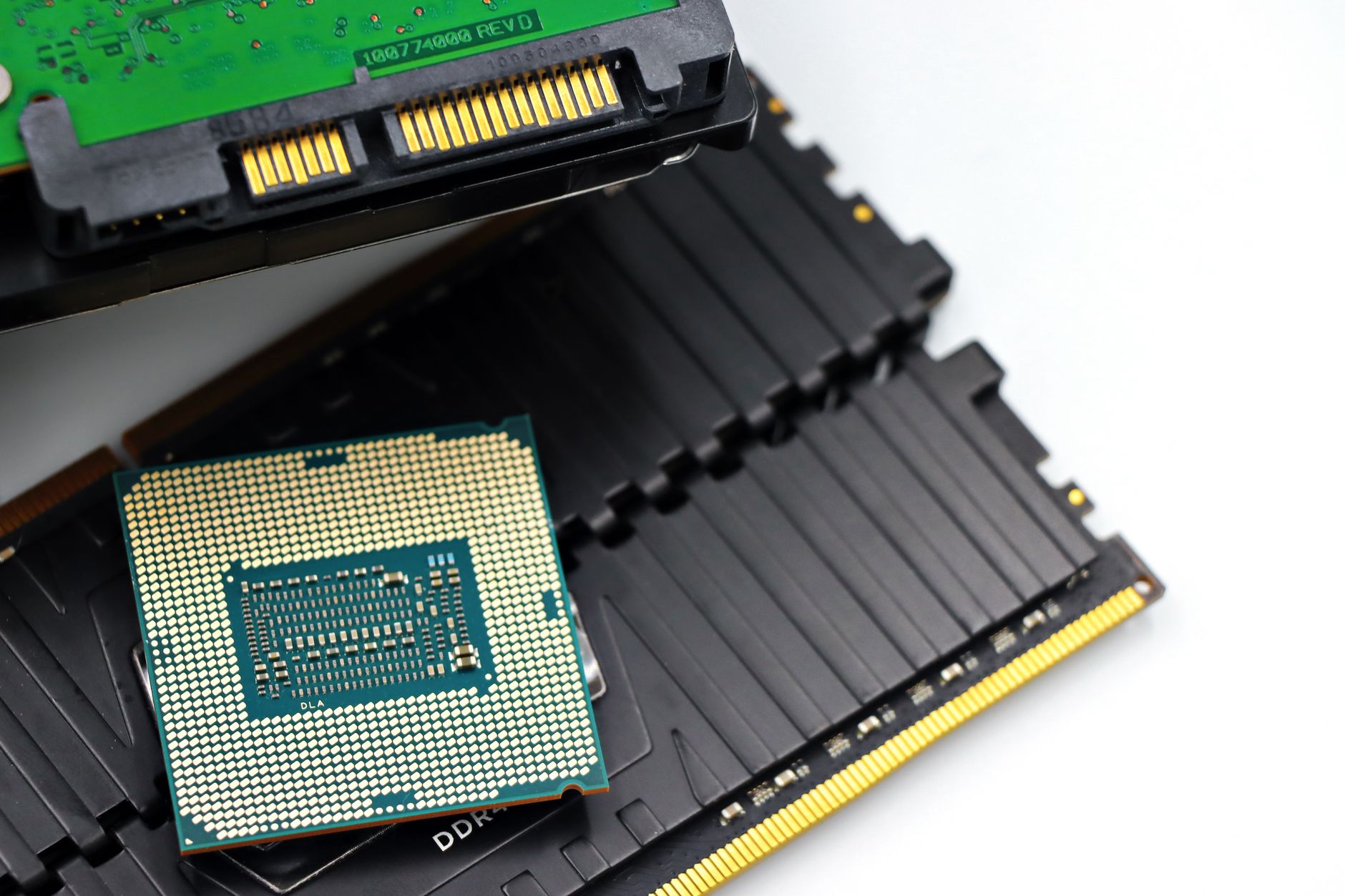
XFUNDS has introduced an actively managed exchange-traded fund designed to combine exposure to the memory-semiconductor industry with an options-based income strategy, extending the range of specialized products built around the artificial-intelligence investment cycle. The XFUNDS Memory Income ETF began trading on NYSE Arca under the ticker DRMY on July 16. XFUNDS developed the product with Tidal Investments LLC, which serves as investment adviser, while Nicholas Wealth LLC acts as sub-adviser and oversees security selection and portfolio management.
The new fund is structured around two objectives that can sometimes conflict. Its primary objective is capital appreciation from companies connected to memory semiconductors and storage technology. Its secondary objective is current income generated largely through option premiums. Rather than tracking a published benchmark, DRMY gives its managers discretion to select companies, determine portfolio weights and adjust derivatives positions according to market conditions, volatility and their outlook for individual securities.
DRMY arrives as memory technology becomes a more visible part of the AI infrastructure trade. Artificial-intelligence systems require processors capable of performing enormous numbers of calculations, but computing performance also depends on moving data rapidly between processors and memory. High-bandwidth memory, commonly known as HBM, has consequently become a strategically important component in advanced accelerators and servers. Demand has also extended into conventional DRAM, NAND flash, enterprise storage and other products used throughout data centers and high-performance computing systems.
The fund’s eligible investment universe is broader than a small group of headline chip manufacturers. XFUNDS said DRMY may invest across businesses involved in developing, manufacturing or enabling memory technologies. The strategy encompasses HBM, dynamic random-access memory, NAND flash, solid-state drives, NOR flash, hard disk drives and specialty, application-specific or embedded memory. That framework potentially captures semiconductor producers, storage-device manufacturers and other companies whose economics are substantially tied to memory products.
Under the fund’s stated policy, at least 80% of net assets, plus any borrowings for investment purposes, will normally be invested in equity securities or instruments providing economic exposure to qualifying memory companies. A company generally qualifies when at least half of its revenue or profit comes from designing, developing, producing or manufacturing memory-related semiconductor products or storage technologies. Derivatives are measured by notional value when applying the 80% test.
DRMY may obtain exposure through common shares, American depositary receipts, global depositary receipts, other depositary instruments and memory-focused ETFs. The ability to invest internationally is important because several of the largest participants in memory manufacturing are headquartered outside the United States. It also introduces foreign-investment, currency, market-access, regulatory and geopolitical risks that may not be present to the same degree in a U.S.-only semiconductor portfolio.
Nicholas Wealth uses a proprietary selection process intended to identify companies it considers leaders in memory products and related technologies. Factors may include market share and the percentage of a company’s revenue associated with memory. The fund’s regulatory filing said the portfolio would generally use a modified market-capitalization approach, while limiting the weight of any single issuer to 25%. The equity portfolio is expected to be rebalanced at least quarterly, although active management permits adjustments outside a mechanical index schedule.
The options overlay distinguishes DRMY from conventional thematic semiconductor ETFs. The fund may write or purchase contracts tied to selected individual holdings, seeking to collect more option premiums than it pays. Those net premiums are expected to be an important source of the cash used for distributions. Premium levels will vary with implied volatility, strike selection, expiration dates, the direction of the underlying shares and the portfolio managers’ assessment of market conditions.

Among the principal techniques identified by XFUNDS are synthetic covered calls, credit call spreads and credit put spreads. In a synthetic covered-call structure, the fund can create equity-like exposure through options while selling call options that generate premium. The premium provides income and may offset part of a decline, but the short call generally limits gains once the underlying security rises above the relevant strike price.
A credit call spread combines the sale of a call option with the purchase of another call at a higher strike. The position receives a net premium while defining the potential loss if the underlying share price rises sharply. A credit put spread generally sells a put and purchases another put at a lower strike, also collecting a net premium while limiting maximum downside from the option structure. The fund may use other derivatives strategies when managers believe they are appropriate.
The options program is intended to support weekly cash distributions, an increasingly common feature among actively managed income ETFs. Weekly payments can appeal to investors seeking frequent cash flow or more regular portfolio withdrawals. However, distribution frequency does not determine economic return. A payment made by an ETF reduces its net asset value by approximately the amount distributed on the ex-dividend date, all else being equal.
XFUNDS cautions that DRMY is not guaranteed to make a distribution in every week or to maintain any particular payment level. Option premiums can decline when volatility falls, and losing derivatives positions may offset premiums collected elsewhere in the portfolio. Dividends received from underlying companies may also vary. As a result, investors should expect the size and composition of DRMY’s distributions to change, potentially substantially, from one period to another.
Some payments may be classified as return of capital rather than income or realized investment profit. Return of capital is not automatically detrimental; it can reflect the timing of gains, options accounting or tax-management decisions. But when cumulative distributions exceed the fund’s investment return, the payments reduce net asset value and effectively return part of shareholders’ original investment. Persistent net-asset-value erosion can leave investors with lower principal and a smaller asset base from which future distributions are generated.
The income overlay also changes the fund’s return profile compared with an unhedged portfolio of the same memory stocks. Selling calls can reduce volatility and produce cash during sideways or moderately rising markets. During a powerful semiconductor rally, however, short-call exposure may cap part of the upside. Credit put spreads may generate premiums when markets are stable, but they can lose value when the underlying shares fall rapidly. DRMY should therefore not be expected to match a pure memory-equity benchmark in every market environment.
That distinction is especially relevant because memory semiconductors have historically been highly cyclical. Producers must make large capital investments years before the associated supply enters the market. Periods of tight supply and strong pricing can encourage capacity expansion, which may eventually produce excess inventory and price declines. Earnings can also be affected by shifts in consumer electronics demand, cloud-computing investment, export controls, manufacturing yields, technological transitions and customer concentration.
The AI investment cycle has altered near-term demand expectations but has not eliminated those structural risks. HBM requires sophisticated manufacturing, advanced packaging and close coordination with accelerator designers, creating technological and supply constraints. Strong demand can improve pricing power for established suppliers, yet it can also intensify competition and encourage customers to diversify procurement. A thematic ETF concentrated in this area may therefore experience substantially greater volatility than a diversified technology or broad-market fund.

DRMY enters an ETF market already responding aggressively to investor enthusiasm for memory shares. Memory-focused equity products have attracted attention by offering more concentrated exposure than broad semiconductor ETFs, which also hold logic-chip designers, foundries, equipment manufacturers and analog-chip producers. Other issuers have launched leveraged or single-stock products tied to prominent memory companies. DRMY is positioned differently by combining a multi-company portfolio with a premium-generating overlay rather than providing straightforward or leveraged daily exposure.
For portfolio construction, the fund may appeal to investors who want thematic participation but are willing to exchange some potential appreciation for current distributions. It could also be used as a satellite holding alongside broader technology or income allocations. The fund is less suited to investors who require predictable payments, principal stability or full participation in a rapidly rising memory market. Its concentration and derivatives exposure make it materially different from a traditional dividend fund, bond ETF or diversified covered-call strategy.
Costs are another consideration because an active portfolio using individual options generally requires more trading and oversight than a passive index product. Yahoo Finance displayed a net expense ratio of 1.01% for DRMY at launch. Investors may also bear indirect costs from bid-ask spreads, option execution, portfolio turnover and any underlying ETFs held by the fund. As a newly launched product, DRMY has no operating history from which investors can evaluate how effectively its managers balance income generation, risk control and capital appreciation.
Trading conditions may also take time to develop. New ETFs often begin with limited assets and secondary-market volume, making bid-ask spreads and the effectiveness of the creation-and-redemption process important. An ETF’s quoted market price can trade above or below the value of its underlying portfolio, particularly during volatile periods or when foreign securities are trading in markets with different hours. Investors using market orders in a young, specialized fund may face execution prices that differ from indicative net asset value.
The launch broadens XFUNDS’ lineup of actively managed strategies that pair thematic or alternative exposures with derivatives. The firm already offers products connected to fixed income, global equities, cryptocurrency, gold, silver, nuclear energy, defense and strategic materials. DRMY applies that framework to a segment that has become central to AI hardware spending, while presenting the weekly distribution schedule as a way to convert some of the sector’s volatility into cash flow.
Whether the approach succeeds will depend on more than the direction of memory-chip shares. Results will also reflect security selection, portfolio concentration, option timing, strike prices, volatility levels, foreign-market access and the relationship between premiums collected and gains surrendered. The most relevant measure for shareholders will be total return after expenses and distributions, not the stated distribution rate alone. Changes in net asset value will indicate whether payments are being supported by sustainable portfolio returns or accompanied by declining principal.
DRMY therefore represents a hybrid allocation rather than a simple income substitute. It offers targeted access to an important component of the AI supply chain while actively reshaping the exposure through derivatives. For investors comfortable with semiconductor cyclicality and options-related complexity, the ETF provides a distinct way to approach the memory theme. For others, the concentration, uncertain distributions and possibility of capped upside may outweigh the appeal of frequent cash payments.