Andrew Ross Sorkin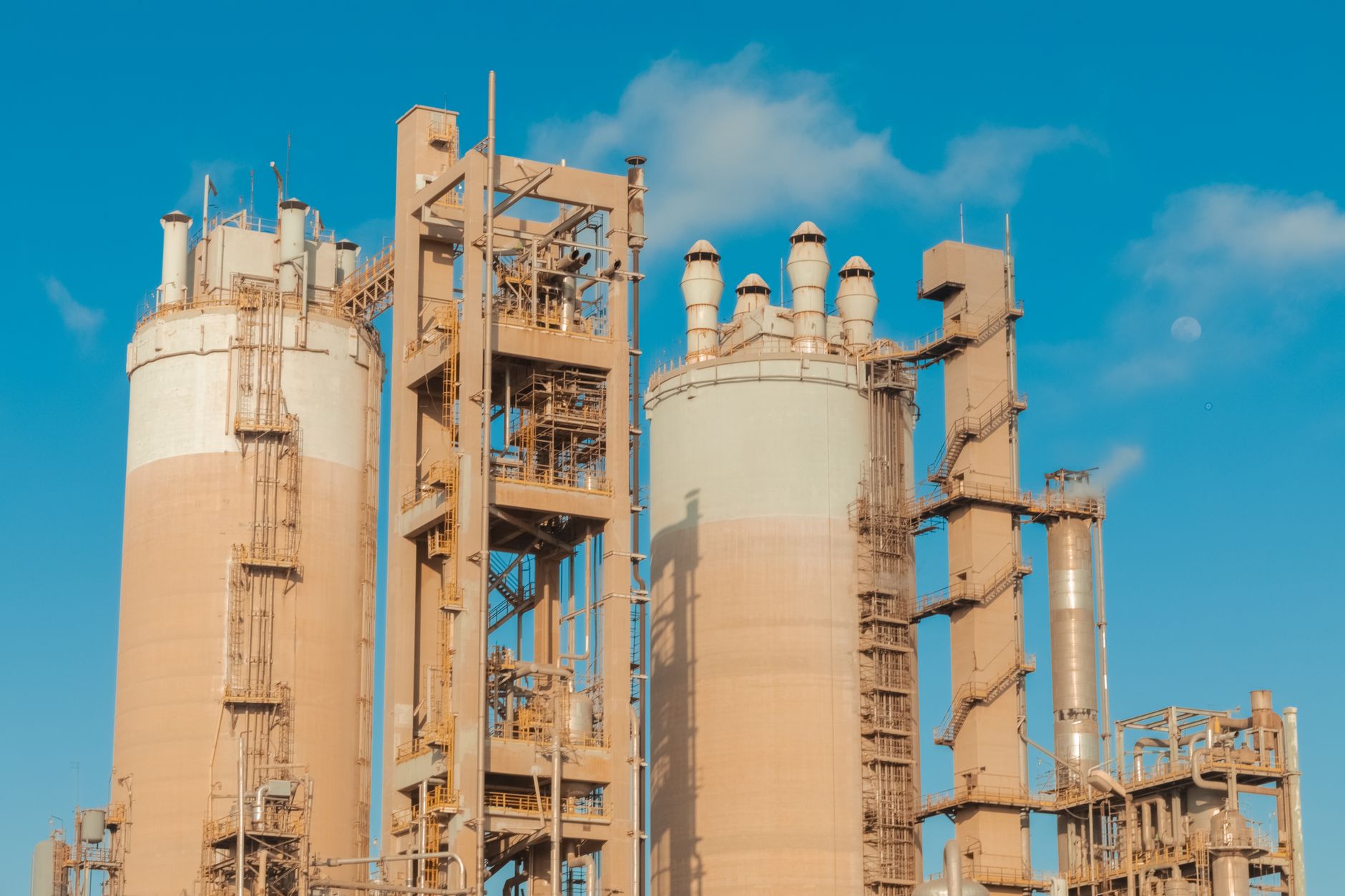
BASF has completed a major modernization of its acid chlorides and chloroformates production operation in Ludwigshafen, Germany, increasing capacity at the site by approximately 30% as the chemical group concentrates investment on production assets it believes can remain competitive in global markets. The company officially inaugurated the renewed facility on September 2, describing the project as a fundamental overhaul of production infrastructure rather than a limited incremental expansion. BASF said the investment was in the low three-digit million-euro range, making it a meaningful commitment to a European manufacturing base that has also been undergoing substantial restructuring and cost reduction.
The plant sits within BASF’s Ludwigshafen Verbund complex, the company’s historic headquarters and one of the world’s largest integrated chemical-production sites. The modernized operation produces acid chlorides and chloroformates, commonly referred to by BASF as the ACCF portfolio. These intermediates are not typically visible to end consumers, but they occupy important positions in industrial supply chains. Customers use them as building blocks in pharmaceuticals, crop-protection products, organic peroxides, coatings, plastics and rubber formulations. Increasing capacity therefore expands BASF’s ability to supply a range of downstream industries rather than exposing the project to a single end market.
BASF said the modernization raises production capacity at Ludwigshafen by around 30%, although it did not disclose the plant’s new standalone nameplate capacity in the September announcement. Earlier information from the company said BASF had combined annual capacity of about 60,000 metric tons for chloroformates, acid chlorides and alkyl chlorides across production facilities in Ludwigshafen and Yeosu, South Korea. The geographic split gives BASF a production footprint in both Europe and Asia and provides customers with two major manufacturing locations serving international demand.
The scale of the project is notable because BASF is not pursuing indiscriminate expansion in Germany. Ludwigshafen has become the center of a broader effort to simplify operations, reduce fixed costs and close or restructure assets that management considers insufficiently competitive. BASF said in July that the proportion of highly competitive production units at Ludwigshafen had risen to 88% from 78% in 2024. At the same time, the company has been reducing employment and implementing a cost-saving program at the site. The ACCF investment therefore represents the other side of that restructuring strategy: capital continues to flow to operations where BASF sees attractive market positions, integrated-site advantages and a path to long-term returns.
That distinction is important for investors assessing BASF’s European asset base. High energy costs, weaker industrial demand during portions of the past several years and intense competition from newer chemical complexes outside Europe have forced major producers to reconsider where incremental capital generates the strongest returns. BASF has responded by reshaping Ludwigshafen while simultaneously ramping up its newer Verbund complex in Zhanjiang, China. The German site is not being abandoned, but management has made clear that individual assets must justify their place within a more disciplined portfolio.
The acid-chloride and chloroformate modernization appears designed to meet that threshold. BASF describes itself as one of the world’s leading suppliers of the products, giving the company an established customer base and existing market position on which to build. The intermediates are required in applications where consistent specifications, dependable supply and manufacturing quality can matter as much as headline commodity pricing. For pharmaceutical and crop-protection customers in particular, supply disruptions involving critical intermediates can ripple through production schedules and qualification processes. BASF has emphasized long-term supply reliability as one of the principal commercial rationales for the investment.
The upgraded plant also gives BASF additional capacity without separating expansion from its decarbonization strategy. Since 2025, the company says its entire Ludwigshafen portfolio of around 25 acid chlorides and chloroformates has been produced using renewable-electricity credits, including electricity associated with upstream raw-material processes covered by its methodology. BASF calculates that the change has reduced the portfolio’s average product carbon footprint by 19% compared with a scenario without those renewable-electricity credits. The company said the calculation includes Scope 1, Scope 2 and certain upstream Scope 3.1 emissions.

The carbon-footprint component has a commercial purpose as well as an environmental one. Chemical companies increasingly face requests from industrial customers for more detailed data on the emissions embedded in purchased materials. For manufacturers attempting to reduce Scope 3 emissions, lower-carbon intermediates can contribute to emissions targets without requiring changes to the customer’s own production equipment or product formulation. BASF said customers can receive the lower-footprint ACCF products without changes to specifications, certifications or ordering procedures, reducing the operational friction that can accompany switching to alternative materials.
That approach is potentially important in specialty and intermediate chemicals, where changing a supplier or product grade may trigger testing, documentation or regulatory requirements. BASF is effectively seeking to offer lower attributed emissions while maintaining the chemical and commercial characteristics of the existing product. The company said its product-carbon-footprint methodology follows ISO 14067:2018 and has undergone a methodology review by TÜV Rheinland. The 19% reduction is calculated against production using electricity without the renewable credits and is based on 2025 production volumes, with comparable levels expected for 2026 under similar volume assumptions.
By combining the renewable-electricity framework with a 30% increase in capacity, BASF is extending the carbon-footprint improvement over a larger potential production volume. That makes the modernization relevant to customers evaluating not only the emissions intensity of a chemical input but also whether sufficient quantities will be available as their businesses grow. In industrial supply chains, sustainability claims can carry limited commercial weight if lower-carbon products cannot be delivered reliably at scale. BASF is positioning the renewed facility as an answer to both requirements.
Mary Kurian, a member of BASF’s board of executive directors, framed the opening as evidence that the company remains willing to invest in competitive and sustainable assets at Ludwigshafen and elsewhere in Europe. Ketan Joshi, president of BASF’s Intermediates division, said the project strengthens the company’s position in acid chlorides and chloroformates while improving its ability to provide consistent quality and supply to customers worldwide. Their comments underscore that BASF views the project primarily as an industrial competitiveness investment, with sustainability improvements functioning alongside capacity and supply security rather than as a standalone objective.
The timing also follows an improvement in BASF’s recent operating performance. In July, the company reported second-quarter 2026 sales of €17.2 billion, up €2.4 billion from the prior-year period, helped by higher prices and volumes. EBITDA before special items increased by €854 million to €2.4 billion. BASF subsequently raised its full-year expectation for EBITDA before special items to between €6.9 billion and €7.7 billion. Chemicals, Materials and Industrial Solutions were among the businesses contributing to stronger underlying earnings, giving BASF somewhat firmer financial conditions as it executes portfolio restructuring and targeted capital projects.
Those improved results do not remove the pressure on Ludwigshafen. BASF recorded substantial special charges in the second quarter related partly to restructuring and the site’s cost-savings program. The company said BASF SE’s full-time-equivalent workforce in Ludwigshafen fell below 30,000 in May 2026 for the first time since 1954. Globally, BASF reported roughly 7,000 fewer positions between January 2024 and the end of June 2026, excluding reductions linked to divestitures and workforce additions related to the Zhanjiang complex. The juxtaposition of workforce reduction and fresh plant investment illustrates how aggressively management is differentiating among assets rather than applying a single expansion or contraction policy across the German site.
For BASF, the economic logic of an integrated Verbund location remains central. Ludwigshafen links production units through networks of raw materials, intermediates, energy and logistics, allowing outputs from one process to serve as inputs elsewhere on the site. A modernized intermediates facility can therefore benefit from infrastructure and supply relationships already embedded within the complex. At the same time, the economics of older plants can deteriorate if energy use, maintenance requirements or operating complexity become too burdensome. Modernization provides one way to preserve the network benefits of an integrated site while replacing infrastructure that may no longer meet contemporary cost, reliability or environmental standards.

The project also broadens the strategic relevance of chemical intermediates at a time when BASF is simplifying its portfolio. The company’s core businesses now include Chemicals, Materials, Industrial Solutions and Nutrition & Care, while other activities are being managed more independently or divested. Intermediates that serve multiple downstream industries can fit naturally within that structure because they connect basic chemical manufacturing with more specialized end markets. The ACCF portfolio’s exposure to pharmaceuticals, agricultural chemicals, coatings, polymers and rubber reduces dependence on a single cyclical demand source, although overall industrial conditions remain important.
Demand conditions across the global chemical sector remain uneven. BASF said in July that it expected global chemical production to expand by 1.8% in 2026, below the 2.4% growth assumption it had previously used. The company simultaneously raised its earnings outlook because its own operating results had improved more strongly than expected. That combination—moderate sector growth alongside better internal performance—reinforces the logic of selective capacity additions rather than broad-based expansion. Projects must be supported by product-specific demand, market position or cost advantages rather than relying solely on a strong global chemical cycle.
For customers, the most immediate effect of the Ludwigshafen project should be increased availability and potentially greater resilience in BASF’s supply network. The company has not disclosed customer commitments, utilization targets or expected incremental revenue from the 30% capacity increase. It also has not provided a specific return-on-investment target for the low three-digit million-euro expenditure. As a result, the financial contribution will depend on market demand, pricing, plant utilization and margins across the portfolio rather than on capacity growth alone.
Investors will therefore be watching whether BASF can translate modernization spending into higher utilization and sustained earnings while continuing to lower the structural cost base of Ludwigshafen. Management’s July disclosure that the share of highly competitive units had risen by 10 percentage points since 2024 provides a benchmark against which additional asset decisions can be evaluated. Further modernization projects would indicate where BASF sees durable European advantages; closures or divestitures would identify areas where those advantages are no longer sufficient.
The ACCF opening is consequently more consequential than its niche product terminology may suggest. It demonstrates how BASF is attempting to rebuild the economics of its flagship German manufacturing complex: eliminate or restructure weaker assets, modernize selected plants, concentrate on businesses with established global positions, improve reliability and reduce the carbon intensity associated with production. Whether that model restores Ludwigshafen’s competitiveness at the pace management wants will depend on energy costs, European industrial demand, global chemical pricing and execution of the broader restructuring program.
For now, the 30% capacity increase provides one concrete example of where BASF is prepared to commit substantial capital in Germany. Rather than treating Europe as a market destined solely for retrenchment, the company is making differentiated investment decisions at the asset level. The modernized Ludwigshafen plant combines higher output with a lower stated product carbon footprint and serves several strategically important downstream markets. That makes it a useful indicator of the type of production BASF intends to retain and strengthen as the company reshapes one of the most important chemical manufacturing sites in Europe.