Andrew Ross Sorkin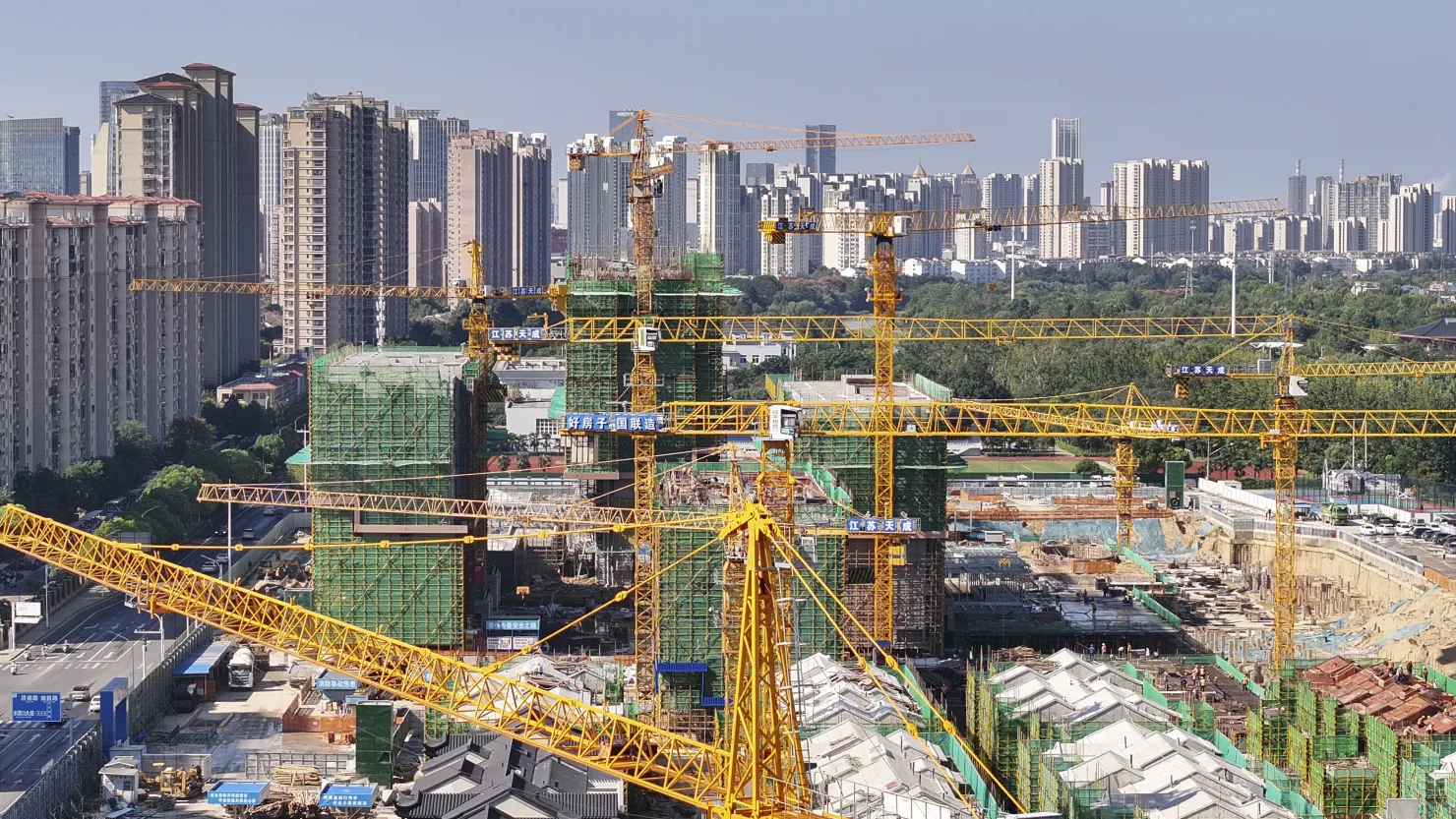
China’s real estate sector, once the backbone of the nation’s economic expansion, is projected to experience another sharp contraction in 2025, according to a new report by S&P Global Ratings. The study reveals that the housing market slump—already dragging on for four consecutive years—will likely extend into a fifth year, signaling that a long-anticipated recovery may still be far off.
A Steeper Fall Than Expected
S&P’s analysts now predict that new home sales will decline by roughly 8% compared to 2024, dropping to an estimated 8.8 to 9 trillion yuan (approximately $1.23 trillion to $1.26 trillion). This represents a far deeper fall than the 3% drop the agency had projected back in May.
At that time, analysts anticipated stronger government intervention to stabilize the property market amid mounting external pressures, such as trade tensions and slowing domestic growth. However, such robust policy support has not materialized as many had hoped.
Edward Chan, a director of corporate ratings at S&P Global Ratings, told CNBC that the downgrade in forecast largely reflects weak buyer confidence:
“Homebuyers’ sentiment remains very fragile. The government will need to maintain consistent support to rebuild confidence and stimulate demand.”
Beijing’s Limited Response
Beijing’s policymakers have repeatedly emphasized the importance of stabilizing the housing market. In September 2024, top leaders called for efforts to “halt the real estate decline.” Yet, according to S&P, the pace of policy easing has slowed notably since then.
One key indicator is the five-year loan prime rate (LPR)—the benchmark rate for most mortgages in China—which has only been reduced by 10 basis points so far this year. This modest cut stands in stark contrast to the 60-basis-point reduction seen in 2024, suggesting a more cautious approach from central authorities despite the ongoing slump.
Some local governments have attempted to revive demand through targeted measures. In August 2025, three of China’s largest cities loosened restrictions to allow buyers to own multiple properties. However, most of these relaxations applied only to less desirable suburban areas, where demand remains limited.
Chan emphasized that any sustained recovery would likely begin in first-tier cities such as Beijing, Shanghai, and Shenzhen.
“If demand stabilizes in higher-tier cities first, it could lay the groundwork for a more durable national rebound,” he said.
Market Recovery Still Out of Reach
The outlook for China’s property market remains grim. S&P estimates that with total sales expected to fall to 9 trillion yuan or less in 2025, the sector will have effectively halved in size from its 2021 peak of 18.2 trillion yuan.
The ratings agency further projects that sales will decline by another 6% to 7% in 2026, while average new home prices are expected to drop between 1.5% and 2.5%.
Confidence Crisis and Oversupply
China’s once-booming real estate market relied heavily on the pre-sale model, where buyers purchased homes before completion. This system functioned smoothly during the boom years but has since become a major source of risk. As financially strained developers struggled to finish projects, construction delays became widespread, shaking consumer trust.
In response, Beijing launched a “whitelist” financing program last year to ensure funding for approved unfinished projects. Despite these efforts, S&P data shows that the total stock of completed but unsold housing continues to rise—reaching 762 million square meters in August 2025, up from 753 million square meters at the end of 2024.
“The government has made considerable efforts to reassure homebuyers that they will eventually receive their apartments,” Chan noted. “The bigger issue now is the overall weakness in nationwide demand.”
Gradual Policy Adjustments Expected
While Beijing appears reluctant to launch a massive stimulus campaign, S&P analysts believe the government will continue to intervene incrementally to prevent a deeper collapse.
August 2025 saw two notable developments: the easing of some home purchase restrictions and a rare public acknowledgment by Premier Li Qiang that the real estate downturn remained unresolved. His comments hinted that further policy adjustments could be on the horizon.
Encouragingly, in September 2025, sales among China’s top 100 developers rose 0.4% year over year, according to S&P’s industry data. Although modest, the uptick suggests that certain stabilization efforts are beginning to gain limited traction.
Toward a Smaller but Stronger Market
As developers navigate one of the toughest periods in modern Chinese housing history, many are shifting focus from rapid expansion to financial survival and restructuring. Several large developers, once fueled by heavy borrowing, have been forced to offload assets, renegotiate debt, or pivot toward more sustainable business models.
S&P’s report concluded on a cautiously optimistic note:
“The end result may be a smaller market, but also a healthier and more resilient sector.”
In the long run, industry analysts believe that such restructuring could benefit China’s broader economy. A leaner, more disciplined property market could redirect capital toward more productive sectors such as technology, manufacturing, and green infrastructure—aligning with Beijing’s long-term vision of “high-quality growth.”
The Road Ahead
Still, challenges persist. The ongoing property downturn weighs heavily on consumer spending, local government revenues, and financial institutions exposed to real estate debt. Restoring confidence will require not only policy support but also visible progress in project completion and employment stability.
In the short term, most experts agree that 2025 will remain a year of adjustment rather than recovery. The path to revival may depend on how decisively policymakers act to restore trust among homebuyers and investors.
For now, China’s real estate sector—once a key driver of its economic miracle—continues to grapple with an uncertain future. But as S&P suggests, if the right balance of policy restraint and targeted intervention is achieved, the downturn may ultimately give rise to a more stable and sustainable housing market in the years ahead.