Andrew Ross Sorkin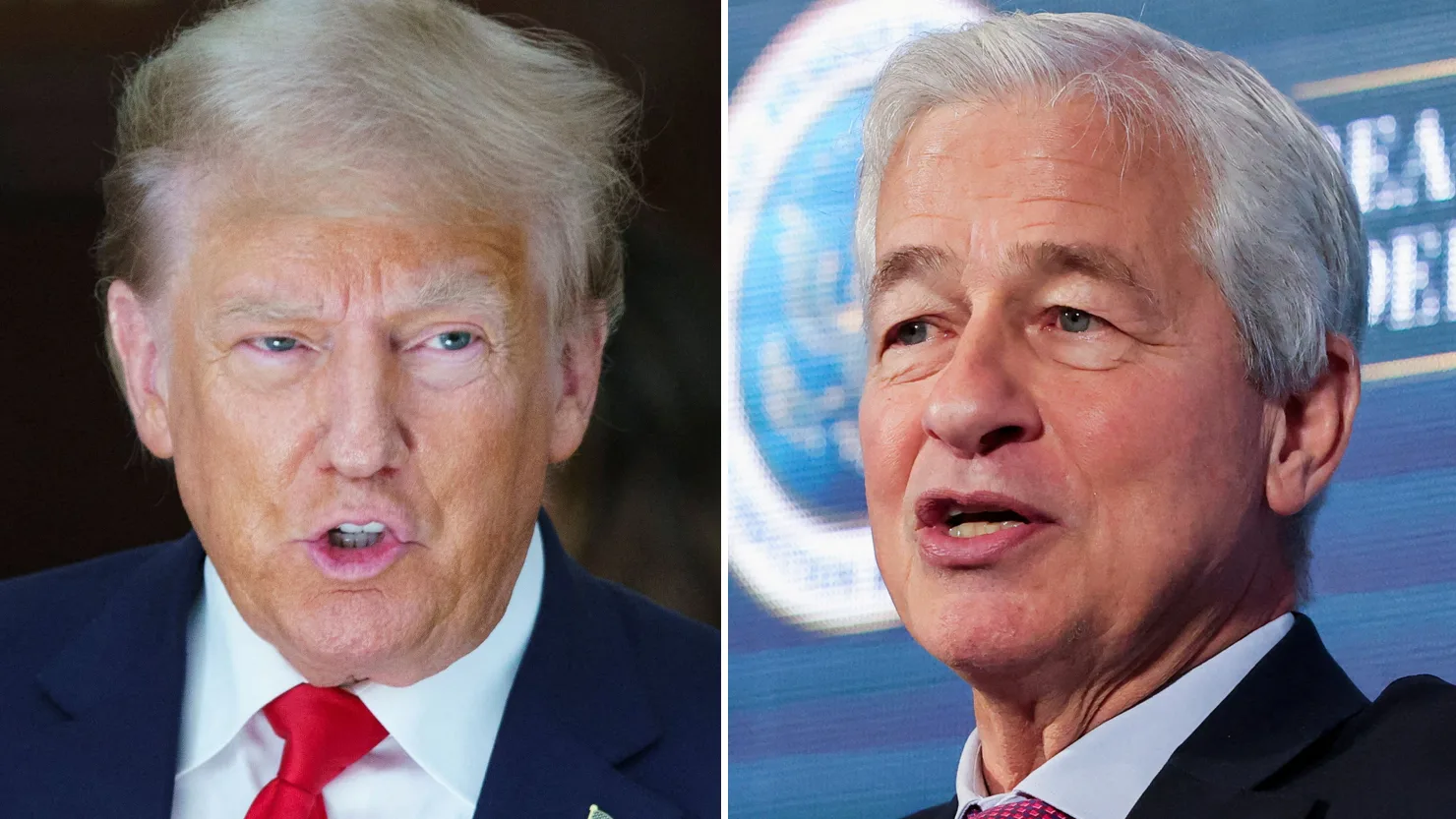
JPMorgan Chase CEO Jamie Dimon said on Monday that President Donald Trump’s $5 billion lawsuit against the bank lacks legal foundation, yet he acknowledged that he understands why Trump feels frustrated about the closure of his accounts.
Trump has accused JPMorgan and other financial institutions of shutting down his accounts for political reasons. His supporters have framed the issue as an example of discrimination against conservative figures, arguing that major banks have unfairly targeted individuals based on ideology rather than financial risk.
Speaking with CNBC’s Leslie Picker during a JPMorgan conference in Miami, Dimon addressed the lawsuit directly. He stated that, in his view, the claims do not hold up legally. At the same time, he expressed empathy toward Trump’s reaction.
According to Dimon, anyone in a similar situation would likely feel upset. He suggested that it is understandable to question why a bank would have the authority to close accounts, especially when the action carries reputational and financial consequences for the customer involved.
Dimon explained that banks do not make such decisions lightly. He argued that financial institutions operate under strict regulatory oversight, and compliance requirements can create significant legal and reputational exposure. In certain situations, banks may determine that maintaining a relationship with a client presents risks that outweigh the benefits.
He emphasized that the current regulatory environment places pressure on lenders to minimize potential threats to their standing with supervisors and regulators. If a client relationship is seen as potentially damaging from a legal or compliance perspective, banks often choose to disengage rather than face scrutiny or penalties.
As Dimon described it, financial institutions are incentivized to reduce uncertainty. When confronted with possible legal or reputational complications, it may appear safer for a bank to end a relationship and allow the client to seek services elsewhere.
Trump filed his lawsuit against Dimon and JPMorgan in January as part of a broader series of legal actions following his return to the White House last year. In addition to JPMorgan, Trump and his affiliated businesses have pursued claims against Capital One over similar debanking allegations. He has also taken legal action against several media organizations over alleged defamation and against the Internal Revenue Service concerning the disclosure of his tax information.
Court documents submitted by JPMorgan indicate that the bank closed numerous accounts connected to Trump in the weeks following the January 6, 2021 attack on the U.S. Capitol. While there is no single statute that explicitly requires banks to terminate relationships based on reputational concerns, the industry operates within a complex web of rules, supervisory expectations, and guidance. Together, these frameworks can make certain clients appear high-risk from a compliance standpoint.
The case places Dimon in a delicate position. As one of the most outspoken and influential leaders in global finance, he must balance defending his institution with navigating the political sensitivities surrounding the president. Trump’s ability to influence markets and public opinion through social media adds another layer of complexity to the situation.
At the same time, the broader financial sector has recently begun to benefit from a regulatory shift under Trump-appointed officials. A deregulatory approach could allow banks to reduce certain capital requirements and potentially increase profitability. This evolving landscape makes high-profile legal disputes between major banks and the president particularly noteworthy.
Dimon suggested that much of the public debate stems from confusion about how banking regulations function. He expressed hope that clearer laws or updated policies could eventually address some of the tensions surrounding debanking practices.
Ultimately, the dispute highlights the intersection of politics, regulation, and corporate risk management. As the legal process unfolds, it may also prompt renewed scrutiny of how financial institutions evaluate reputational risk and how much discretion they should have in deciding whom to serve.