Andrew Ross Sorkin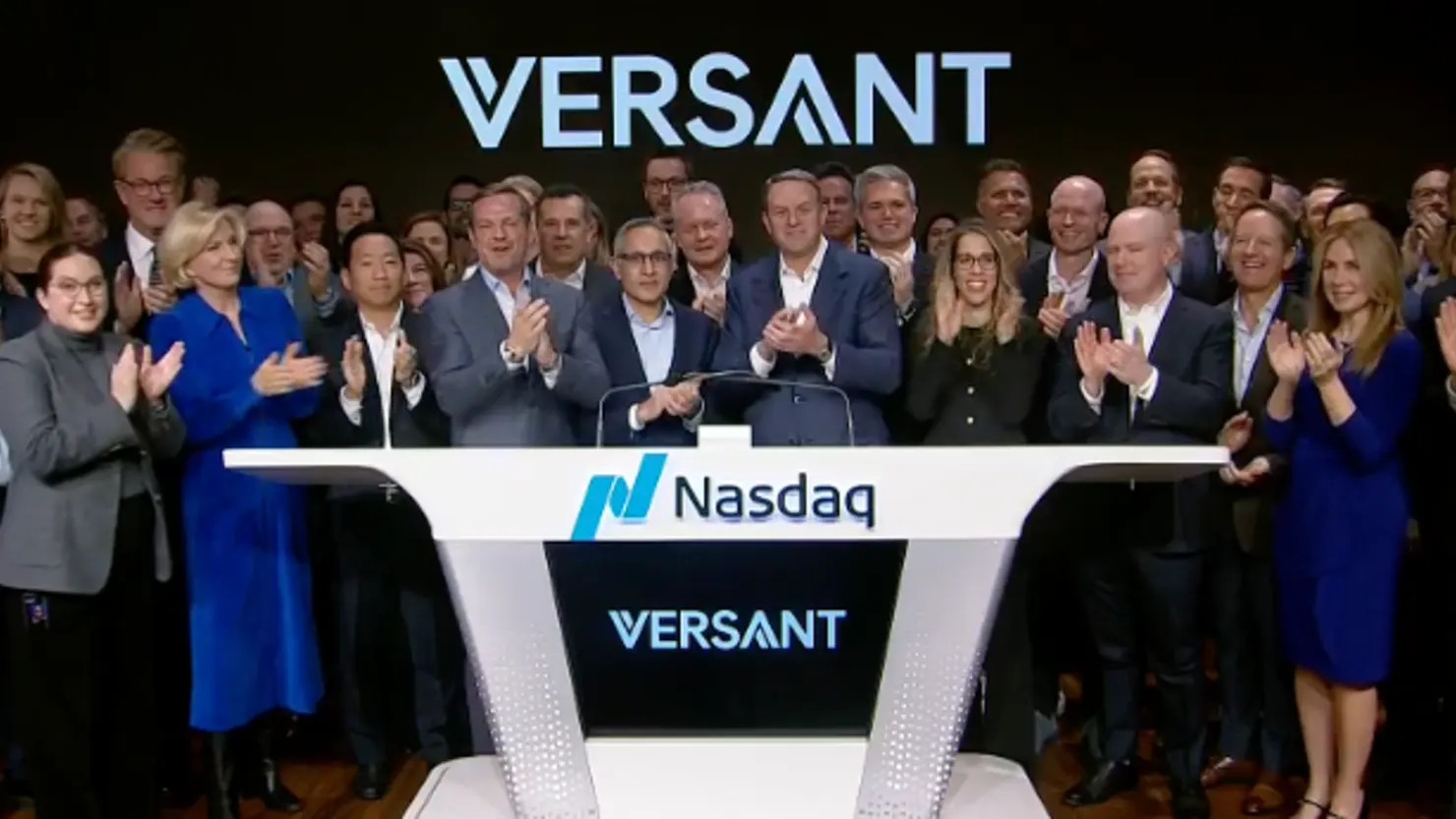
Versant Media Group is set to report its first quarterly earnings as a standalone public company on Tuesday, offering investors their first detailed look at a business built largely around traditional pay television networks.
The company was spun off from Comcast and began trading on the Nasdaq in January, marking one of the most consequential media restructurings in recent years. Versant’s portfolio includes well-known cable brands such as CNBC, MSNBC (recently rebranded in some contexts as MS Now), USA Network, Golf Channel, Syfy, E! and Oxygen. Beyond linear television, the company also controls digital properties including Fandango, Rotten Tomatoes, GolfNow and SportsEngine.
For years, these assets were embedded within Comcast’s NBCUniversal television division, making it difficult for analysts to isolate their individual performance. Now, with Versant standing on its own, Wall Street will gain greater transparency into how these networks and digital platforms are performing in a media landscape increasingly defined by streaming.
Financial disclosures filed with the Securities and Exchange Commission ahead of the spin-off revealed that Versant’s revenue has been trending downward. The company reported $7.1 billion in revenue for 2024, compared with $7.4 billion in 2023 and $7.8 billion in 2022. While still substantial, the steady decline underscores the structural pressures facing traditional pay TV.
Investor sentiment has reflected those concerns. Since its January debut, Versant shares have fallen roughly 25%, weighed down in part by technical selling tied to the separation from Comcast. The company’s market capitalization now sits at approximately $4.8 billion.
A pure-play bet on cable
In today’s market, it is unusual to see a media company focused primarily on cable networks enter the public markets. Streaming-first businesses have captured most of the investor attention in recent years. One recent exception was Newsmax, which began trading on the New York Stock Exchange last year. Its stock initially surged before retreating sharply, highlighting the volatility investors associate with linear television businesses.
Versant generates more than 80% of its revenue from traditional pay TV distribution fees. Although this segment remains profitable, it has been under sustained pressure as consumers cancel cable subscriptions in favor of streaming services. Cord-cutting has transformed what was once the media industry’s most reliable cash engine into a maturing, and in some cases shrinking, revenue stream.
At the company’s December investor day, CEO Mark Lazarus emphasized the strength of Versant’s live programming, noting that 62% of its audience comes from sports and news. He argued that these categories remain resilient because they are often consumed in real time, making them less susceptible to on-demand substitution.
Analysts at Raymond James have pointed out that Versant’s portfolio contains fewer low-performing general entertainment channels compared with some peers. While the company does not own top-tier sports rights such as the NFL, NBA or major college football packages, it holds valuable assets including significant golf coverage, WWE programming and NASCAR events. Combined with its news brands like CNBC and MSNBC, this mix supports the company’s leverage in negotiations with distributors.
Carriage agreements provide breathing room
Before the spin-off was completed, NBCUniversal secured multiyear carriage agreements with major distributors including Charter Communications and YouTube TV. Importantly, these agreements continue to cover Versant’s networks for at least two years following the separation. In an era when carriage disputes frequently lead to temporary channel blackouts, this contractual cushion offers a degree of stability.
During the investor presentation, Chief Operating Officer and Chief Financial Officer Anand Kini stressed that more than half of Versant’s pay TV subscribers are covered by agreements extending through 2028 or later. Many of the company’s sports rights contracts stretch beyond 2030. According to management, this long-term visibility provides predictability for both revenue and strategic planning.
Nevertheless, the company will soon face its first independent test at the bargaining table. Two distribution agreements are reportedly up for renewal this year. Although sports and news channels traditionally command stronger negotiating positions, recent years have shown that even networks with premium sports rights, including NFL coverage, are not immune to blackouts during disputes.
Signs of stabilization — and a pivot
Despite the relentless narrative around cord-cutting, there have been tentative signs that the traditional TV bundle may be stabilizing. Charter recently reported a quarterly increase in cable subscribers for the first time since 2020. Other distributors, including Comcast, continue to lose customers but at a slower pace than in previous quarters. Some analysts interpret this deceleration as a possible bottoming process for the industry.
Even so, Versant’s leadership has acknowledged that its future cannot rely solely on linear television. Management has described 2026 as the beginning of a broader business model transition. The company plans to invest more heavily in direct-to-consumer offerings, expand its ad-supported streaming footprint and strengthen digital and transactional businesses.
Over the long term, executives envision a revenue mix evenly split between traditional pay TV and a combination of digital platforms, subscriptions, advertising-supported streaming and transactional services. Achieving that balance would mark a significant shift from the company’s current profile.
Strategic acquisitions form part of this transformation. Versant has announced the purchase of Free TV Networks, which operates free over-the-air digital broadcast channels, as well as Indy Cinema Group, a cloud-based cinema operating system that has been integrated into Fandango. Notably, management has indicated that acquiring additional linear TV networks is not a priority. Instead, the focus is on expanding digital capabilities and diversified revenue streams.

A broader industry backdrop
Versant’s spin-off reflects a wider trend in the media sector. Comcast separated these assets in part to distance its core business from the headwinds affecting cable networks. Similarly, Warner Bros. Discovery recently announced plans to separate its television networks from its streaming operations, although it later entered into an agreement with Paramount Skydance to sell the company in its entirety.
This context underscores the strategic crossroads facing legacy media companies. Linear television still produces meaningful cash flow, but long-term growth increasingly depends on digital distribution and direct consumer relationships.
Analysts covering Versant have highlighted the company’s strengths, including solid free cash flow, a portfolio weighted toward sports and news, and relatively modest debt levels. At the same time, firms such as Goldman Sachs have adopted a cautious stance, maintaining neutral ratings due to the structural challenges facing the linear networks business, even as they acknowledge progress in digital platform development.
As Versant prepares to deliver its inaugural earnings report, the key question is whether investors are willing to look beyond near-term cable headwinds and give management time to execute its transformation strategy. The results will not only shed light on the company’s financial health but may also serve as a referendum on Wall Street’s appetite for a modernized, yet still cable-heavy, media enterprise.