Andrew Ross Sorkin
The International Monetary Fund’s latest global forecast delivers a clear message to markets and governments alike: the post-shock recovery that many policymakers expected for 2026 is no longer the central story. In its April 2026 World Economic Outlook, the fund lowered its projection for global growth this year to 3.1%, citing a new round of disruptions tied to conflict in the Middle East, firmer energy prices, tighter financial conditions, and renewed trade tensions. The number, by itself, does not signal collapse. But it does indicate a broad loss of momentum at a moment when growth was already expected to remain below pre-pandemic norms.
The significance of the downgrade lies not only in the headline growth rate but also in the architecture of risks sitting behind it. The IMF’s baseline assumes the current geopolitical conflict remains limited in duration and scope. Even under that relatively restrained scenario, the fund expects inflation to tick higher in 2026, disinflation to slow, and financial conditions to remain more restrictive than many borrowers had anticipated at the start of the year. It also emphasizes that the burden is not evenly distributed. Emerging market and developing economies, particularly commodity importers with preexisting fiscal and external vulnerabilities, face a more severe squeeze than the global aggregates suggest.
That point matters because global growth downgrades are often discussed as if they were symmetrical. They are not. When the IMF lowers the world forecast, the market reaction can initially center on large economies, major central banks, and benchmark government bonds. But the transmission of the shock is frequently sharper in countries with weaker currencies, larger import bills, thinner reserve cushions, and more fragile public finances. In the current episode, the mix of higher goods and transport costs, tighter funding conditions, and risk-averse capital flows creates exactly that kind of asymmetry.
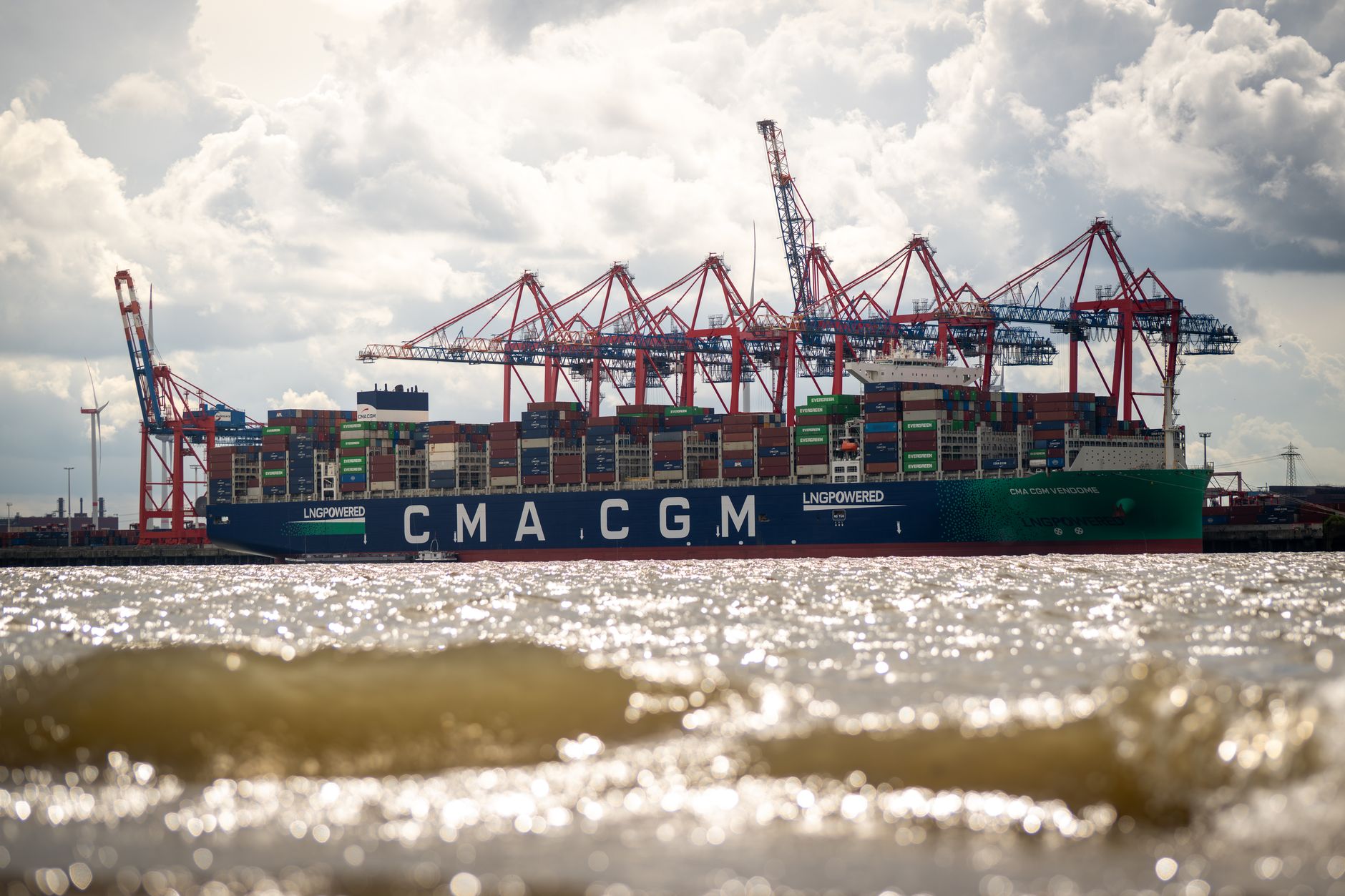
The trade channel is an important part of the story. The fund’s warning arrives against a backdrop of renewed trade friction and a broader geopolitical turn toward fragmentation, strategic autonomy, and supply-chain defensiveness. In earlier downturns, weaker growth sometimes brought an offset through cheaper energy, looser trade conditions, or easier financial markets. This time, those offsets are less reliable. Trade tensions are limiting the efficiency gains from cross-border integration, while conflict-driven commodity shocks are raising costs instead of relieving them. That combination is especially problematic for economies that import both energy and capital.
The inflation profile reinforces the challenge. The IMF said global headline inflation is projected to rise to 4.4% in 2026 before resuming its decline in 2027. That means central banks are unlikely to view the growth downgrade as a simple reason to pivot abruptly toward aggressive easing. The macro trade-off is more complex. Growth is slowing, but the inflation impulse from energy and supply disruptions has not disappeared. For rate-setters, that environment raises the risk of policy hesitation: easing too quickly could validate higher inflation expectations, while staying tight for too long could deepen the growth slowdown and intensify debt-servicing pressure.
The fund’s messaging around scenarios makes the warning more urgent than the baseline alone would imply. IMF officials said their reference forecast already assumes a moderate energy shock, but they also described the global economy as drifting toward a more adverse outcome. In that scenario, 2026 growth would slow to 2.5% and inflation would rise materially further. A severe case, tied to prolonged energy supply disruption and broader macro instability, would push growth even lower. For investors, the practical implication is that the baseline may be less informative than usual if the geopolitical situation continues to evolve faster than official forecasts can be updated.
That gap between formal baseline and moving real-world conditions became one of the most striking features of the IMF-World Bank Spring Meetings. Even as the IMF published a reference case built on limited conflict, policymakers and market participants were already debating whether that assumption had become too optimistic. Such a disconnect matters because governments build budgets, debt-management strategies, and policy communications around baseline forecasts. If those baselines age quickly, fiscal and monetary settings can become misaligned with the actual environment in which households and companies are operating.

Debt is the second major pressure point, and arguably the one that makes this downgrade more consequential than a routine cyclical adjustment. In its April 2026 Fiscal Monitor, the IMF said global public debt rose to just under 94% of GDP in 2025 and is on course to reach 100% by 2029, one year earlier than previously projected. That is not just a statistic about long-term sustainability. It is a warning that governments are entering a more volatile growth phase with fewer shock absorbers than they had in the past. Interest burdens are rising, spending demands are broadening, and the political tolerance for fiscal tightening is uneven at best.
The composition of those spending pressures is notable. Governments face demands to preserve social support, finance defense commitments, accelerate energy security investments, and in some jurisdictions subsidize households or industries hit by price shocks. None of those pressures disappears because growth slows. In fact, they often intensify when growth underperforms. That creates a policy trap: the weaker the economy becomes, the harder it can be to implement the fiscal consolidation needed to preserve market confidence. The IMF’s concern is not only that debt levels are high, but that the credibility of adjustment plans may weaken just when investors are becoming less forgiving.
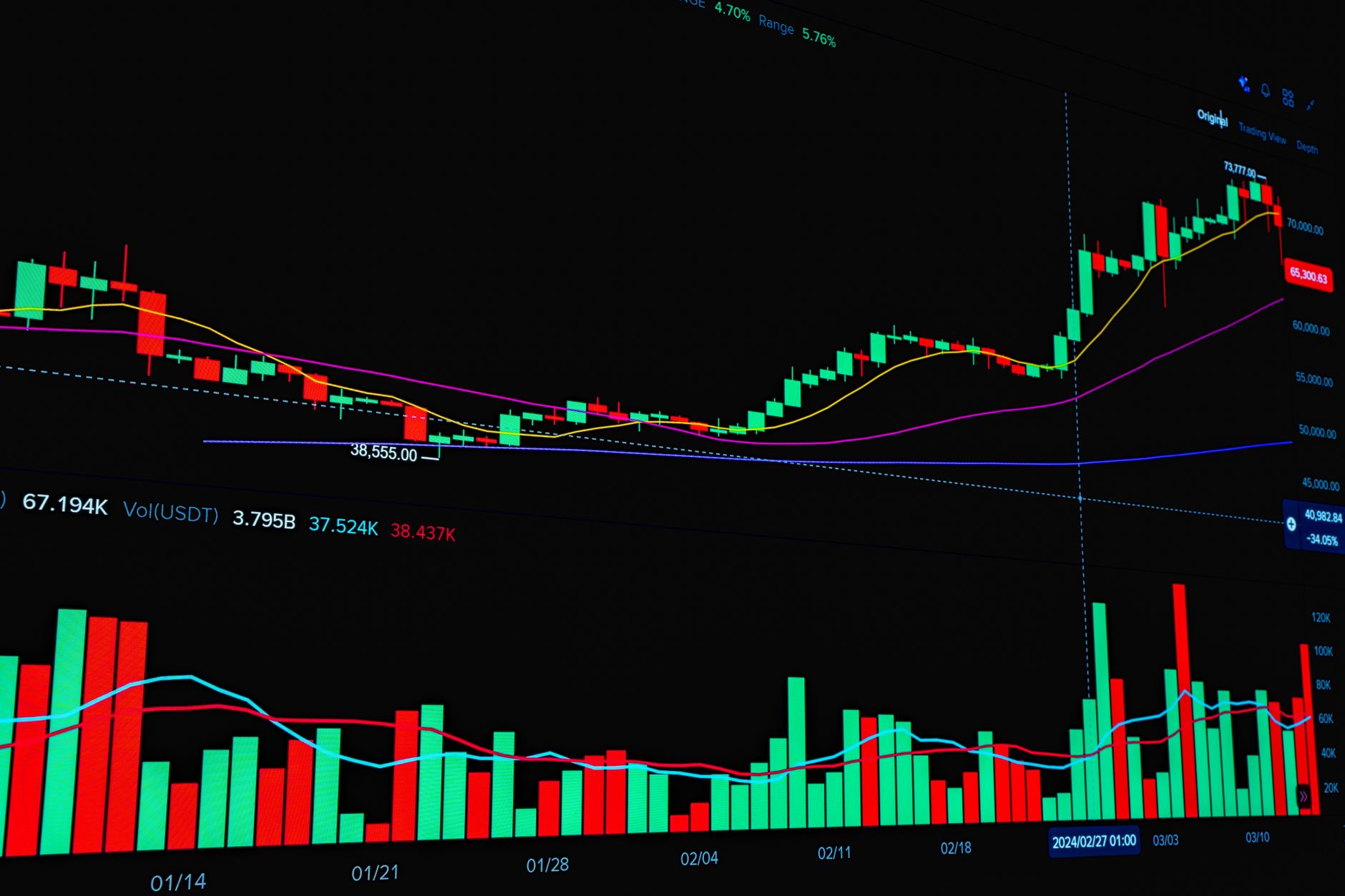
Financial conditions tie the growth and debt stories together. Higher debt ratios are easier to manage when inflation is falling cleanly, liquidity is ample, and sovereign bond markets are functioning smoothly. The IMF is warning that those conditions can no longer be taken for granted. The fund has pointed to vulnerability from repricing in sovereign debt markets, the growing role of leveraged nonbank intermediaries, and a diminished safety premium around U.S. Treasuries. Those developments raise the possibility that a geopolitical or inflation shock could trigger sharper movements in yields, funding spreads, and exchange rates than headline growth numbers alone would suggest.
For advanced economies, that raises difficult sequencing questions. Many still retain deeper capital markets and broader policy credibility than emerging peers, but they are not insulated from the arithmetic of slower growth and higher borrowing costs. The IMF’s analysis implies that countries with aging populations, substantial entitlement commitments, or high refinancing needs may find it harder to absorb additional security and industrial-policy spending without testing market tolerance. The issue is not immediate insolvency. It is whether medium-term fiscal promises remain believable when politics becomes more fragmented and the growth denominator becomes less supportive.
In Europe, those strains are already feeding into official planning. Italy moved this week to cut its domestic growth forecasts as higher energy prices and geopolitical instability weighed on the outlook, while public-finance constraints remained prominent. The country-specific move is not the IMF story in itself, but it illustrates how the fund’s global diagnosis is being translated into national budget assumptions. When major governments lower growth expectations, revenue forecasts soften, debt ratios become harder to stabilize, and room for discretionary support narrows. The same pattern is likely to play out across other import-dependent economies facing more expensive energy and weaker external demand.
Emerging economies may feel the pressure sooner. The IMF has already lowered its 2026 growth forecast for emerging market and developing economies, underscoring the vulnerability of countries that must simultaneously absorb higher import costs, defend currencies, and refinance debt in a less accommodating market. For many of them, the macro menu is unappealing. Currency depreciation can cushion external demand but worsen imported inflation. Higher interest rates can support stability but suppress domestic activity. Fiscal support can soften the blow to consumers but weaken already-stretched debt trajectories. The result is a narrower policy corridor than the headline global forecast alone would imply.

Trade tensions deepen that vulnerability because they attack one of the few engines that could otherwise help offset weaker domestic demand. If cross-border commerce becomes more politicized and less efficient, exporters face not only softer growth abroad but also more barriers, more uncertainty, and more costly supply chains. The IMF’s language on fragmentation is therefore central rather than incidental. It suggests the fund no longer sees trade friction as a secondary downside risk, but as part of the main mechanism through which global growth is being downgraded and debt sustainability is being tested.
There is still a path to a better outcome. The IMF notes that faster-than-expected productivity gains from artificial intelligence or a durable easing in trade tensions could lift activity above the current baseline. But those are conditional upsides, not dominant forces. The current policy burden falls on more conventional measures: preserving central-bank credibility, restoring fiscal buffers where possible, improving debt management, and reinforcing international cooperation at a time when geopolitical incentives are pulling in the opposite direction. None of those steps produces immediate relief, but together they can reduce the risk that a growth slowdown becomes a broader financial accident.
For business leaders, the practical takeaway is that 2026 is increasingly defined by resilience rather than acceleration. Capital allocation decisions will need to account for the possibility of higher-for-longer energy costs, delayed rate relief, more volatile financing conditions, and weaker end-market demand in trade-sensitive sectors. Multinationals with geographically diversified production may be better positioned than those with concentrated supply chains, while firms with strong balance sheets may find opportunities as weaker competitors retrench. But the overarching environment is one in which forecasting confidence is lower and policy error carries a higher cost.
For markets, the IMF’s downgrade does not necessarily imply an immediate synchronized selloff. Growth of 3.1% is still growth, and investors have shown repeatedly that they can tolerate slower expansion if earnings, liquidity, and policy signaling remain manageable. The concern is that the balance of risks has shifted in a way that makes tail outcomes more plausible. A world of slower growth, stickier inflation, and higher public debt is not simply a softer version of the old cycle. It is a more brittle one. That, more than the downgrade itself, is why the IMF’s April warning deserves close attention.
By putting trade tensions, energy shocks, and debt fragility into the same analytical frame, the fund has moved the policy conversation beyond routine forecast revision. The question is no longer whether global growth is slowing. It is whether governments can maintain financial credibility and social stability while navigating a lower-growth, higher-risk environment with less policy space than before. On that question, the IMF’s answer is cautious at best. The baseline still points to expansion, but the margin separating slowdown from something more disruptive is becoming uncomfortably thin.