Andrew Ross Sorkin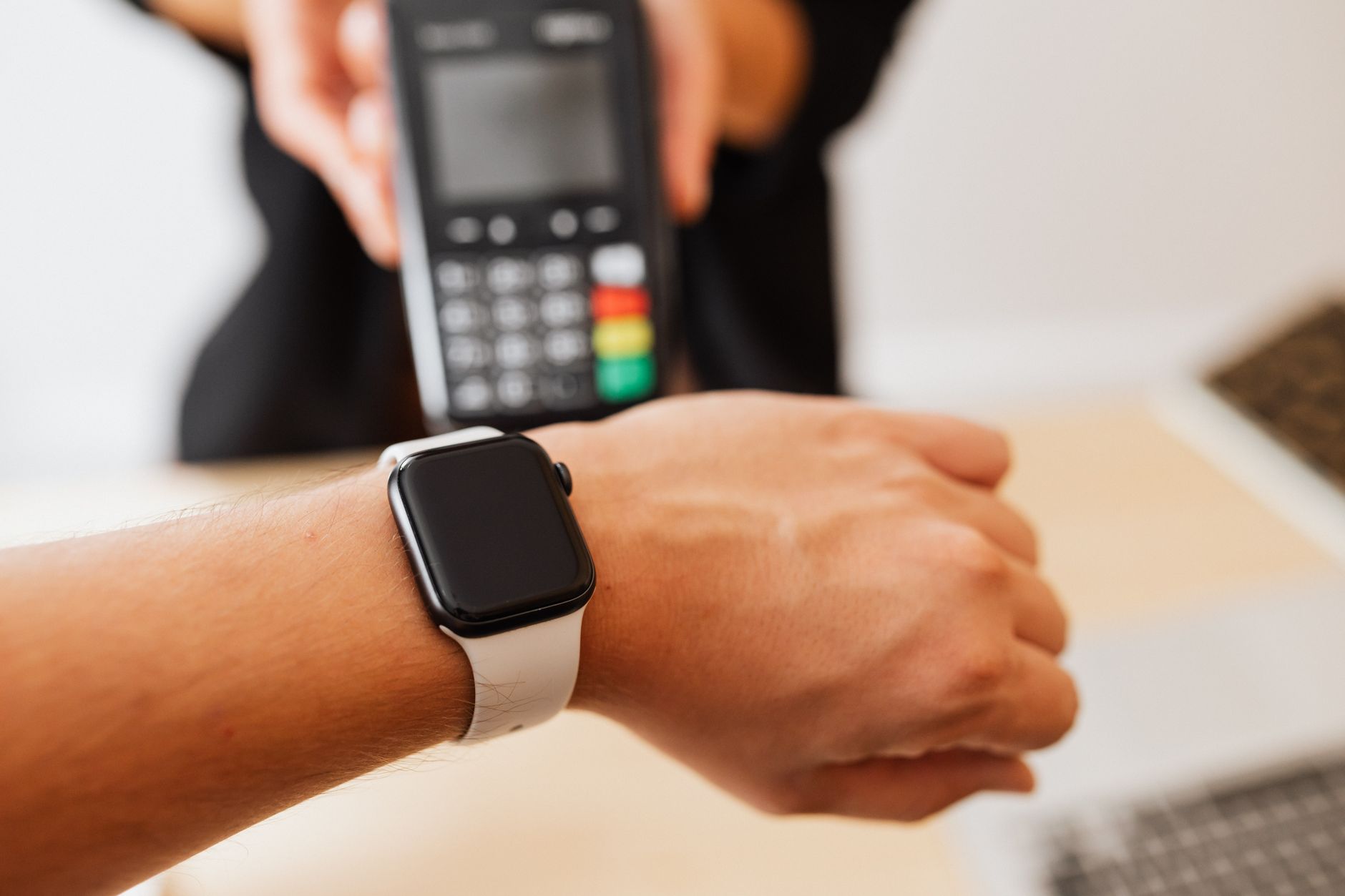
Cash App and Afterpay are expanding buy now, pay later access to eligible Cash App Card customers, bringing installment payment functionality to purchases made where Visa is accepted and advancing Block’s effort to turn Cash App into a broader consumer finance platform.
The company said on June 2 that Afterpay on Cash App Card is now generally available, following a pilot that introduced a Visa Debit Flex Card and allowed customers to activate pay-over-time functionality inside Cash App before completing qualifying purchases. The launch brings BNPL into a card-based payment flow rather than limiting installment financing to a participating merchant’s checkout page, extending the product’s utility across a far wider set of spending occasions.
Under the model described by Cash App, eligible customers can use the Cash App Card and access Afterpay functionality for eligible purchases, while managing repayment through the Cash App ecosystem. The company framed the launch as a response to a workforce increasingly defined by variable income, gig work, irregular pay schedules and demand for flexible short-term liquidity. For Block, the launch is also a commercial milestone in the integration of Cash App and Afterpay, two of its most visible consumer fintech brands.
The product matters because it shifts BNPL from a retailer-specific payment option into a more portable card-linked feature. Traditional BNPL products have typically appeared at checkout with a merchant that has integrated a provider such as Afterpay, Klarna, Affirm or PayPal. A card-based model changes the distribution point: the consumer can carry the financing option through the wallet and card relationship, while the merchant can still accept payment through existing Visa rails.
That structure gives Block a way to scale BNPL without requiring each use case to depend on a direct merchant integration. It also puts Cash App deeper into the user’s daily spending flow. Cash App already offers peer-to-peer transfers, direct deposit, a debit card, savings features, stock trading and bitcoin services. By adding broad BNPL access through the Cash App Card, Block is seeking to make credit flexibility part of the same interface customers use to receive wages, send money, spend balances and manage recurring financial activity.
The June 2 announcement follows an earlier November 2025 pilot in which Cash App and Afterpay said eligible customers would be able to order a Visa Debit Flex Card with standard Cash App Card features plus the option to activate Afterpay in-app. At the time, the company said the pilot would begin in the following months, with a broader rollout planned for early 2026. The general availability announcement indicates that the pilot has moved into a wider commercial phase.
Cash App described the launch as extending Afterpay on Cash App Card to all eligible Cash App Card customers across Cash App’s 59 million monthly transacting actives. That scale is important for the competitive landscape. Few BNPL providers have direct access to a consumer wallet with tens of millions of active users and a debit card already tied to spending behavior. For Block, the Cash App base provides both distribution and data, while Afterpay provides a mature installment product and merchant-brand recognition.
The expansion also reflects a broader shift in fintech product design. BNPL began as an e-commerce conversion tool: merchants paid for access to consumers who might spend more or complete purchases more frequently when offered installment plans. The current phase is more account-centric. Fintech companies, card networks and banks are embedding installment options into wallets, debit products, credit card interfaces and transaction histories, allowing customers to convert purchases into repayment plans before, during or after a transaction.
Cash App has been moving in that direction for more than a year. In 2025, it began rolling out Afterpay pay-over-time access inside Cash App for merchant checkout. In April 2026, Cash App announced a pay-over-time feature for peer-to-peer transfers, allowing eligible customers to convert recent P2P payments into short-term installment plans. The latest launch extends that strategy into card spending, where the addressable payment universe is far broader than a closed merchant network.

For consumers, the core appeal is predictability and short-term budget management. BNPL products usually promise fixed installments, transparent repayment schedules and, in many cases, no interest if payments are made on time. Cash App’s messaging emphasizes no hidden fees and flexibility for users whose income may not arrive on a fixed schedule. That pitch is aimed at consumers who may not want to revolve a credit card balance or may not qualify for traditional credit products on attractive terms.
For Block, the economics are more strategic. BNPL can increase engagement, transaction frequency and the value of Cash App’s financial services ecosystem. The more functions users manage through Cash App, the more Block can deepen the account relationship and improve monetization across deposits, spending, lending, merchant acceptance and consumer offers. The product also helps Block position Cash App as an alternative to a bank account and credit card bundle, especially for younger and digitally native consumers.
The timing is notable because Block has recently emphasized Cash App as a major growth engine. In May, the company raised its annual gross profit outlook after first-quarter results showed strong Cash App performance. Reuters reported that Cash App gross profit rose 38% year over year in the quarter and that consumer lending origination volume increased sharply, supported by products such as Cash App Borrow. The Afterpay card rollout adds another product to that lending and financial flexibility portfolio.
BNPL expansion, however, also brings risk management questions. Card-linked installment products depend on underwriting, repayment behavior, chargeback handling, disclosures and controls around repeated borrowing. Providers must balance convenience with the possibility that customers stack multiple obligations across lenders or use installment products for everyday spending that would otherwise be constrained by available cash. The more portable BNPL becomes, the more it resembles a general-purpose credit tool rather than a checkout feature attached to a specific purchase category.
Regulatory scrutiny remains part of the sector backdrop. The Consumer Financial Protection Bureau in 2024 issued an interpretive rule that would have treated certain BNPL lenders as card issuers for purposes of some federal credit protections, including dispute and refund obligations. In 2025, the CFPB withdrew that interpretive rule and later said it did not intend to reissue it, citing procedural defects and the fit between open-end credit regulations and closed-end BNPL loans. Even with that withdrawal, BNPL remains a live policy issue because of its growth, opacity in credit reporting and potential consumer debt accumulation.
Cash App and Afterpay’s rollout therefore lands in a market with both commercial momentum and unresolved policy debate. BNPL providers argue that installment products can be more transparent than revolving credit cards because repayment schedules are fixed and interest is often avoided. Critics argue that consumers can underestimate the cumulative burden of multiple short-term plans, particularly when the loans are not consistently reported to credit bureaus or visible to other lenders assessing affordability.
Block has an additional differentiator: it can underwrite using behavior across its own ecosystem. Cash App balance activity, card use, repayment histories and other account signals may help the company evaluate eligibility without relying only on traditional credit bureau data. That can expand access for customers with thin credit files, but it also raises questions about transparency, model governance and how consumers understand the internal criteria used to approve or limit pay-over-time access.
The Visa acceptance element is central to the product’s significance. Visa’s network gives the Cash App Card broad merchant reach, while the financing decision sits in the Cash App and Afterpay layer. That separation could make the product easier to deploy at scale because merchants do not need to redesign checkout flows to present Afterpay as a branded tender option. From the consumer’s perspective, the card becomes the access point. From Block’s perspective, the wallet becomes the control center.

The approach also illustrates how card networks are adapting to fintech-led credit innovation. Rather than being displaced by wallet-native financing, Visa rails can become the acceptance infrastructure for new forms of payment choice. For networks, this preserves transaction relevance. For fintechs, it provides reach. For merchants, it may reduce integration complexity, though transaction economics and customer experience will still depend on how the payment is routed, authorized and serviced.
Competition in this area is intensifying. Affirm has expanded card-linked installment products, PayPal continues to offer pay-later services across its wallet and checkout network, Klarna has been broadening its consumer app and card strategy, and major card issuers offer installment plans on eligible credit card purchases. Cash App’s advantage is its direct relationship with consumers who already use the app for money movement and debit spending. Its challenge is to prove that BNPL can scale responsibly while maintaining repayment quality and avoiding excessive losses.
Merchant implications are more nuanced. A broader Cash App Card BNPL product could bring installment-funded purchasing into stores and online environments that do not have Afterpay directly embedded. That may support conversion for consumers who would otherwise delay spending. But it may also make the BNPL provider less dependent on merchant-specific partnerships, potentially shifting some of the sector’s economics from merchant acquisition toward consumer account ownership and card-linked engagement.
For the digital banking sector, the rollout reinforces a broader convergence between payments, deposits and credit. Neobanks and wallet providers increasingly compete not only on low-cost accounts or simple transfers, but on the ability to provide liquidity at the point of need. Cash App’s expansion of Afterpay to Visa-accepted purchases is a clear example of that trend: the payment credential, the account interface and the credit decision are being packaged into one mobile experience.
The launch also shows why Block’s acquisition of Afterpay remains strategically relevant several years after the deal closed. The acquisition gave Block a consumer credit brand, repayment infrastructure and merchant-side BNPL experience. Cash App supplied distribution, engagement and account-level data. The June 2 general availability announcement is one of the most concrete examples of those assets being combined into a product that neither brand could have delivered as easily alone.
Execution will now be the central test. Block must drive adoption among eligible Cash App Card customers, manage approvals conservatively enough to protect credit performance, and communicate repayment terms clearly enough to avoid consumer confusion. It must also maintain trust with regulators and merchants as BNPL moves further into everyday payments. The company’s public messaging emphasizes transparency and flexibility, but the product’s long-term performance will depend on repayment behavior and user satisfaction, not only activation rates.
The fintech market will watch whether broad card-linked BNPL becomes a durable category or a transitional feature that converges into mainstream debit and credit card installment offerings. Cash App and Afterpay are betting that customers want the flexibility of installment finance without the perceived complexity or cost of traditional credit cards. If the model gains traction, it could accelerate the migration of BNPL from a checkout button into a default feature of consumer money apps.
For now, the announcement gives Block a fresh product catalyst in a competitive but still expanding consumer finance segment. It extends Afterpay’s reach, strengthens Cash App Card’s value proposition and aligns with Block’s broader effort to make Cash App a primary financial hub for customers outside conventional banking relationships. The launch is therefore not just an incremental BNPL feature; it is a step toward embedding short-term credit directly into the everyday payment infrastructure of a major U.S. fintech platform.