Andrew Ross Sorkin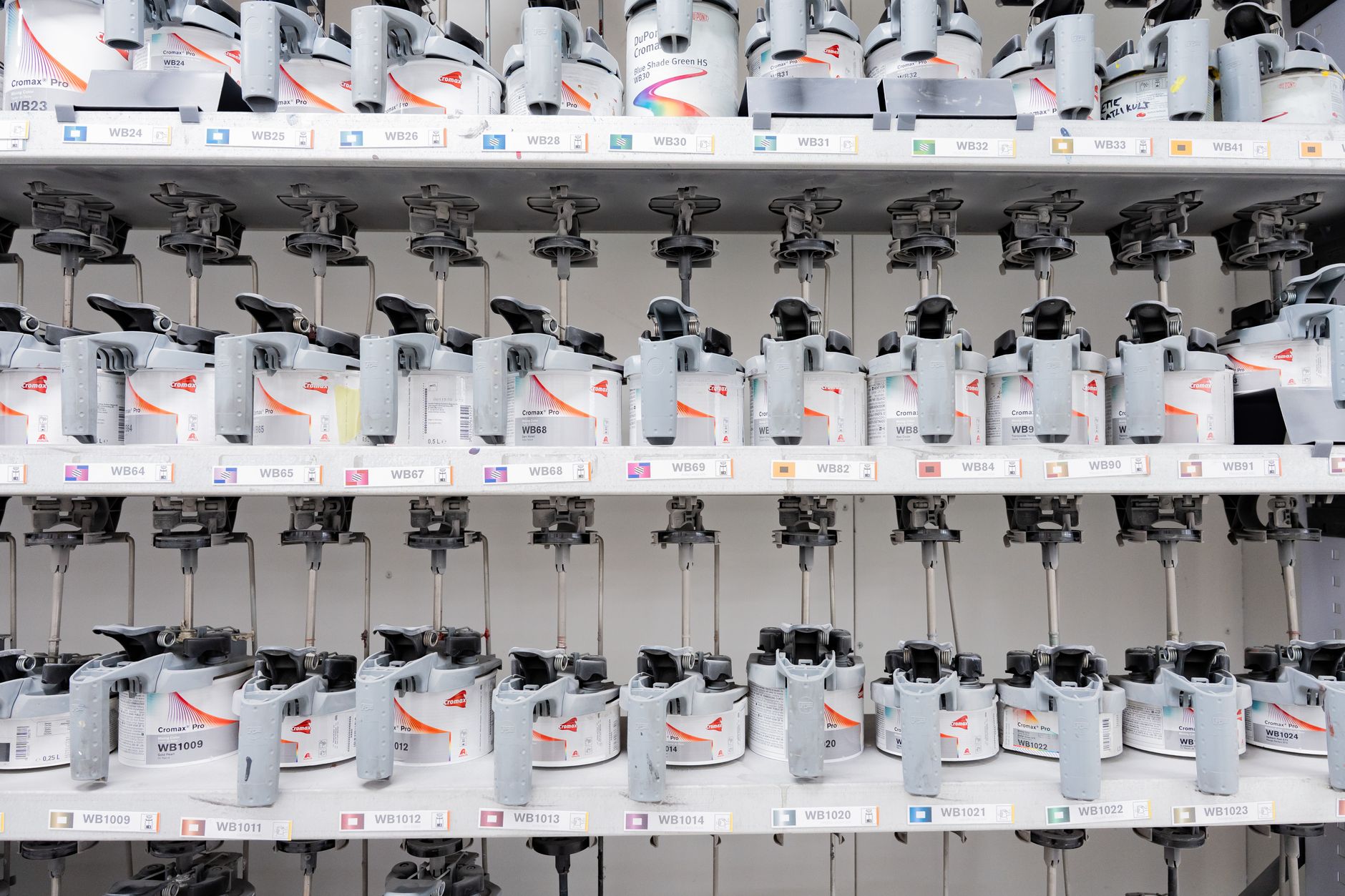
PHILADELPHIA — Axalta Coating Systems Ltd. reported record second-quarter adjusted EBITDA and adjusted earnings per share on Tuesday, delivering a stronger operational performance shortly before shareholders vote on its proposed merger of equals with Dutch paints and coatings group AkzoNobel. The Philadelphia-based company said net sales for the three months ended June 30 increased by $41 million, or 3%, to $1.346 billion. Adjusted EBITDA rose 5% to $305 million, establishing a quarterly record, while the corresponding margin expanded to 22.7% from 22.4% a year earlier.
The earnings release places Axalta’s financial execution directly alongside the strategic decision facing investors. Axalta’s special shareholder meeting is scheduled for August 5 at 9 a.m. Eastern time, while AkzoNobel will hold its extraordinary general meeting in Amsterdam later that day. Approval from both shareholder groups is among the principal remaining conditions for the all-share transaction, which the companies expect to complete near the end of 2026 or at the beginning of 2027, subject to regulatory clearances and other closing requirements.
Axalta attributed the quarterly sales increase to favorable foreign-currency translation, contributions from acquisitions and positive price and product mix. Those factors offset continued unevenness in several underlying markets, particularly in North America. The result marked an improvement from the first quarter, when total sales declined slightly year over year and management cited weaker volume and mix. The second-quarter acceleration therefore provides evidence that pricing discipline, geographic diversification and acquired revenue are helping stabilize the top line despite mixed industrial and automotive demand.
Adjusted profitability improved more sharply than reported profit. Adjusted net income increased 10% to $153 million, while adjusted diluted earnings advanced to a record $0.72 per share from $0.64. Management said the increase reflected strong conversion of higher sales, reduced operating expenses and lower interest costs. Net interest expense declined to $37 million from $45 million, adding to the benefit from operational efficiencies and the smaller diluted share count compared with the prior-year quarter.
On a generally accepted accounting principles basis, the picture was less favorable. Net income declined 19% to $89 million, reducing the net income margin to 6.6% from 8.4%. Diluted earnings fell to $0.41 per share from $0.50, and operating income decreased to $167 million from $193 million. Axalta said the principal factor was an incremental $31 million of merger and acquisition-related expenses, which include financial, tax, legal and other advisory costs associated with completed and proposed transactions.
The reconciliation between reported and adjusted results included $35 million of merger and acquisition-related costs during the quarter, compared with $4 million a year earlier. Axalta also excluded employee-related restructuring costs, site-closure expenses, foreign-exchange remeasurement losses, long-term benefit-plan adjustments and stock-based compensation when calculating adjusted EBITDA. The adjustments lifted EBITDA from $247 million on an unadjusted basis to the reported $305 million adjusted figure.
The widening difference between statutory and adjusted earnings is particularly relevant as shareholders evaluate the transaction. Merger costs reduce current reported profit and cash generation, while the principal financial benefits promoted by the companies—including procurement efficiencies, operating consolidation and administrative savings—would emerge only after completion and integration. Investors must consequently assess a transaction that is already generating measurable expenses against projected benefits that remain subject to approvals, execution and market conditions.
Performance Coatings was the primary source of Axalta’s quarterly earnings growth. Segment sales increased 4% to $872 million as currency movements, acquisitions and favorable price mix more than offset slightly lower volume. Adjusted EBITDA rose 10% to $218 million, and the segment’s margin expanded by 130 basis points to 25.1%. Lower variable and operating expenses supplemented the contribution from pricing and mix, demonstrating the effect of Axalta’s cost-control programs on its largest earnings segment.

Within Performance Coatings, refinish sales increased 6% to $545 million. The business benefited from acquisitions, pricing and foreign exchange, while industrial coatings sales increased 2% to $327 million. Axalta reported positive industrial volume growth in Europe and Asia, together with favorable pricing, but said those gains were partially offset by lower North American volume. The regional pattern was consistent with the first quarter, when demand outside North America also proved more resilient.
Refinish is strategically important because demand is tied more closely to vehicle repair activity and the installed fleet than to new-vehicle production. It can therefore provide greater resilience when automotive manufacturing cycles weaken. The business also supports pricing through color-matching technology, customer service, distribution relationships and the operational cost of switching systems within body shops. Its second-quarter growth helped offset softer conditions in certain original-equipment and industrial applications.
Mobility Coatings generated record quarterly sales of $474 million, a 1% increase from the prior-year period. Light Vehicle sales declined slightly as lower organic revenue outweighed favorable currency translation. Commercial Vehicle sales rose 7%, supported by volume growth in all four operating regions and foreign-exchange benefits. The broad commercial-vehicle improvement contrasted with more cautious conditions in parts of the global light-vehicle market.
Segment profitability did not rise with Mobility Coatings revenue. Adjusted EBITDA totaled $87 million, down from $92 million a year earlier, producing an 18.4% margin. Axalta said stronger Commercial Vehicle volumes were more than offset by favorable one-time items recorded in the second quarter of 2025 that did not recur. The comparison indicates that underlying commercial demand improved, but the absence of prior-year benefits limited reported segment earnings growth.
Cash generation strengthened despite transaction spending. Cash provided by operating activities increased 7% to $152 million, while free cash flow rose 6% to $107 million. For the first six months of 2026, operating cash flow totaled $220 million, compared with $168 million in the corresponding 2025 period. Working-capital improvements and lower interest payments contributed to the increase, even as accounts receivable and inventory absorbed cash during the half year.
Axalta ended June with $633 million in cash and cash equivalents. Its total net leverage ratio fell to 2.2 times, the lowest level recorded by the company, reflecting debt reduction and stronger trailing adjusted EBITDA. Payments on long-term borrowings totaled $135 million during the first half. A stronger balance sheet gives the company more capacity to absorb transaction expenses and may improve the financial starting point of the combined group, although leverage and capital allocation after closing will also be affected by AkzoNobel’s planned special dividend to its existing shareholders.
Management reaffirmed its full-year forecast. Axalta expects low-single-digit percentage sales growth in 2026, adjusted EBITDA of $1.14 billion to $1.17 billion and adjusted diluted earnings of $2.55 to $2.70 per share. Free cash flow is projected to exceed $500 million. The company also expects approximately $150 million of interest expense, capital expenditure of $180 million to $200 million and an adjusted tax rate of about 24%.
For the third quarter, Axalta projected low-single-digit sales growth, adjusted EBITDA of $295 million to $305 million and adjusted diluted earnings of approximately $0.70 per share. The EBITDA range implies that profitability could remain close to the second-quarter record even as seasonal and market conditions change. The full-year ranges are unchanged from the outlook issued after the first quarter, indicating that management has retained its broader assumptions rather than raising annual guidance following the second-quarter outperformance.

The reaffirmed forecast also reflects continuing uncertainty. Axalta identified tariffs, possible retaliatory trade measures, geopolitical conflict, commodity prices and the execution of its tariff-mitigation plans among the variables that could affect results. Coatings producers are exposed to energy, petrochemical feedstocks, solvents, resins and pigments, while their customers operate across cyclical automotive, construction and industrial markets. Pricing can offset cost inflation, but typically with timing differences and varying effectiveness across contracts and regions.
The merger agreement calls for Axalta shareholders to receive 0.6539 AkzoNobel shares for each Axalta share. Following completion, existing AkzoNobel investors are expected to own approximately 55% of the combined company and Axalta investors approximately 45%. AkzoNobel plans to pay its shareholders a special cash dividend calculated from a €2.5 billion base amount, reduced by regular dividends distributed before closing. The combined company is expected to have dual headquarters in Amsterdam and Philadelphia and ultimately trade solely on the New York Stock Exchange.
The companies have projected approximately $17 billion in annual revenue for the combined enterprise and targeted $600 million of annual cost synergies within three years after closing. Their stated rationale centers on complementary geographic positions, technologies, customer relationships and product portfolios. Axalta is particularly prominent in automotive refinish and transportation coatings, while AkzoNobel brings substantial decorative paints, powder coatings, marine and protective coatings operations.
Governance emerged as an important issue during the shareholder solicitation. On July 23, the companies revised elements of the proposed framework after discussions with investors. All directors would stand for annual re-election after an initial three-year period, rather than after five years as previously contemplated. During that first three-year period, certain major board decisions would require approval from two-thirds of non-executive directors, replacing the earlier 75% threshold. The affected decisions include senior executive appointments, director nominations, leadership titles and remuneration-policy amendments.
The governance changes did not alter the August 5 meeting agendas, and both boards continue to support the combination. Even with shareholder approval, completion remains conditional on required regulatory authorizations, the listing of the combined company’s shares, the special dividend and other customary conditions. Axalta and AkzoNobel will continue to operate separately until the transaction closes.
Axalta’s latest results strengthen the operational case management will present to investors: margins expanded, adjusted earnings reached records, cash flow increased and leverage declined. At the same time, the quarter makes the trade-offs more visible. Transaction expenses weighed on statutory earnings, Mobility Coatings profitability softened and some of the reported sales growth came from currency and acquisitions rather than broad-based organic volume.
The August vote will therefore turn on more than one quarter of performance. Shareholders must weigh Axalta’s improving standalone financial profile against the prospective scale, portfolio breadth and cost savings of the AkzoNobel combination. Should the transaction receive approval, investors will shift their attention toward regulatory progress, financing and dividend arrangements, integration planning and the timetable for realizing synergies. Until then, Axalta’s record adjusted EBITDA provides a stronger earnings benchmark against which the proposed merger’s value can be judged.