Andrew Ross Sorkin
Amplify ETFs has launched an actively managed bitcoin fund that can vary its market exposure from approximately 70% to 150% of net assets, adding a tactical and potentially leveraged alternative to the largely passive products that have defined the U.S. spot-bitcoin ETF market.
The Amplify Fairlead Tactical Bitcoin ETF began trading under the ticker BNAV on Cboe BZX on July 29. The fund seeks long-term capital appreciation by adjusting bitcoin exposure in response to technical indicators rather than maintaining a constant allocation. Amplify Investments serves as investment adviser, while Fairlead Asset Management acts as sub-adviser and is responsible for the tactical model.
BNAV’s launch reflects the continued segmentation of the digital-asset ETF business. The first phase of the market centered on providing brokerage-account access to bitcoin’s price through funds designed to hold the cryptocurrency and track it closely. More recent product development has increasingly focused on income generation, downside buffers, leverage, options overlays and active allocation. BNAV extends that trend by packaging technical analysis and changing exposure levels into a single ETF.
The strategy starts with a baseline bitcoin exposure equal to approximately 70% of the fund’s net assets. That allocation is intended to keep BNAV participating in what Fairlead describes as bitcoin’s longer-term or secular advances without requiring the model to move completely into cash whenever market conditions deteriorate.
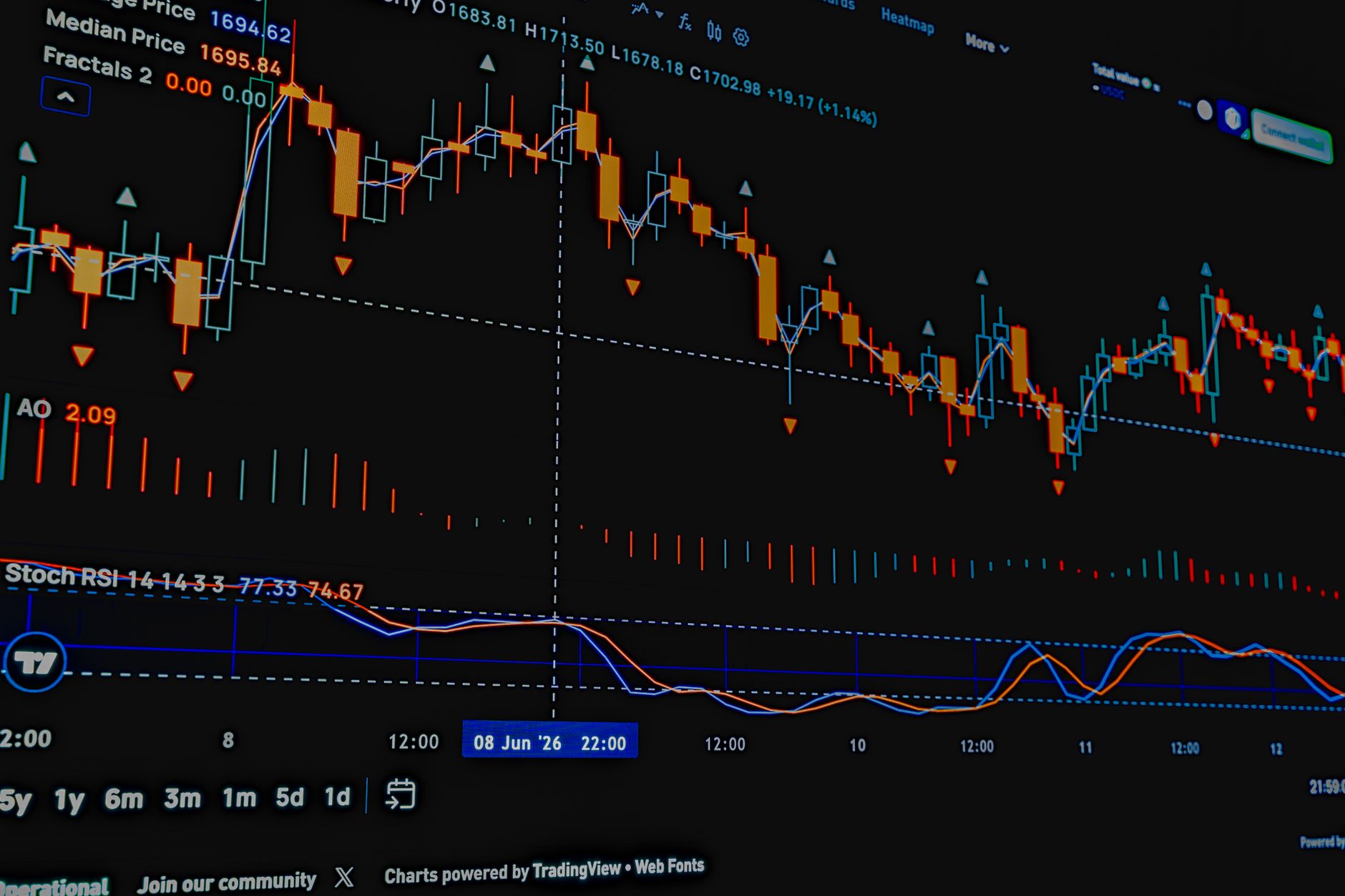
The remaining exposure is determined by Fairlead’s proprietary model. According to the prospectus, the system evaluates historical price, momentum and volatility data and measures trends across short-term, intermediate-term and longer-term horizons. Market conditions are classified into higher-conviction, or risk-on, environments and lower-conviction, or risk-off, environments.
When trend and momentum readings are supportive, the sub-adviser can increase the fund’s exposure above the 70% baseline. When trends weaken, momentum declines or the model identifies heightened risk, exposure can be reduced toward that baseline. Under the most favorable technical conditions, BNAV may raise its bitcoin exposure above 100% and as high as approximately 150% of net assets.
The 70% floor is a defining feature of the strategy. BNAV is not designed to eliminate bitcoin risk during negative markets, nor does it promise to avoid major drawdowns. Even at its lowest intended allocation, the fund will retain substantial sensitivity to bitcoin-linked instruments. Its defensive mechanism is therefore relative: the strategy seeks to reduce exposure from a leveraged or fully invested position, rather than move entirely into cash or establish a net-short allocation.
That distinction will be important for investors evaluating BNAV as a portfolio tool. A decline in bitcoin could still produce a significant loss when the fund is positioned at its baseline. If the model remains above 100% as the market reverses, losses could be larger than those experienced by an unleveraged bitcoin position until the strategy reduces exposure.
BNAV does not invest directly in bitcoin. The prospectus says it expects to obtain exposure primarily through options on bitcoin exchange-traded products or on the Cboe Bitcoin U.S. ETF Index. It may also invest in bitcoin ETP shares and cash-settled bitcoin futures, depending on market conditions, liquidity and the sub-adviser’s assessment of the most efficient way to establish the desired economic exposure.
The options component can create synthetic exposure through a combination of purchased call options and sold put options, generally using the same strike price, expiration date and notional amount. A long call provides participation when the referenced bitcoin ETP or index rises above the strike price. A short put creates downside exposure when the reference asset falls below the strike price. Used together, the positions can approximate the economic profile of owning the underlying instrument.
The fund may use standardized exchange-traded options or customizable FLEX options. The contracts must be listed on regulated U.S. exchanges and are guaranteed for settlement by the Options Clearing Corporation. FLEX options allow the portfolio manager to select terms such as strike price and expiration date rather than relying exclusively on standardized contracts.

Options make it possible for BNAV to obtain notional exposure without investing the same amount of cash in an underlying bitcoin ETP. They also create additional considerations. Option prices reflect volatility, time until expiration, interest rates, liquidity and the value of the reference asset. The fund’s result may consequently differ from the return generated by a direct bitcoin holding, even when the portfolio’s stated notional exposure appears comparable.
Selling put options creates an obligation that can become costly when the reference asset declines sharply. Purchased calls require the payment of premiums that can lose value through time decay. Bid-ask spreads, contract availability and the process of replacing expiring options may also affect performance. These costs are separate from the fund’s stated management fee and can vary with market conditions.
BNAV also has authority to use cash-settled bitcoin futures. Futures exposure would be obtained indirectly through a wholly owned Cayman Islands subsidiary and would be limited to contracts traded on commodity exchanges registered with the Commodity Futures Trading Commission. The prospectus identifies CME bitcoin futures as one potential instrument.
Futures can deviate from the spot price of bitcoin because contracts reflect financing conditions, supply and demand, time to expiration and other market factors. When futures trade above the spot market, a condition known as contango, replacing expiring contracts with more expensive later-dated contracts can reduce returns. Periods of backwardation can have the opposite effect, but neither condition is guaranteed to persist.
The fund intends to invest at least 80% of its net assets, plus any borrowings for investment purposes, in instruments providing bitcoin exposure. Derivatives are measured at notional value for purposes of that policy. Assets not used to generate bitcoin exposure may be held in U.S. Treasury securities, cash or cash-equivalent investments, which can support option obligations, futures margin requirements and liquidity needs.
BNAV’s ability to increase exposure to 150% introduces leverage risk. At that level, a 10% move in the relevant bitcoin-linked instruments could theoretically produce a substantially larger change in the fund before expenses, trading effects and portfolio adjustments. Actual performance would depend on instrument selection, option values, the timing of the move and whether exposure changed during the period.
Leverage can be particularly consequential in bitcoin because the asset trades continuously outside the operating hours of U.S. securities and derivatives markets. A large overnight or weekend price move may affect the value of BNAV’s underlying instruments when U.S. markets reopen. The portfolio manager may not be able to adjust positions at the precise time the model registers a change in trend.
Active management adds another layer of uncertainty. Fairlead’s indicators may correctly identify some sustained advances and declines, but no technical model can ensure that a trend will continue. Rapid reversals can result in the fund increasing exposure near a market peak or reducing it after a substantial decline. Sideways markets may produce repeated changes in signals, increasing turnover and transaction costs without improving returns.
The prospectus states that the model includes controls intended to limit or prohibit higher exposure in conditions identified as particularly risky. Those controls are designed to influence position sizing, not guarantee capital protection. The fund’s performance will depend on both the construction of the model and the sub-adviser’s implementation decisions.
BNAV carries a total annual operating expense ratio of 0.74%. The prospectus estimates that a $10,000 investment would incur $76 in fund-level expenses during the first year, assuming a 5% annual return and no change in the expense ratio. The illustration excludes brokerage commissions, trading spreads and transaction costs generated inside the portfolio.

The active fee pays for a materially different mandate from that of a passive spot-bitcoin product. BNAV is not seeking simply to match bitcoin less expenses. Its objective depends on whether changes in exposure allow the fund to capture more of favorable trends, limit some participation in weaker periods or improve risk-adjusted results over a full market cycle.
That objective also means the fund could lag sharply during certain market environments. BNAV’s 70% baseline may underperform an unleveraged bitcoin holding during a sudden rally if the model has not yet increased exposure. Conversely, a leveraged position may outperform during a sustained rise but suffer disproportionate losses if the market turns before the strategy scales back.
The ETF wrapper introduces the usual trading considerations. Shares are bought and sold at market prices rather than directly at net asset value and may trade at premiums or discounts. As a newly launched and specialized fund, BNAV will need to establish secondary-market liquidity, trading volume and an effective creation-and-redemption ecosystem. Wider spreads could raise the cost of entering or exiting positions, particularly during periods of extreme bitcoin volatility.
The fund is classified as non-diversified, reflecting its concentration in instruments tied to a single digital asset. Its risk profile therefore depends heavily on bitcoin prices, cryptocurrency regulation, the functioning of bitcoin ETPs and derivatives markets, and the operational resilience of the exchanges, custodians and reference rates supporting those products.
Katie Stockton, Fairlead’s founder and managing partner, is the portfolio manager associated with the strategy. Fairlead applies technical analysis across multiple asset classes and also sub-advises the Fairlead Tactical Sector ETF. Amplify said the bitcoin fund uses a related systematic philosophy, although BNAV’s concentrated digital-asset mandate and ability to employ leverage give it a distinct risk profile.
For financial advisers and asset allocators, BNAV could be evaluated as a tactical satellite position rather than a direct substitute for passive bitcoin exposure. The changing allocation may reduce the need for an investor to rebalance a bitcoin position manually, but it also transfers timing and instrument-selection decisions to the manager. Investors will not know in advance whether the fund will be positioned at 70%, 100% or 150% during a particular market move.
Early attention will likely focus on the fund’s published holdings, actual exposure levels and frequency of allocation changes. Those disclosures will show how the model translates signals into trades, which bitcoin ETP options are used, how much collateral is held in Treasury securities and whether futures become a significant component of the strategy.
Trading volume, bid-ask spreads, assets under management and investor flows will provide a separate test of commercial demand. The broader bitcoin ETF market has already demonstrated investor appetite for straightforward exposure. BNAV’s launch asks a narrower question: whether investors will pay for a systematic manager to vary that exposure and accept derivative and leverage risks in pursuit of a better result across market cycles.
The answer will depend on performance through both advances and drawdowns. Strong returns during a bitcoin rally would not by themselves establish the value of the approach, particularly if they result from leverage. The more consequential measure will be whether the strategy’s signal changes, transaction costs and exposure floor produce an attractive balance of gains and losses over a sufficiently long period.
BNAV therefore represents an important product-development step without resolving the central challenge of tactical investing. Its structure gives investors access to an explicit, rules-based range of bitcoin exposure inside a listed ETF. Whether that range improves outcomes will depend on the timing of Fairlead’s signals, the efficiency of the derivatives portfolio and bitcoin’s future pattern of trends and reversals.