Andrew Ross Sorkin
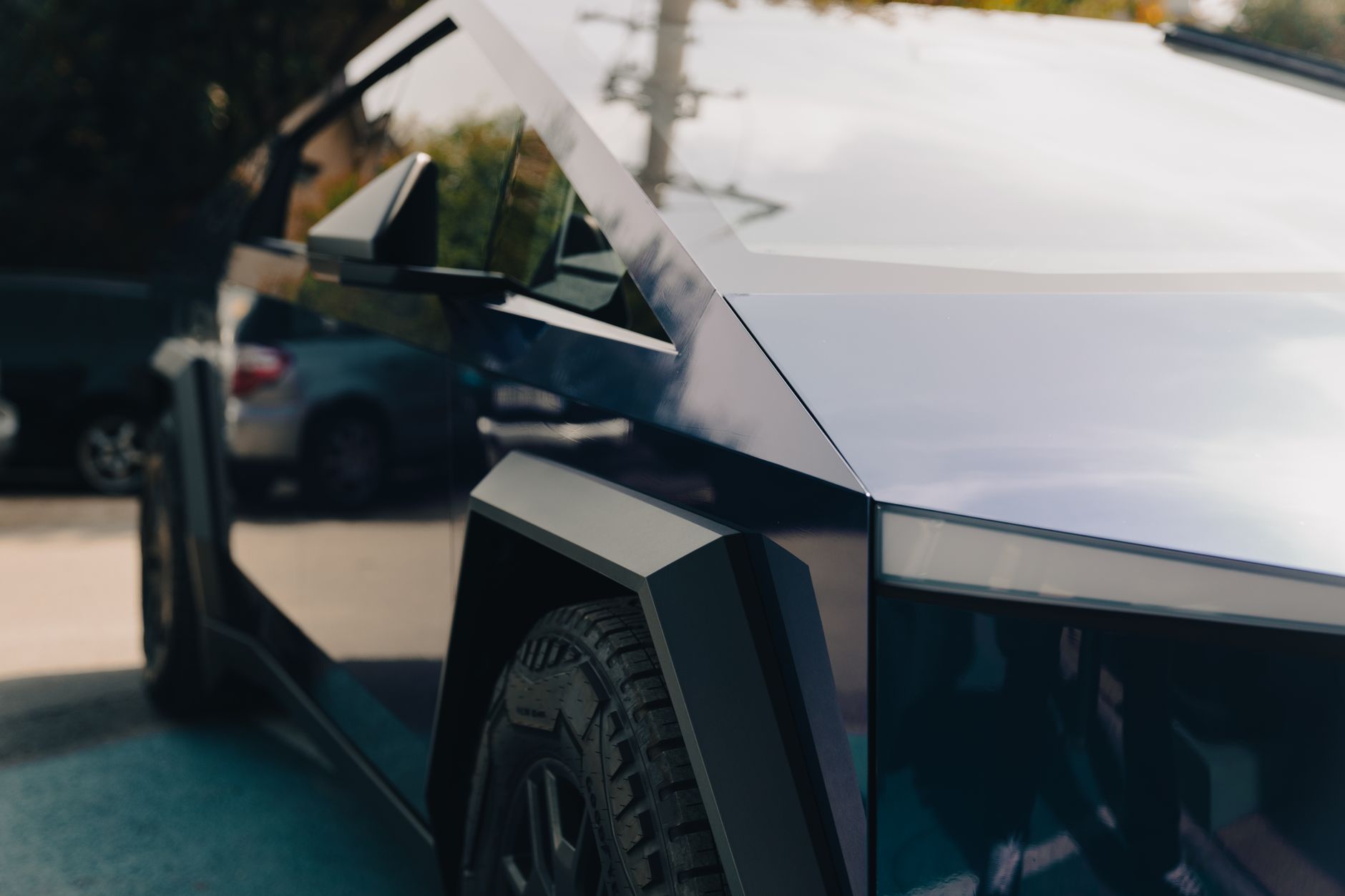
Tesla has begun accepting Cybercab orders from selected individual customers, marking a new stage in the company’s effort to turn autonomous driving technology into a commercially available consumer product. The limited release offers the two-seat, fully autonomous electric vehicle for $29,990 before taxes, with a mandatory $299 monthly subscription required for operation and geographic restrictions governing where the vehicle can travel.
The company announced the invitation program on November 13, 2026, through its official Robotaxi account on X. Tesla said selected customers were being invited to purchase a Cybercab for personal use, confirming that the vehicle would no longer be available exclusively through the company’s own autonomous ride-hailing operations. The announcement was accompanied by ordering information showing a $1,000 nonrefundable deposit and an estimated delivery period beginning in December 2026.
The development creates a direct consumer sales channel for a vehicle designed without a steering wheel or conventional accelerator and brake pedals. Unlike existing Tesla passenger vehicles, which retain manual controls even when advanced driver-assistance features are enabled, the Cybercab depends on its autonomous operating system for ordinary road transportation.
That distinction is central to the vehicle’s commercial structure. Tesla is selling customers ownership of the physical vehicle while requiring continued payment for the software and connectivity services that make it usable. The company is therefore combining a one-time hardware transaction with recurring service revenue, a model that could become increasingly important if autonomous vehicles move beyond limited commercial fleets.
The initial release is narrowly controlled. Tesla has not disclosed the total number of invitations issued, the criteria used to select eligible customers or the number of vehicles allocated for private ownership. The invitation materials indicate that initial availability is limited, making the announcement an early commercial rollout rather than a nationwide retail launch.
Ordering information shared by technology reviewer Marques Brownlee identifies Austin, Dallas, Fort Worth, Houston and San Antonio as available Texas delivery locations. However, eligibility to accept delivery in a particular city does not necessarily mean the vehicle can operate throughout that metropolitan area. Tesla’s autonomous operating boundaries remain a separate and potentially more restrictive condition.
The subscription requirement is one of the most consequential features of the offering. Tesla’s Autonomy Subscription Agreement, dated November 12, explicitly states that a Cybercab cannot operate without an active subscription. The agreement covers autonomous driving functionality, vehicle connectivity, remote assistance and specified maintenance services.
The $299 monthly charge is therefore not an optional premium feature comparable to a navigation package or an entertainment subscription. It is a required operating expense for the vehicle’s primary transportation function. Because the Cybercab has no conventional manual driving controls, customers cannot simply discontinue the autonomous driving service and continue using the vehicle as a traditional car.
Tesla’s published ordering information includes one month of the Autonomy Subscription with the purchase. At the stated price, the first 12 months of ownership would cost approximately $33,279, including the vehicle purchase and 11 paid subscription months, before taxes, insurance, registration, charging and other excluded expenses. Subsequent full years would add $3,588 in subscription payments if the monthly charge remains unchanged.
Over a five-year ownership period, the combined vehicle purchase price and 59 paid subscription months would total approximately $47,631, assuming the initial complimentary month and no price increases. That calculation excludes financing costs, taxes, insurance, electricity, parking and expenses outside the subscription’s maintenance coverage.
The financial implications extend beyond consumer budgeting. For Tesla, the mandatory subscription creates a potentially recurring revenue stream attached to every privately owned Cybercab that remains active. A theoretical installed base of 100,000 vehicles paying $299 monthly would generate approximately $358.8 million in annualized subscription billings before cancellations, service expenses and other adjustments. This is an illustrative calculation, not a company forecast or an indication of current Cybercab sales.
Whether that revenue would translate into attractive recurring margins depends on the cost of operating the autonomous platform. Tesla’s service obligations include connectivity, remote support, roadside assistance and a defined package of maintenance activities. The agreement lists services such as tire replacement, windshield replacement, cabin filter replacement, inspections and cleaning of exterior camera lenses. These obligations distinguish the subscription from a software-only product with relatively limited physical maintenance requirements.
Vehicle owners remain responsible for insurance, registration, charging, parking, general cleaning and other excluded expenses. Unplanned repairs outside the covered services may also result in additional charges unless covered by the vehicle warranty. Consequently, the economic value of the subscription will depend partly on how frequently Tesla must provide support, maintenance and physical intervention as vehicles accumulate mileage.
The current $299 pricing may not remain unchanged. Responding to the initial announcement, Tesla Chief Executive Elon Musk said the monthly charge was too high and suggested it should be closer to approximately $115, reflecting the combined cost of Full Self-Driving and connectivity on other Tesla models. His comments introduced uncertainty about the final long-term pricing strategy, although Tesla had not announced a formal reduction to the displayed $299 subscription price as of November 14.

Under the published agreement, Tesla can change subscription pricing after providing one month’s notice. Customers may cancel their subscriptions, but payments are not prorated, and cancellation removes the operating entitlement required for normal Cybercab use. This structure gives Tesla flexibility to adjust service pricing while making future subscription costs an important variable in the total expense of ownership.
Geographic restrictions create a second major limitation. Tesla’s agreement specifies that privately owned Cybercabs may operate only within supported Robotaxi geofences and other operating limits established by the company. Those boundaries may be displayed through the vehicle’s touchscreen or Tesla’s mobile application and can be expanded, reduced or otherwise changed through software and mapping updates.
Tesla’s head of artificial intelligence and autonomous driving, Ashok Elluswamy, said privately owned Cybercabs would be able to operate without supervision in the same geographic locations supported by the Robotaxi service. The company’s subscription terms, however, state that operating boundaries may not exactly match the commercial service’s coverage, making the specific customer-accessible territory an important detail.
Tesla’s Robotaxi service currently operates with Model Y vehicles in several Texas and Florida markets, while the company’s support information identifies Cybercab passenger service as available in limited areas of Austin. This difference illustrates why the expansion of a ride-hailing network does not automatically establish unrestricted operational coverage for privately purchased Cybercabs.
For customers, geofencing means that the vehicle’s utility depends not only on the distance it can travel on a charge but also on the software-defined territory where autonomous trips are permitted. A Cybercab could potentially have sufficient battery capacity for a journey while remaining unable to complete it because part of the route falls outside an approved operating zone. The agreement also permits restrictions based on road type, weather and other conditions.
The Cybercab’s operating system further depends on working connectivity, current software and access to a Tesla account. Tesla can remotely restrict vehicle operation or place the vehicle in a safe state under circumstances described in its agreement. These provisions reflect the operational requirements of a connected autonomous system but also create dependencies that do not exist in the same form for conventional manually driven vehicles.
Although the vehicle lacks traditional controls, the agreement describes limited touchscreen-based manual movement at speeds of up to two miles per hour. This function is intended for short-distance positioning rather than public-road driving and requires a licensed operator. It does not provide a practical substitute for the vehicle’s autonomous driving system during normal transportation.
The agreement also limits how privately owned vehicles can be used commercially. Early Cybercab buyers are prohibited from placing their vehicles on Tesla’s Robotaxi network or third-party ride-hailing, delivery, rental or similar platforms unless Tesla separately authorizes the activity. As a result, customers cannot currently use their vehicles to generate ride-hailing revenue that might offset the monthly subscription expense.
The restriction is significant because Tesla has previously presented autonomous vehicle ownership as a potential foundation for a distributed transportation network, in which privately owned vehicles could provide rides when their owners were not using them. The initial Cybercab agreement instead separates personal vehicle ownership from commercial fleet participation. Tesla has discussed potential future access for customer-owned vehicles, but the present agreement does not establish a general right to earn income through autonomous transportation services.
Regulatory compliance remains another material factor in the rollout. On September 4, the National Highway Traffic Safety Administration announced an audit query examining Tesla’s self-certification that the Cybercab complies with applicable Federal Motor Vehicle Safety Standards. The investigation focuses on the technical and legal basis for certifying a vehicle that lacks conventional human driving controls.
Under the United States vehicle safety framework, manufacturers generally certify that their products satisfy applicable federal requirements, while NHTSA retains authority to examine those certifications and investigate potential noncompliance. The agency’s Cybercab inquiry concerns how Tesla determined which requirements apply to a vehicle designed for autonomous operation and whether the company’s certification framework satisfies existing standards.
The investigation should not be treated as a final finding that the Cybercab violates federal law. Nevertheless, unresolved questions about certification, operating permissions and future regulatory requirements introduce uncertainty into the timing and geographic scope of personal deliveries. Tesla has also made its broader expansion ambitions conditional on receiving the necessary approvals.
Musk said the Cybercab would eventually become available nationwide as regulatory permission is obtained. That statement indicates the company’s intended direction but does not establish a confirmed nationwide launch date. Actual expansion will depend on multiple factors, including safety compliance, vehicle readiness, local operating permissions and the company’s ability to support autonomous service across additional territories.

The Cybercab’s design highlights the broader technological transition Tesla is pursuing. Removing traditional driving controls changes the relationship between vehicle hardware and software. Cameras, onboard computing, autonomous decision-making systems, route planning, remote assistance and connectivity become essential components of ordinary vehicle operation rather than optional technological enhancements.
The company’s agreement places these functions within a continuously managed service environment. Tesla retains control over software updates, certain vehicle operating parameters and the availability of supported geographic areas. It also requires maintenance and safety inspections, which can affect whether a vehicle remains authorized to operate. The model links individual vehicle ownership to an ongoing platform relationship controlled by the manufacturer.
Data collection is another component of that relationship. The agreement authorizes Tesla to collect technical, diagnostic and vehicle-use information for support, connectivity and service development. Depending on the circumstances, the information may include vehicle location data, camera recordings and other operational information. Tesla states that certain autonomy data is retained for 30 days by default, with different handling possible for support requests or safety events.
The commercial importance of this arrangement extends beyond the Cybercab itself. Software-controlled transportation platforms may generate revenue from vehicle sales, recurring autonomy subscriptions, connectivity and associated services. At the same time, they require manufacturers to assume continuing responsibilities related to software reliability, cybersecurity, service availability, maintenance coordination and customer support.
For Tesla, those obligations create a different operating profile from the sale of a conventional electric vehicle. A manufacturer can generally recognize substantial revenue at vehicle delivery while retaining more limited ongoing responsibilities for warranty and software maintenance. The Cybercab model adds a continuing service relationship in which customers must remain subscribed and vehicles must remain operationally supported to preserve the intended functionality of the product.
The structure also presents a test of consumer willingness to accept recurring payments for essential vehicle capabilities. Customers purchasing an ordinary automobile typically expect basic transportation functionality to remain available without a separate monthly software fee. Cybercab’s architecture replaces that assumption with a service-dependent model in which the autonomous operating platform is inseparable from the vehicle’s everyday usability.
The initial price may help Tesla address one barrier to adoption. At $29,990 before recurring charges and taxes, the Cybercab meets the sub-$30,000 vehicle pricing objective Musk outlined when introducing the concept in 2024. However, the subscription requirement means that the headline purchase price alone does not capture the financial commitment associated with operating the vehicle over an extended period.
The two-seat configuration also narrows the potential customer market. Tesla describes the Cybercab as a compact autonomous vehicle with a large central touchscreen, substantial luggage capacity relative to its size and passenger controls managed through an application. Its design may be suitable for individual mobility and small-party trips, but it does not provide the seating flexibility associated with larger passenger vehicles.
The limited rollout gives Tesla an opportunity to observe how customers use privately owned autonomous vehicles, how frequently they travel within supported geofences and what level of service intervention is required. Such information could become important in evaluating vehicle reliability, customer satisfaction, subscription economics and the feasibility of supporting a larger privately owned Cybercab fleet.
For investors, the initial invitations represent a product commercialization milestone rather than evidence of significant near-term sales volume. Tesla has not disclosed how many consumers will receive vehicles in December, how quickly production will expand or what proportion of future Cybercab output will be allocated to individual buyers rather than company-operated transportation services.
Those uncertainties limit the conclusions that can be drawn about immediate financial performance. The larger significance of the announcement lies in the transition from demonstrating autonomous transportation technology to offering a contractual consumer product with a defined purchase price, recurring operating charge and published restrictions.
The next indicators will include whether Tesla begins the estimated December deliveries, how the company resolves the initial subscription pricing, whether the supported operating areas expand and how federal regulators address the vehicle’s safety certification. Customer acceptance and operational reliability will also determine whether the limited program can develop into a broader consumer market.
As of November 14, 2026, Tesla’s Cybercab is available to selected buyers at a $29,990 purchase price and a required $299 monthly Autonomy Subscription, subject to geographic restrictions and other contractual conditions. The offering establishes an early commercial framework for privately owned autonomous vehicles while leaving substantial questions about scale, service economics and regulatory expansion unresolved. Its longer-term significance will depend on whether Tesla can convert that framework into a reliable, widely accessible and financially sustainable transportation platform.