Andrew Ross Sorkin
Riot Platforms has secured a long-duration computing-infrastructure agreement with artificial-intelligence developer Anthropic that is expected to produce approximately $9.1 billion of revenue over an initial 20-year term, accelerating the company’s transformation from a Bitcoin miner into a developer and operator of large-scale AI data centers.
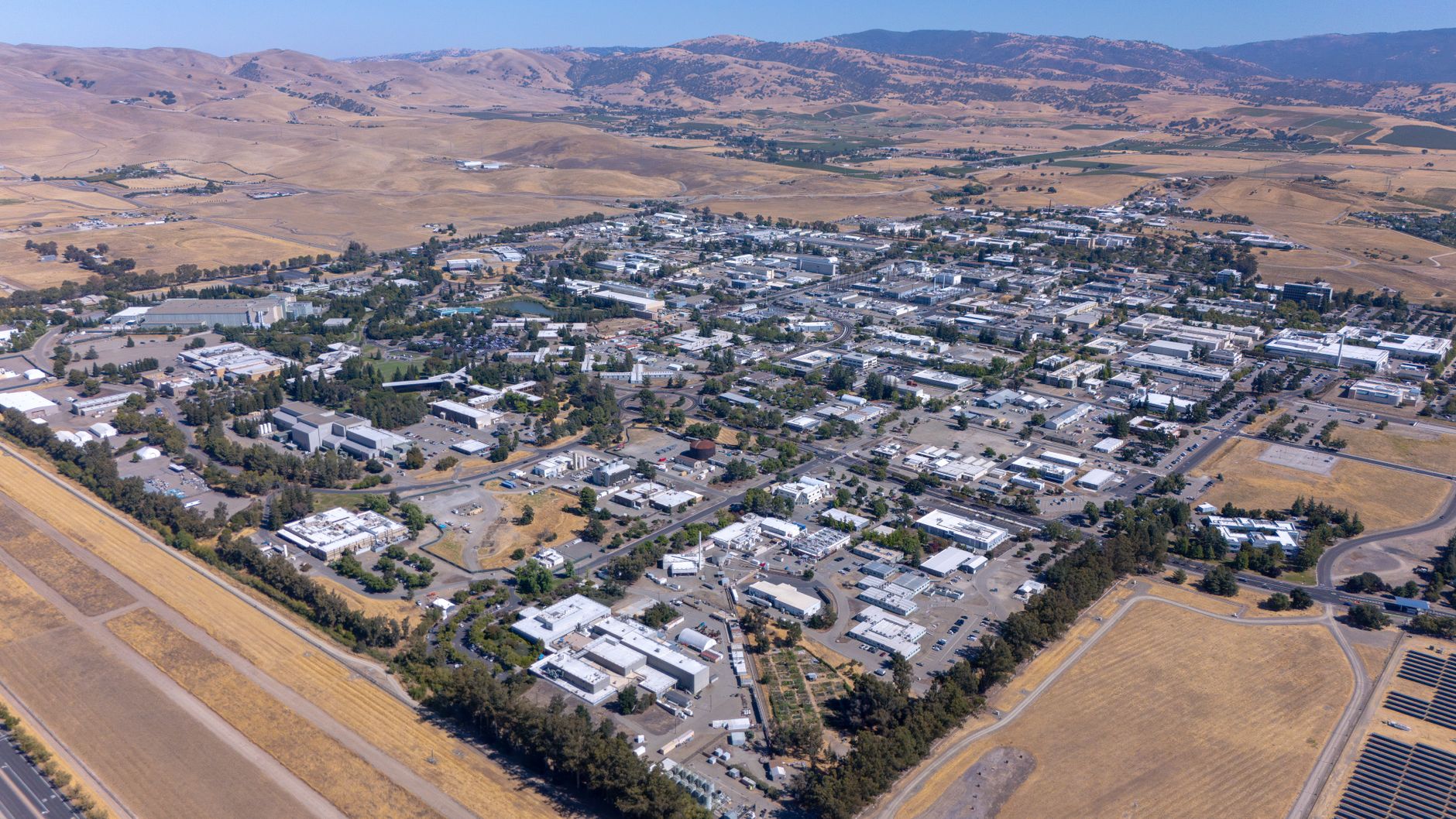
The lease and services agreement covers 191 megawatts of critical IT capacity at Riot’s Rockdale campus in central Texas. The base term runs through June 2048, according to Riot’s second-quarter financial release on August 10. Anthropic holds two five-year extension options that, if fully exercised, would lift the total potential contract value to approximately $16.1 billion.
Riot described the customer in its formal announcement as a leading frontier AI laboratory rather than naming it. Contemporary market reports identified the tenant as Anthropic, the developer of the Claude family of AI models. The agreement gives Anthropic access to purpose-built infrastructure supported by an existing large-scale electrical interconnection, while giving Riot a long-term contracted-revenue stream outside its historically volatile cryptocurrency business.
The transaction is structured as a build-to-suit Tier 3 data-center development. Riot expects to deliver the capacity in stages, beginning with 96 megawatts in December 2027. The full 191-megawatt deployment is scheduled for June 2028. Those dates leave Riot with a substantial construction and commissioning program before the project reaches its intended scale, making on-time delivery a central operational test.
Riot estimated that the contract will contribute cumulative net operating income of between $7.3 billion and $8.2 billion during the initial term. That range implies average annual net operating income of approximately $365 million to $411 million, although actual results will depend on construction, operating expenses, lease performance and other contractual assumptions. The company’s projections are forward-looking rather than guaranteed revenue or earnings.
Morgan Stanley is providing a $573 million interim financing facility to fund initial development costs while an investment-grade credit backstop is finalized. The financing arrangement is important because converting an energized industrial site into infrastructure suitable for advanced AI workloads requires extensive spending on buildings, cooling, networking, electrical distribution and backup systems. Access to funding can reduce near-term pressure on Riot’s balance sheet, but the company will still need to manage construction risk and align capital deployment with the phased delivery schedule.
The Anthropic agreement follows Riot’s January 2026 lease with Advanced Micro Devices, under which the semiconductor company contracted for capacity at the same Rockdale campus. Riot said the two arrangements collectively cover 241 megawatts of critical IT capacity and represent approximately $9.8 billion of contracted revenue over their initial terms. The combination establishes Rockdale as a multi-tenant AI infrastructure location rather than solely a cryptocurrency-mining site.
AMD’s deployment also provides Riot with an early execution record relevant to the much larger Anthropic project. During the second quarter, Riot completed the final 20 megawatts of AMD’s initial deployment, bringing 25 megawatts online on time and within budget. Construction is underway on a further 25 megawatts: a 10-megawatt phase is scheduled for November 2026, followed by a 15-megawatt phase in May 2027. Completion would bring AMD’s contracted capacity to 50 megawatts.
Riot’s ability to deliver AMD’s initial installation offers some evidence that its internal engineering, procurement and construction organization can serve institutional technology customers. However, the Anthropic project is nearly four times the size of AMD’s fully contracted deployment and will require a materially larger construction effort. Its scale increases exposure to shortages of transformers, switchgear, cooling equipment and other components that have become critical constraints across the data-center industry.
The contract illustrates how access to electricity has become a strategic asset in the AI market. Training and operating increasingly capable models require dense clusters of accelerators, high-capacity networks and continuous power. Obtaining utility approvals and constructing new transmission and interconnection infrastructure can take years. Riot says Rockdale already has fully approved and energized power capacity, allowing it to offer a development timetable that may be difficult to replicate at undeveloped sites.

The agreement nevertheless involves more than redirecting electricity from Bitcoin-mining machines to AI servers. Cryptocurrency mining can operate in relatively simple industrial facilities and can be interrupted when power prices rise or the grid is under stress. Frontier AI systems generally demand substantially higher standards for cooling, redundancy, connectivity, security and uptime. Riot must therefore build data halls and supporting systems tailored to a tenant whose workloads are more complex and less tolerant of interruption.
For Anthropic, the lease adds infrastructure capacity during an industrywide race to secure computing resources. AI laboratories require access not only to advanced processors but also to sites capable of operating large numbers of them. Long-term commitments can provide greater certainty over capacity and deployment schedules, although they also expose tenants to technology changes and long-range demand forecasts. The extension options give Anthropic the right, but not the obligation, to retain the Rockdale capacity for as long as 30 years.
The relationship between Riot, Anthropic and AMD also reflects the increasingly interconnected structure of the AI supply chain. AMD develops processors and computing platforms used in AI systems, while Anthropic develops and deploys models and software services. Riot’s role is to provide the physical environment and power infrastructure needed to operate large computing installations. Contracting with both a major chip company and a frontier-model developer broadens Riot’s exposure to AI spending without requiring it to design processors or models.
The development changes Riot’s business profile but does not immediately replace Bitcoin mining as its principal revenue source. The company reported second-quarter revenue of $174.2 million, up 14% from $153 million a year earlier. Bitcoin-mining revenue was $113.7 million, compared with $140.9 million in the prior-year quarter. Data-center revenue was $23.2 million, consisting of $4.9 million in operating lease revenue and $18.3 million from tenant fit-out services. Engineering revenue rose to $37.3 million from $10.6 million.
The quarterly figures show both the promise and the early stage of the diversification. Data centers generated a meaningful new revenue contribution, but Bitcoin mining remained the largest segment, and much of the reported data-center revenue came from fit-out work rather than recurring rent. The Anthropic lease could alter that balance once capacity begins service, yet the first major delivery is more than a year away and the full contracted installation is not expected until mid-2028.
Riot reported a second-quarter net loss of $237.2 million, compared with net income of $219.5 million in the same period of 2025. Adjusted earnings before interest, taxes, depreciation and amortization were negative $69.7 million, versus positive $495.3 million a year earlier. The results underscore the difference between a large nominal contract value spread over decades and current profitability. Investors will need to evaluate the timing of revenue recognition, capital expenditures, financing costs and depreciation as the new facilities enter operation.
The company produced 1,587 Bitcoin during the quarter, up from 1,426 a year earlier. Its average cost to mine one Bitcoin, excluding depreciation and after power-curtailment credits, increased to $49,912 from $48,992. Bitcoin-mining revenue declined despite higher production, primarily because of lower average cryptocurrency prices and growth in the global network hash rate, which increases competition for mining rewards.
Those pressures help explain the strategic appeal of long-term data-center leases. Bitcoin-mining returns can shift rapidly with token prices, network difficulty, transaction fees and energy markets. A contracted data-center business can offer longer revenue visibility and potentially more predictable operating income. It can also make better use of land, substations and interconnections accumulated during the expansion of industrial-scale mining.
Riot ended the second quarter with more than $1.2 billion in liquid assets. That included $548.9 million in cash, of which $77.5 million was restricted, and 11,380 Bitcoin. Of those holdings, 5,821 Bitcoin were pledged as collateral. Based on the June 30 market price cited by the company, its total Bitcoin holdings were valued at approximately $666 million.

The liquidity position and interim development facility provide resources for the initial build, but they do not remove the risks inherent in a multiyear infrastructure program. Riot identified possible delays, supply-chain disruptions, permitting issues, financing requirements and unforeseen technical challenges among the factors that could cause actual performance to differ from its projections. Tenant credit support and the final financing structure will also influence the project’s risk and return profile.
Power availability presents another important consideration. Large AI facilities can create substantial and relatively constant electricity demand, potentially affecting local grid planning and community scrutiny. Riot’s Rockdale operations are connected to the Electric Reliability Council of Texas market, where extreme temperatures and changing demand can produce periods of tight supply and price volatility. Bitcoin miners have historically been able to curtail operations during such periods, sometimes receiving power credits. A high-availability AI data center may have less operational flexibility, depending on the lease and technical design.
The company will therefore need to reconcile two operating models at Rockdale: interruptible mining loads that can respond to grid conditions and data-center services designed around demanding uptime commitments. The existing interconnection is a competitive advantage, but service reliability, cooling performance and contractual availability standards will determine whether Riot can translate that power position into durable AI infrastructure earnings.
The deal is also part of a wider repositioning among publicly traded cryptocurrency miners and digital-infrastructure companies. Owners of large power allocations have sought AI and high-performance-computing tenants as the economics of mining have become more competitive. Not every mining property is suitable for that conversion, however. Network connectivity, location, construction readiness and the ability to finance sophisticated facilities distinguish viable AI sites from basic mining campuses.
Riot’s engineering and fabrication operations may help it control development schedules and costs. Management has emphasized its ability to procure equipment, engineer custom infrastructure and perform construction internally. The AMD delivery offers an initial demonstration of that model, while Anthropic will test whether it can be applied at substantially greater scale without sacrificing budget discipline or commissioning standards.
For shareholders, the principal attraction is the prospect of turning a power-intensive asset base into contracted infrastructure with a longer economic life. The $9.1 billion headline value is several times Riot’s recent annual revenue, but it will be recognized over two decades rather than upfront. The more relevant milestones will be financing completion, construction progress, energization of the first 96 megawatts, acceptance by the tenant and conversion of installed capacity into recurring lease and service revenue.
The optional extensions should likewise be treated separately from the base agreement. Reaching the approximately $16.1 billion maximum would require Anthropic to exercise both five-year options and the facilities to remain commercially useful for three decades. Hardware architectures, cooling methods and model-development economics can change considerably over that time. Riot will need to maintain and potentially upgrade the campus to preserve its value through the initial term and any extensions.
The transaction gives Riot an unusually large contracted foothold in the AI infrastructure market and gives Anthropic a path to substantial dedicated capacity at a power-ready Texas site. It does not eliminate execution, financing or technology risk, nor does it immediately transform Riot’s reported earnings. Its significance lies in the scale and duration of the commitment: a company built around Bitcoin mining is allocating a major portion of its infrastructure platform to frontier AI computing, with its future cash-flow mix increasingly tied to successful data-center delivery.