Andrew Ross Sorkin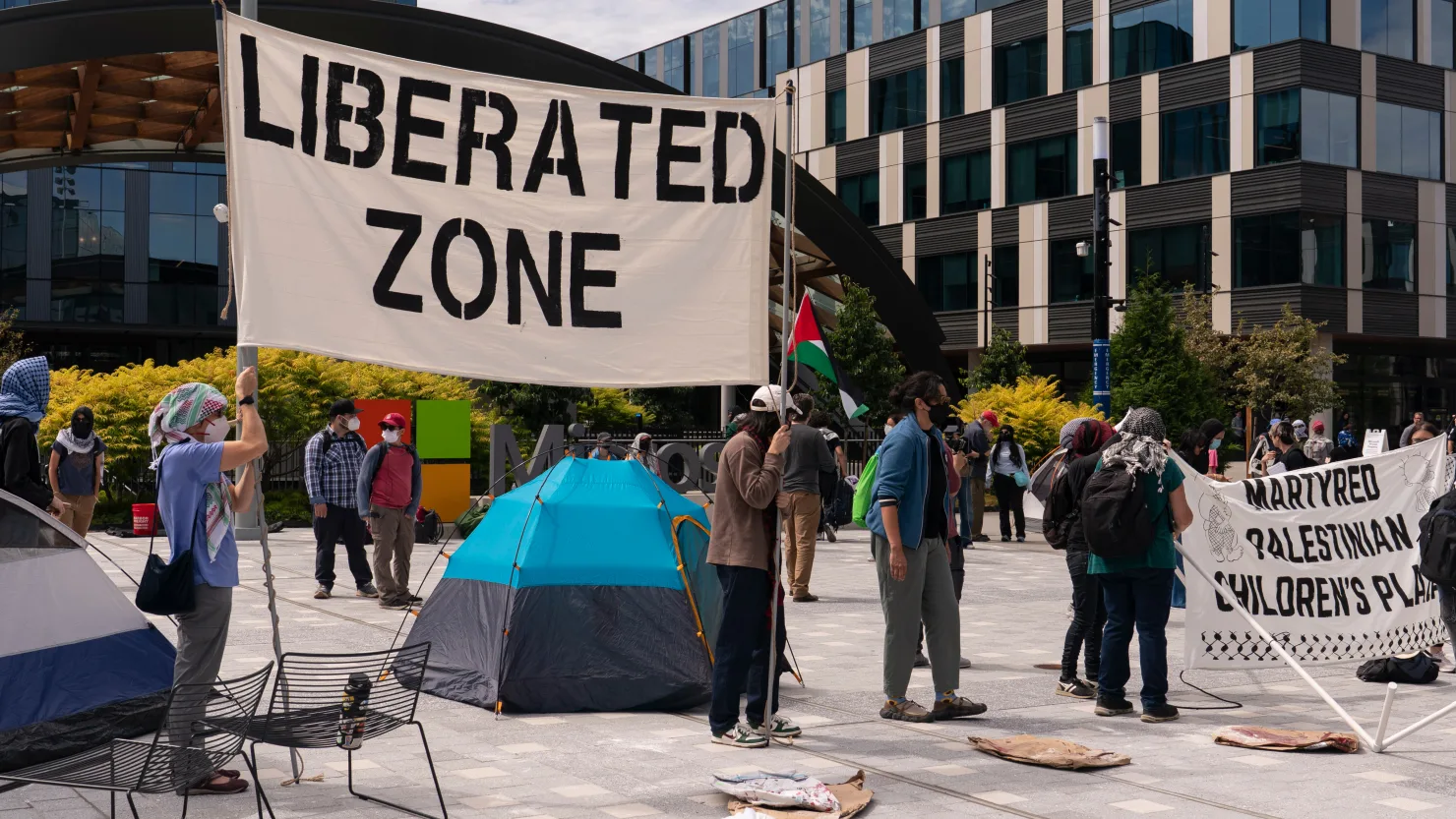
After more than a decade at Microsoft, a senior software engineer has resigned, accusing the tech giant of continuing to provide cloud computing services to the Israeli military despite internal backlash and the ongoing humanitarian crisis in Gaza.
Scott Sutfin-Glowski, who served as a principal software engineer for thirteen years, announced his decision to leave the company this week, citing moral and ethical concerns. His resignation letter, which has circulated within Microsoft and among technology ethics advocates, paints a picture of deep frustration with the company’s leadership and its silence over the war in Gaza.
“I can no longer be part of enabling what may be the worst atrocities of our time,” Sutfin-Glowski wrote in his internal farewell note to colleagues.
A Stand Against Corporate Complicity
According to Sutfin-Glowski, Microsoft continues to maintain dozens of contracts with the Israeli military through its Azure cloud platform, despite mounting criticism both inside and outside the company. He referenced a February Associated Press report indicating that Israel’s defense institutions held at least 635 active Microsoft subscriptions, with most of them still operational.
While Microsoft has chosen not to comment on individual contracts, the engineer’s departure has reignited public debate about the ethical responsibilities of major tech corporations involved in global conflicts.
Tech companies — particularly those with massive cloud infrastructures like Microsoft, Amazon, and Google — have faced increasing scrutiny over how their technology might be used in surveillance, warfare, or human rights violations. Sutfin-Glowski’s resignation has become one of the most visible acts of internal dissent in recent months, echoing similar waves of employee activism across the tech industry.
Employee Unrest and Corporate Silence
This is not the first time Microsoft employees have voiced concerns about the company’s relationship with the Israeli government and military. Over the past year, employee protests have grown more vocal, with petitions and open letters urging the company to suspend its contracts with Israeli defense agencies until clear human rights safeguards are implemented.
At least five Microsoft employees were fired earlier this year after participating in public demonstrations or speaking out against the company’s cloud deals. Despite these protests, Microsoft leadership has largely avoided public discussion about its role in the Gaza conflict.
In September, Microsoft announced that it had stopped providing “certain services” to one division of Israel’s Ministry of Defense — though the company offered no details about which services were withdrawn or whether broader partnerships were being reconsidered. The move came after The Guardian published a report alleging that Israel’s elite intelligence unit, Unit 8200, had developed surveillance tools using Microsoft technology to track Palestinian communications.
A Growing Divide Inside Microsoft
Sutfin-Glowski’s resignation highlights a widening ethical divide within Microsoft’s workforce. Many employees have complained that internal communication channels discussing the Gaza conflict were restricted or shut down after workers began questioning the company’s involvement with the Israeli military.
According to Sutfin-Glowski, Microsoft “cut off” forums and message boards where employees had previously been able to voice concerns about the ethical implications of Microsoft’s cloud services.
Outside Microsoft’s headquarters in Redmond, Washington, dozens of employees and activists gathered Thursday to display banners calling on the company to “end its complicity in war crimes.” The protest was organized by No Azure for Apartheid, a coalition of current and former tech workers demanding that Microsoft end all contracts with the Israeli government and its military institutions.
“Our message is simple,” said a spokesperson for the group. “Microsoft cannot claim to stand for human rights while profiting from a military engaged in occupation and apartheid.”
The Broader Political Context
Sutfin-Glowski’s decision came just one day after former U.S. President Donald Trump announced that Israel and Hamas had agreed to the first phase of a new peace plan, more than two years after the latest wave of violence began. According to the Associated Press, the U.S. government is now deploying approximately 200 troops to Israel to assist in implementing and monitoring the ceasefire agreement.
Despite the announcement, many human rights groups remain skeptical. The situation in Gaza has been described by international observers as one of the world’s worst humanitarian crises, with tens of thousands of civilians displaced, ongoing shortages of food and medicine, and entire neighborhoods reduced to rubble.
Calls for Accountability and Transparency
The debate around Microsoft’s role in the conflict reflects a broader reckoning within the tech industry about the ethics of large-scale government and military contracts.
In recent years, both Microsoft and Google have faced internal protests over similar concerns. In 2021, Google employees publicly criticized the company’s participation in Project Nimbus, a $1.2 billion cloud computing deal with the Israeli government that included AI and data processing tools potentially applicable to military operations.
Critics argue that by providing advanced computing infrastructure to armed forces, tech companies risk becoming complicit in surveillance programs and military operations that violate international law.
Sutfin-Glowski’s letter underscores that fear. He accused Microsoft executives of deliberately avoiding discussions about Gaza and said that the company’s refusal to address moral questions had pushed him to resign.
“Today, the ceasefire in Gaza finally takes effect after two years of genocide,” he wrote. “But the atrocities, human rights abuses, war crimes, apartheid, and occupation continue.”
Microsoft’s Public Image at Stake
For Microsoft, the fallout from Sutfin-Glowski’s departure could extend far beyond a single employee’s protest. The company’s brand has long positioned itself as a global leader in ethical AI, corporate responsibility, and inclusive innovation. Yet the ongoing accusations of complicity in human rights violations risk damaging that reputation, particularly as younger tech workers demand greater transparency from their employers.
Industry analysts note that Microsoft’s Azure cloud division — one of the company’s most profitable arms — is increasingly dependent on large government contracts. The company’s ability to balance those lucrative deals with mounting pressure for ethical accountability could shape its long-term public perception.
The Human Cost Behind the Technology
Sutfin-Glowski’s departure also draws attention to a growing sense of disillusionment among tech professionals who entered the field believing in technology’s potential to improve the world. As wars, surveillance, and political manipulation increasingly intersect with digital tools, engineers and data scientists are confronting difficult questions about their role in shaping the future.
His resignation letter serves as both a personal act of conscience and a call for reform within one of the world’s most powerful companies.
“We built these systems believing they would empower people,” he wrote. “But when those same systems are used to oppress and destroy, silence becomes complicity.”
A Moment of Reflection for Big Tech
As global attention shifts to the fragile ceasefire in Gaza, the controversy surrounding Microsoft’s contracts underscores a broader moral challenge facing Silicon Valley. The intersection of technology, politics, and human rights is no longer abstract — it is embedded in every line of code, every data server, and every algorithm that shapes modern life.
Whether Microsoft chooses to address these internal dissenting voices or continue its business as usual may determine not only its reputation but also its legacy in the ongoing conversation about ethics in technology.
For many observers, Sutfin-Glowski’s resignation is a powerful reminder: in an age where technology touches every corner of conflict, neutrality is no longer an option.