Andrew Ross Sorkin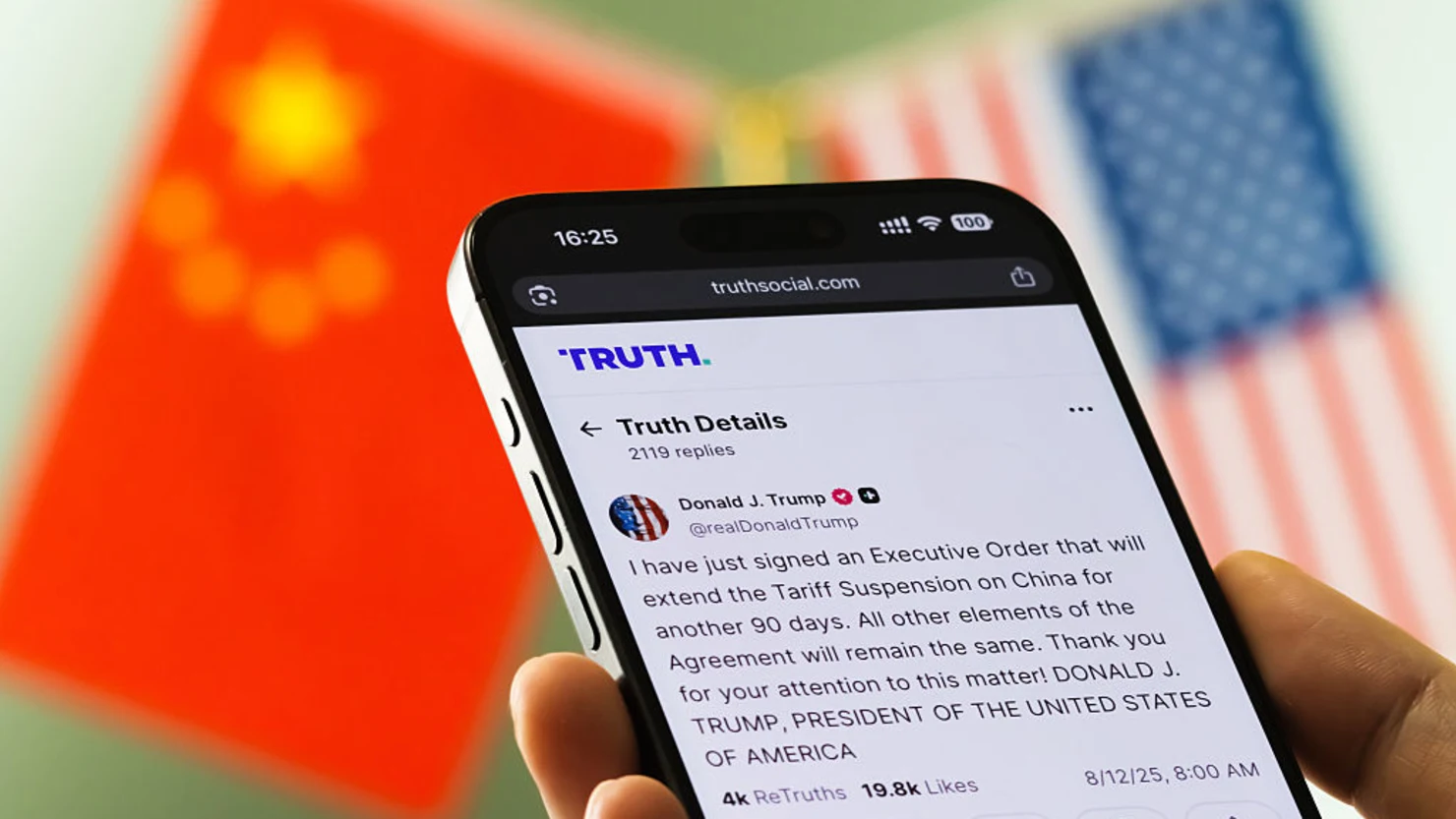
Chinese stocks listed in the United States faced a sharp selloff on Friday after former President Donald Trump warned that he would dramatically raise tariffs on Chinese imports if he returns to the White House. His comments, describing China as “very hostile,” reignited long-standing tensions between the world’s two largest economies and rattled global investors.
Major U.S.-listed Chinese tech giants bore the brunt of the market turmoil. Alibaba and Baidu both plunged roughly 8%, while JD.com and PDD Holdings fell 6.6% and 5.2%, respectively. The iShares MSCI China ETF (MCHI) — a widely followed fund that tracks major Chinese companies traded in the U.S. — declined 5.2%, marking one of its steepest single-day drops this year.
The market reaction underscored just how sensitive investors remain to any signs of renewed friction between Washington and Beijing. Over the past few years, relations between the two nations have deteriorated over issues ranging from trade imbalances and technology restrictions to national security concerns. Trump’s recent remarks have rekindled fears of a fresh escalation that could once again disrupt global supply chains and trade flows.
Trump’s Harsh Rhetoric Sparks Global Concerns
During a campaign rally, Trump accused China of holding the world “captive” through its dominance in the rare earth metals industry — a sector critical to modern electronics, electric vehicles, and defense technologies. His warning followed Beijing’s recent decision to impose stricter export controls on products containing rare earth elements, now requiring foreign firms to obtain government licenses for any goods containing more than 0.1% of such materials.
The new Chinese restrictions were widely interpreted as a strategic move to strengthen control over key resources and to leverage its dominance in the rare earth market, which supplies more than 80% of the world’s needs. Trump’s remarks suggested that his potential administration could retaliate with sweeping tariffs, a move that would further strain trade relations and could trigger a new round of economic tit-for-tat measures between the two powers.
“Friday served as a reminder of how emotion and uncertainty can drive markets,” said Mark Hackett, chief market strategist at Nationwide. “It’s still unclear whether these comments will ignite another phase of the trade war or simply amount to public posturing. For now, investors appear to be adopting a cautious wait-and-see approach.”
Renewed Investor Anxiety Amid Fragile Optimism
The selloff came just as Chinese equities were regaining investor confidence after several challenging years marked by weak economic data, regulatory crackdowns, and sluggish consumer demand. Earlier in 2025, Chinese markets had experienced a notable rebound, buoyed by signs of economic stabilization, easing deflationary pressures, and optimism that Beijing’s stimulus measures were finally gaining traction.
Even with Friday’s losses, the iShares MSCI China ETF remains up roughly 32% year-to-date, reflecting a broader recovery trend across the Chinese market. Analysts have credited the rebound to improved corporate earnings, gradual policy easing from the People’s Bank of China, and a renewed flow of foreign capital seeking undervalued opportunities.
However, Trump’s comments have injected a new layer of uncertainty. Investors now fear that escalating rhetoric could once again overshadow China’s improving fundamentals. “We’ve seen this movie before,” noted Lucy Tang, an Asia-Pacific equity strategist at Capital Partners. “Trade tensions can quickly derail sentiment, even when the economic backdrop looks better. If Trump’s threats materialize into policy, it could easily reverse months of recovery.”
The Broader Implications for Global Markets
The renewed tensions between the U.S. and China also raise broader questions about the global economic outlook. Trade relations between the two nations have far-reaching consequences for industries ranging from semiconductors to renewable energy. A new round of tariffs could raise production costs, disrupt supply chains, and intensify inflationary pressures at a time when central banks are still grappling with how to sustain economic growth without reigniting inflation.
Market analysts say that if tariffs are reintroduced or increased, both American and Chinese companies could face significant challenges. U.S. importers might experience higher costs, while Chinese exporters could see a drop in overseas demand. Such dynamics would likely ripple through global markets, affecting commodity prices, logistics networks, and investor sentiment worldwide.
“Investors hate uncertainty, and Trump’s comments brought that uncertainty back into focus,” explained David Lee, a senior market analyst at Horizon Research. “Even if no immediate policy changes occur, the fear of a possible trade war is enough to cool investor enthusiasm and prompt a flight to safer assets.”
What Comes Next?
Despite the market’s sharp reaction, some analysts caution against overreacting. Trump’s statements, while forceful, may still be largely rhetorical at this stage. His campaign has frequently used aggressive language toward China as a political tool to galvanize support among voters concerned about trade imbalances and job losses in U.S. manufacturing sectors.
Nonetheless, the potential consequences of such rhetoric are real. Businesses with deep exposure to China — particularly in technology, manufacturing, and consumer goods — may need to start preparing contingency plans for possible supply chain disruptions or cost increases.
Economists note that both the U.S. and China have a shared interest in maintaining economic stability, given the scale of their interdependence. However, the current political climate could make diplomacy more difficult. If trade tensions intensify, global investors might see a repeat of the volatility that characterized the 2018–2019 trade war period, when tariffs and counter-tariffs sent markets into repeated tailspins.
Conclusion
Friday’s market turmoil was a vivid reminder of how deeply intertwined politics and markets have become in the modern global economy. Chinese stocks may continue to experience short-term volatility as investors assess whether Trump’s comments signal concrete policy action or mere political posturing.
While China’s markets have shown resilience and recovery momentum this year, the renewed specter of a U.S.-China trade war threatens to overshadow that progress. For now, both investors and policymakers are likely to remain on edge — watching closely for the next move in what could become another defining chapter in the ongoing geopolitical and economic rivalry between Washington and Beijing.