Andrew Ross Sorkin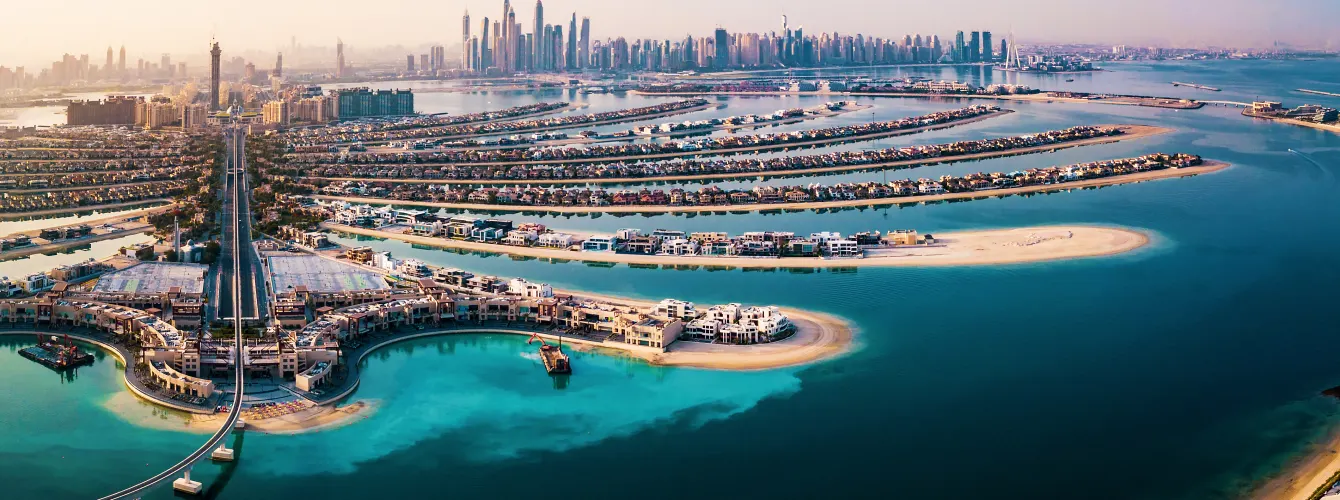
The Middle East, once considered an uncommon destination for Chinese vacationers, is rapidly gaining traction as a preferred travel hotspot. What was once a niche choice for adventurous explorers is now becoming one of the most popular long-haul destinations for China’s outbound travelers.
According to new data from online travel agency Trip.com, the shift was most visible during this year’s extended Golden Week holiday (October 1–8). The company reported that flight reservations to Doha soared by an astonishing 441% compared to the previous year, while bookings to Abu Dhabi jumped 229% during the same period. The analysis covered travel dates between September 27 and October 8, as many office workers added personal leave days to stretch their vacation time.
Meanwhile, Dubai—already a well-known destination for global travelers—experienced a 27% year-on-year increase in Chinese arrivals, placing it among the top 10 destinations outside Asia, according to travel analytics firm ForwardKeys, which tracked international departures from China between September 27 and October 12.
The data also revealed that the United Arab Emirates (UAE) remains a favorite for affluent Chinese tourists who prefer premium economy, business, or first-class travel, with bookings for high-end seats rising by 133% from last year.
A Dramatic Rise in Middle East Popularity
The growing interest in Middle Eastern destinations is part of a larger transformation in China’s outbound tourism market. Flights between China and the Middle East have already increased by 25% this year compared to 2024, said Edmund Ong, general manager at Trip.com Singapore. Even more strikingly, the current traffic levels are over 180% higher than in 2019, before the pandemic disrupted global travel.
Chinese travelers are not just flocking to one or two cities—they are exploring the entire region. According to data translated from Tongcheng Travel, one of China’s biggest online travel platforms, the five fastest-growing international hotel booking destinations during Golden Week were Saudi Arabia, Egypt, New Zealand, Kazakhstan, and the UAE. Within the Middle East, the top choices were the UAE, Saudi Arabia, Egypt, Qatar, and Oman, Ong confirmed.
Still, traditional favorites in Asia—such as Japan, Thailand, Malaysia, South Korea, and Singapore—continue to dominate the overall outbound travel rankings. Yet, the Middle East’s growth rate indicates a powerful new travel trend that is reshaping how Chinese tourists think about international destinations.
Why the Middle East Is Rising: Accessibility and Uniqueness
So what is driving this sudden surge in Chinese visitors to the Gulf and beyond?
Experts point to a combination of relaxed visa policies, better air connectivity, and the region’s unique cultural appeal.
“Before COVID-19, destinations like Dubai and Abu Dhabi were already popular because of their streamlined visa processes,” explained Alexander Glos, CEO of China i2i Group, a Shanghai-based marketing and business consultancy. “For Chinese citizens, visa convenience—or the lack of it—can make or break a destination’s appeal.”
Following the pandemic, the UAE and several neighboring countries were among the first to reopen, capitalizing on their reputation for safety, affordability, and easy entry requirements. These early efforts paid off, establishing the Middle East as one of the most accessible long-haul destinations for Chinese tourists.
Additionally, airlines have been expanding flight options aggressively. Peggy Li, CEO of Chinese marketing consultancy SPS Affinity, highlighted how the UAE’s flagship carrier Emirates recently launched direct flights to Hangzhou and Shenzhen, two of China’s most economically dynamic cities. “These routes are not just for tourism,” Li said. “They’re part of a long-term commercial and strategic plan to strengthen ties with Chinese consumers and businesses.”
From Luxury Shopping to Cultural Experience
While luxury shopping and desert safaris once defined Middle Eastern tourism, today’s Chinese travelers are seeking authentic cultural and educational experiences.
“Demand for luxury desert safaris and private charters remains strong,” Li noted. “But we are seeing a growing appetite for real, meaningful experiences—like study tours, historical site visits, and opportunities for cross-cultural learning.”
This desire for authenticity also plays into the region’s appeal as something fresh and different. For many Chinese tourists, the Middle East still represents an unexplored frontier—a place that feels adventurous and exclusive.
“It’s a kind of social currency,” said Glos. “Traveling to the Middle East shows that you’re an explorer, someone who can afford to visit places your friends haven’t. And of course, it makes for great content to share on WeChat.”
Another key attraction is the region’s diverse cuisine. “Chinese tourists are discovering food cultures they rarely encounter at home—Iranian, Lebanese, Syrian, or Afghan cuisines,” Li said. “It’s a melting pot of flavors, and food has become a central part of the travel experience.”
Dubai’s Dilemma: Too Global, Not Local Enough?
Despite its success in attracting international tourists, Dubai faces a unique challenge when it comes to retaining Chinese visitors. Some experts say that the city’s modern, globalized identity is beginning to lose its novelty.
“Dubai looks the same as any global city,” Glos observed. “You have McDonald’s, KFC, Starbucks—everything feels international, not Arabic. For many tourists, it doesn’t offer a strong sense of local culture.”
According to his firm’s internal data and conversations with local travel agencies, Chinese arrivals to Dubai may be down by as much as 50% this year. In contrast, Abu Dhabi appears to be benefiting from this shift, positioning itself as a destination with stronger cultural authenticity. “Abu Dhabi feels more Emirati,” Glos said. “It offers museums, heritage villages, and cultural landmarks that deliver a more meaningful experience.”
Official data from Dubai’s Department of Economy and Tourism shows that visitors from Northeast and Southeast Asia to the emirate dropped slightly—by about 0.4% year-on-year between January and July 2025—compared with the same period in 2024.
The Changing Face of Chinese Travel
The evolution of Chinese outbound tourism is also shaped by economic realities at home. Slowing domestic growth and tighter personal budgets have made Chinese consumers more selective about where and how they spend. This has directly impacted the luxury shopping segment that once defined Dubai’s tourism brand.
A weaker Japanese yen, for example, has made shopping in Tokyo and Osaka more attractive for luxury buyers who previously preferred the Gulf’s high-end malls. “The price advantage has shifted,” Li explained. “Dubai’s luxury appeal isn’t as strong as it used to be.”
Instead, Chinese travelers are now focusing on destinations that offer value, experience, and cultural depth, rather than just opulence.
What’s Next: The Middle East’s Race to Stay Relevant
As competition heats up across the Gulf region, countries like the UAE, Saudi Arabia, and Qatar are racing to differentiate themselves in an increasingly crowded market.
“If you look at the Gulf Cooperation Council (GCC) countries, they all offer similar attractions—desert safaris, luxury resorts, camel rides, hot air balloon breakfasts,” Li said. “The challenge now is creating something that feels distinct and authentic.”
To maintain momentum, travel experts suggest that Middle Eastern destinations need to invest in cultural tourism, green travel experiences, and digital engagement tailored to Chinese consumers.
China’s growing middle class—particularly its Gen Z travelers—values uniqueness and storytelling. They want to post something different on Xiaohongshu or Douyin, not just another picture from a shopping mall.
As Li summarized, “It’s becoming a race of the fittest. The destinations that combine accessibility, culture, and authenticity will capture the next wave of Chinese outbound travelers.”