Andrew Ross Sorkin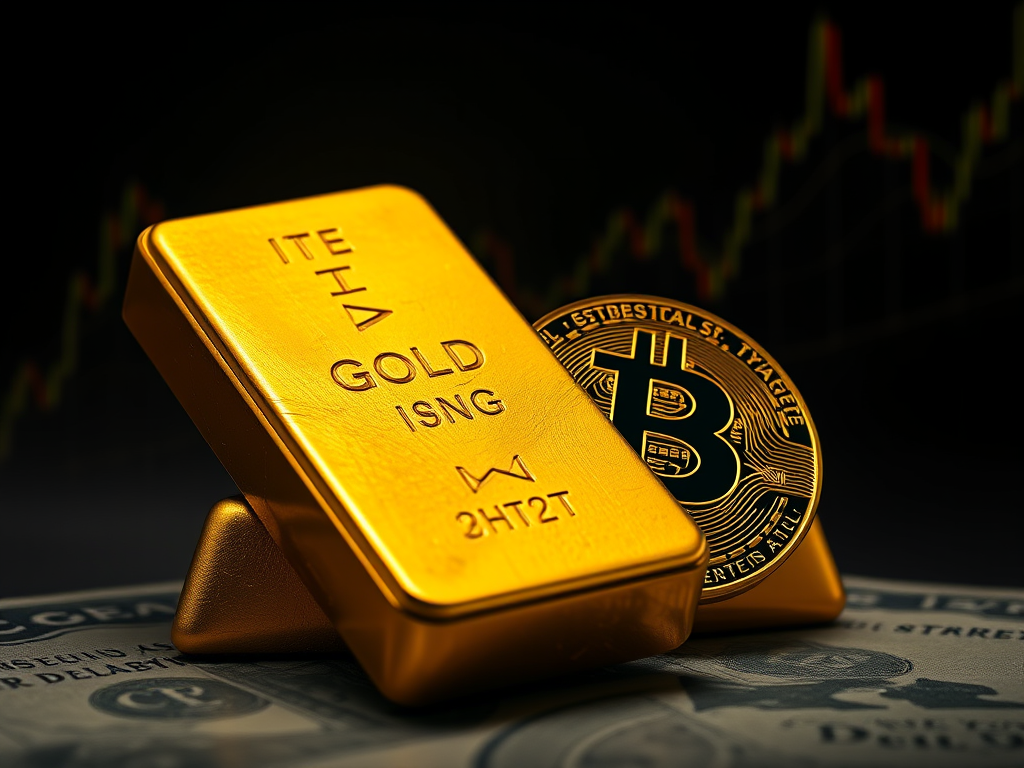
Gold and Bitcoin have recently shattered previous records, drawing attention from investors seeking refuge in volatile markets—especially during October, which historically often brings sharp swings.
Creeping inflation, soaring national debt, a weakening U.S. dollar, an ongoing government shutdown, and a market narrative now dubbed the “debasement trade” are all driving capital away from conventional equities and bond markets and into alternative assets.
“This whole debasement trade is benefiting gold,” said Christian Magoon, CEO of Amplify ETFs, during an appearance on CNBC’s ETF Edge.
The Macro Backdrop: Inflation, Debt, Dollar Pressure
At the heart of this trend is growing investor anxiety over the stability of fiat currencies. The Federal Reserve’s ongoing struggle to tame inflation, coupled with the massive accumulation of federal debt, has led many to question the long-term health of the U.S. dollar. As of early October, the gross U.S. federal debt is approximately $3.7 trillion (though this figure seems lower than more commonly reported figures, it reflects some Treasury data metrics). Meanwhile, the U.S. Dollar Index (DXY) has slumped by roughly 8% year-to-date, adding fuel to the debate over dollar devaluation.
In this environment, gold has regained its standing as a classic safe-haven asset, while Bitcoin is increasingly viewed as a digital counterpart to hard assets.
Gold Hits New Highs; Bitcoin Follows
Gold recently broke past the $4,000 per ounce threshold, marking a historic high. With investor uncertainty mounting, the rally has gained momentum across multiple days. Bitcoin, not to be outdone, crossed the $125,000 mark and briefly pushed toward $126,000, achieving a fresh all-time peak.
This pairing of gold and Bitcoin underlines how closely they are now associated in investor sentiment—both are seen as hedges against the possible debasement of fiat money.
What Is the “Debasement Trade”?
The so-called “debasement trade” is rooted in the wager that excessive government borrowing and monetary expansion will progressively erode the value of fiat currencies. In effect, the thinking goes, central banks and fiscal authorities are “printing” money, reducing its real purchasing power. Investors who anticipate that scenario may shift capital into assets that cannot be arbitrarily diluted: gold, Bitcoin, silver, even select real assets.
Citadel CEO Ken Griffin recently told Bloomberg:
“Inflation is substantially above target … It’s part of the reason the dollar’s depreciated. Gold is at record highs and the appreciation on other dollar substitutes … in items like crypto, for example, is unbelievable.”
This perspective resonates with the broader shift of capital away from traditional safe havens toward more structural hedges.
Comparative Strength: Gold Beats Equities
Gold’s performance this year has outpaced that of all major U.S. equity indices. Not only has it dominated year-to-date returns, but its one-year and three-year totals now surpass many stock benchmarks.
Investors are responding: gold continues to see steady inflows. Silver—often viewed as a “junior gold”—has surged about 66% year-to-date, reaching a new high of $50 per ounce.
Magoon commented on silver’s outlook:
“We see silver going from the high 40s into the 60s over the next 12 months. We’re in the sixth year of limited supply, and silver trends, especially from an industrial standpoint, are only becoming more bullish.”
The tight supply dynamics of silver, combined with rising industrial demand (especially in green tech and electronics), add a structural underpinning to its rally.
October Volatility: A Catalyst for Portfolio Shifts
October is notorious for market turbulence. In this context, many institutional investors are rebalancing portfolios away from sovereign-backed assets and into alternatives. Jay Jacobs, head of equity ETFs at BlackRock, noted on ETF Edge:
“Some traders are seeking non-sovereign assets that behave differently than stocks and bonds, including gold, silver and cryptocurrencies. People are looking for assets that live outside of the traditional system.”
As for instruments, Jacobs flagged SPDR Gold Trust (GLD) and iShares Gold Trust (IAU) as favored vehicles for gold exposure, iShares Silver Trust (SLV) for silver, and iShares Bitcoin Trust (IBIT) gaining traction for crypto exposure.
Indeed, the Bitcoin ETF has recently outpaced large U.S. equity ETFs in terms of weekly capital flows.
Hedge fund legend Paul Tudor Jones weighed in on CNBC’s Squawk Box, stating he plans to hold a mix of gold, major crypto, and Nasdaq tech stocks through year-end to ride the FOMO-driven rally.
“Bear markets are tough … This is a way to hide out or profit during times of uncertainty,” Magoon said, adding that markets often “crawl up a ‘wall of worry’.” He predicted those worries will dissipate into a strong fourth quarter.
Emerging Risks: Global Tensions, Policy Shifts
Markets took a sharp turn lower last Friday amid heightened U.S.–China tensions over rare-earth elements, with threats of sweeping new tariffs. These kinds of geopolitical flashpoints only strengthen the appeal of non-correlated assets.
Jacobs believes momentum could carry into 2026, supported by optimism around corporate earnings and expectations of Fed rate cuts. According to recent Fed meeting minutes, nearly all policymakers favored rate reductions, though they diverged on whether to execute two or three cuts this year.
He argued that geopolitics and inflation uncertainty will continue to push investors toward assets “that live outside of the traditional system.”
Outlook: What Could Unfold
Here’s how the next phase might play out:
Short term (Q4 2025 – Early 2026):
- Gold may rally further, especially if central banks remain active in buying. Some analysts see a potential move toward $5,000–$6,000.
- Bitcoin might continue its upward march, with estimates ranging from $150,000 to $200,000 by year-end, driven by institutional adoption and ETF inflows.
- Volatility and occasional pullbacks are likely given the speed of the rise.
Medium to long term (2026 and beyond):
- Gold could remain in the $4,500–$5,500 range in gentle inflation scenarios, with a possibility to exceed $7,000 under more aggressive demand or crisis-driven scenarios.
- Bitcoin’s long-range forecasts are more speculative but reach as high as $800,000 or even $1 million by 2030 in more bullish narratives—especially if it captures broader adoption as a digital reserve asset.
- The integration of Bitcoin into institutional portfolios may deepen, potentially putting it on central bank balance sheets in the longer run (echoing how gold has been treated historically).
Risks to watch:
- A surprise Fed tightening cycle or inflation cooling faster than expected could trigger a rapid reversal of the debasement trade.
- Regulatory pressures on crypto or restrictive policies targeting digital assets could dampen momentum.
- Overextended valuations can lead to sharp corrections—especially in highly speculative or leveraged positions.
Final Thoughts: A New Chapter in Portfolio Strategy
The record-breaking ascent of gold and Bitcoin under the banner of the “debasement trade” reflects a deeper shift in investor psychology: a declining confidence in fiat currency stability and a renewed preference for scarcity-based assets. Gold, long the bedrock of monetary hedges, is reclaiming its legacy. Bitcoin, meanwhile, is staking its claim as “digital gold” in a digital-first era.
For investors, the question is no longer whether to choose one over the other, but how wisely to combine them within broader portfolios. Gold provides ballast and lower volatility; Bitcoin delivers asymmetric upside and strong potential in a weakened fiat regime.
Moving ahead, market participants should monitor several critical indicators:
- Adjustments in U.S. fiscal and monetary policy, especially around rate cuts
- The path of the dollar index and shifts in reserve currency preferences
- Continued capital flows into gold, silver, and Bitcoin
- Geopolitical escalations and macroeconomic shocks that could amplify safe-haven demand
Ultimately, the unfolding “debasement narrative” may not just be a market trend—it could signal a structural evolution in how global capital views money, trust, and value.