Andrew Ross Sorkin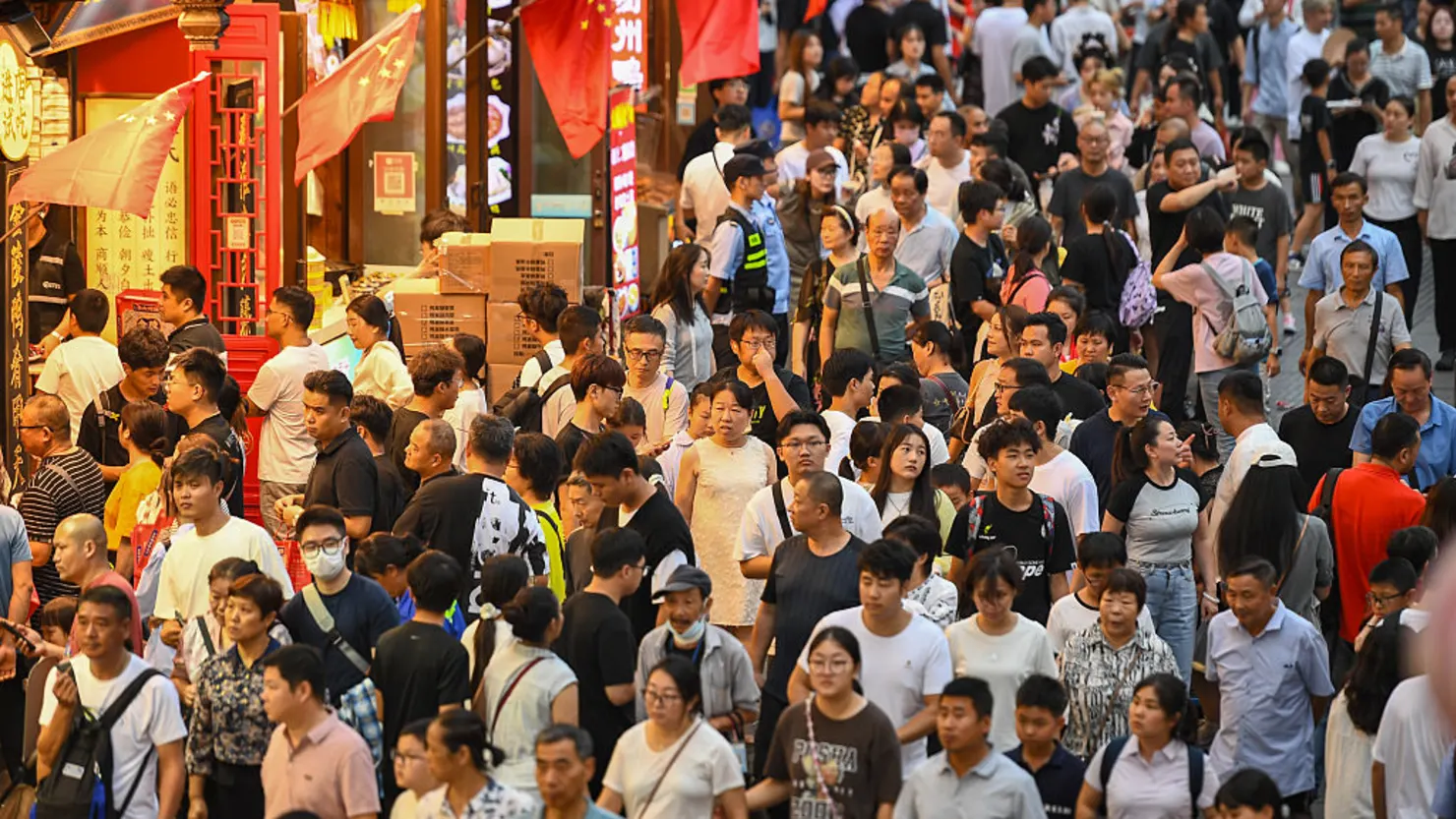
BEIJING — China’s tourism industry witnessed another wave of “involution” during this year’s Golden Week, highlighting the country’s intense market competition and ongoing deflationary concerns.
From October 1 to 8, domestic travelers made 888 million trips nationwide, generating 809.01 billion yuan ($113.63 billion) in revenue, according to government data released on Thursday. These numbers represent a modest year-on-year increase of 1.8% in trips and 7.6% in revenue, based on CNBC’s analysis.
However, the growth rate fell short of the momentum seen during the May Day holiday earlier this year, when trips rose 6.4% and revenue climbed 8%. Average spending per tourist also declined about 3% compared with pre-pandemic levels in 2019, Goldman Sachs noted.
For many in the tourism business, this “Golden Week” felt more like a “Golden Weak.”
Mix Shi, founder of PoshPacker Hostels Chengdu Group, said his hostels were fully booked but only after slashing nightly rates by around 60%. “The competition is brutal,” he said. “So many investors have jumped into the hotel market that even top-quality rooms are being sold at bargain prices. It’s great for travelers, but it’s squeezing smaller operators like us.”
Chengdu, capital of Sichuan province, ranked just behind Nanjing in total tourism spending on the booking platform Meituan. Yet even as Chengdu’s popularity among domestic and foreign travelers doubled from last year, average hostel bed prices dropped more than 20% to about 80.99 yuan ($11), while in Shanghai they fell to 165.70 yuan ($23).
China has tried to encourage travel and domestic consumption by lengthening national holidays and promoting flexible vacation policies. This year’s Golden Week was a day longer than usual, coinciding with the Mid-Autumn Festival on October 6 — a traditional family reunion holiday.
“The holiday momentum really ended on the 6th,” said AJ Wang, who owns two boutique hotels in the coastal city of Qingdao. “After that, bookings dropped sharply, and we had to cut prices by 60% to attract guests.”
While official data showed Golden Week tourism revenue was up 15.4% from 2024, including last year’s Mid-Autumn Festival results, the real growth slowed to 7.6%.
“People are working harder, spending more, but profits are barely moving,” said Sasa Yau, who runs a hostel and restaurant in Guangzhou. Yau’s restaurant revenue jumped from 3,000 yuan to 10,000 yuan per day during the holiday, but his average customer spent only 30 yuan. “We hit record sales, but by the end of the week, we were exhausted,” he said. “When I suggested a celebration dinner, my team just said, ‘Can we celebrate by sleeping instead?’”
In Chengdu — home to the famous Giant Panda Research Base and its fiery cuisine — travelers increasingly booked last-minute, often a day or two in advance. The unpredictability made pricing difficult. China’s extensive high-speed rail and air networks have made spontaneous travel easy, with some flights even cheaper than train tickets.
To save money, many travelers avoided peak days. Trip.com reported that hotel prices in late September were roughly 20% cheaper than during the Golden Week rush, while mid-holiday airfares were over 30% lower than at the start of the break. Fliggy, Alibaba’s travel platform, said average spending per booking rose 14.6% from last year, and noted ultra-cheap post-holiday deals such as flights from Shanghai to Hong Kong for under 400 yuan ($56).
Road trips also surged. An estimated 304 million trips were made by car each day over the holiday period, according to official figures.
“Golden Week brought record movement and strong business activity, showing that domestic demand still has energy,” said Bruce Pang, adjunct associate professor at CUHK Business School. “However, inflation remains subdued. Food and energy prices are still soft, so it may take time for consumer price growth to turn positive again.”
China’s consumer price index fell 0.4% year-on-year in August but rose 0.9% when excluding food and energy. Tourism-related prices increased 0.7% annually in August, though they were 0.3% lower from January to August compared with the same period in 2024.
Interestingly, demand from smaller and less-developed cities surged this year. Travel site Tongcheng reported hotel bookings in at least 30 such cities more than doubled from a year ago, suggesting that tourists are increasingly seeking affordable destinations beyond China’s major urban centers.
With September’s inflation data due on October 15 and retail sales results expected on October 20, analysts are watching closely. Retail sales grew just 3.4% in August — below expectations — underscoring how even record travel and spending may not be enough to lift China’s broader economy out of its deflationary shadow.