Andrew Ross Sorkin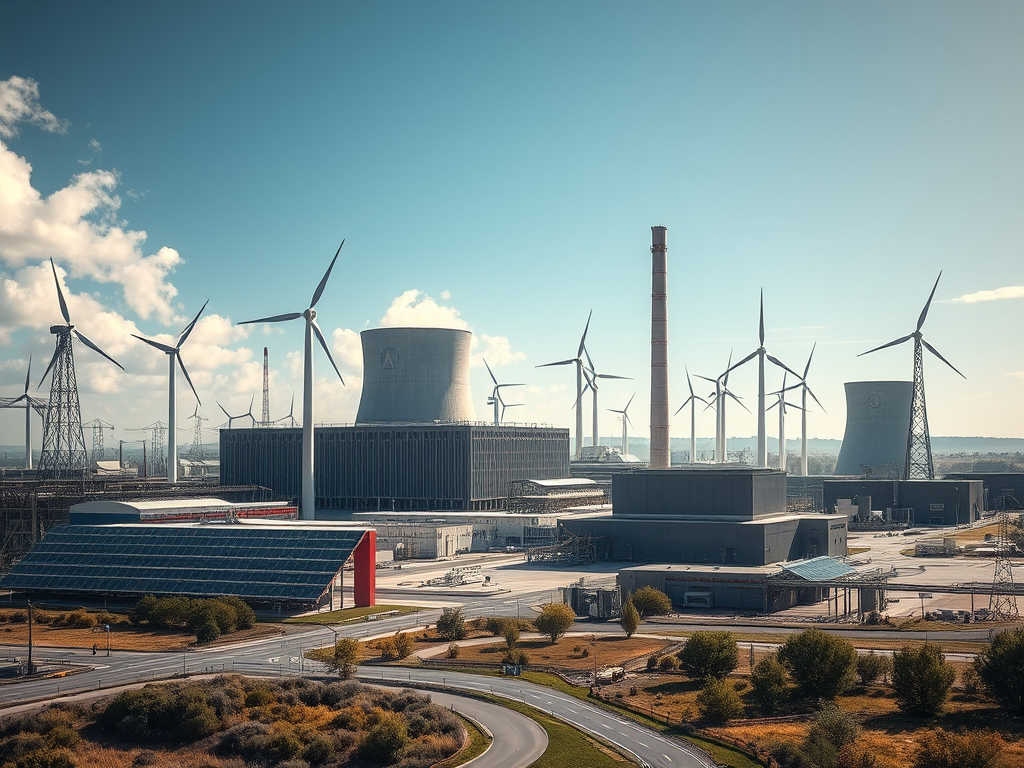
Over the past few decades, investing in the energy sector has typically meant holding shares of the major oil and gas companies — names like Exxon Mobil and Chevron. These giants have long been seen as the backbone of energy investing, offering steady dividends and reliable performance.
While that strategy faced challenges during the past decade, when global sentiment turned against fossil fuels, it has since regained traction. Over the last five years, both Exxon Mobil and the Energy Select Sector SPDR Fund (XLE) have recovered strongly after hitting lows. Yet, in 2025, even with positive returns from traditional energy companies, investors are beginning to shift their focus elsewhere.
According to Paul Baiocchi, head of fund sales and strategy at SS&C ALPS Advisors, the spotlight is moving away from oil and gas toward the broader idea of power generation. “Advisors and investors are starting to think about energy more in terms of power than just crude oil and natural gas,” Baiocchi said during CNBC’s “ETF Edge.”
This transition is reflected in significant outflows from XLE, totaling around $7 billion so far this year — the largest decline among energy ETFs. Part of that may be due to global economic concerns, such as the potential impact of President Trump’s trade policies and the resulting pressure on oil prices. But Baiocchi suggests there’s a deeper reason: the changing definition of what energy investment means.
His firm’s Alerian MLP ETF (AMLP), which focuses on energy infrastructure like pipelines, has actually seen inflows this year. Still, the broader narrative centers on how the U.S. power sector is transforming. With new demand drivers — from AI data centers to advanced manufacturing and electric vehicles — the electric grid is facing decades of expansion and modernization.
Trump’s policies have also added momentum to this transformation, emphasizing domestic AI development, reshoring of manufacturing, and renewed support for nuclear power. “We’re talking about incorporating nuclear in a way we haven’t in decades,” Baiocchi noted. “The mix of what generates electricity is evolving, and so is the way investors approach energy.”
Jack Clark, co-founder of AI firm Anthropic, recently said that by 2027, the U.S. may need 50 gigawatts of additional power — roughly the equivalent of building 50 nuclear reactors. This prediction underscores how central electricity generation has become to the technology ecosystem.
While the XLE fund has seen outflows, its counterpart in the utilities space — the Utilities Select Sector SPDR Fund (XLU) — has benefited, with nearly $3 billion in inflows and returns roughly triple those of XLE. The utilities sector is up about 12% this year, compared to around 4% for traditional energy stocks.
Malcolm Dorson of Global X ETFs agrees that the investment landscape is shifting as electricity becomes “the core of all future technologies.” His firm recently launched the Global X U.S. Electrification ETF (ZAP) to capture this trend. “The U.S. needs to produce about 45% more electricity than it does today by 2040,” Dorson explained, noting that demand had been flat for nearly twenty years before this surge.
However, rising demand also brings challenges. Consumers can expect higher electricity prices, which have already been increasing faster than overall inflation since 2022. By 2025, energy costs have nearly doubled the general inflation rate, and the U.S. Energy Information Administration projects this trend will continue through 2026.
Experts also discussed other emerging investment opportunities, including the surprising strength of international markets such as Argentina and Greece. While some investors may be considering taking profits after recent rallies, others are exploring where the next wave of global growth will appear — an indication that, just like the energy sector itself, the world of investing continues to evolve.