Andrew Ross Sorkin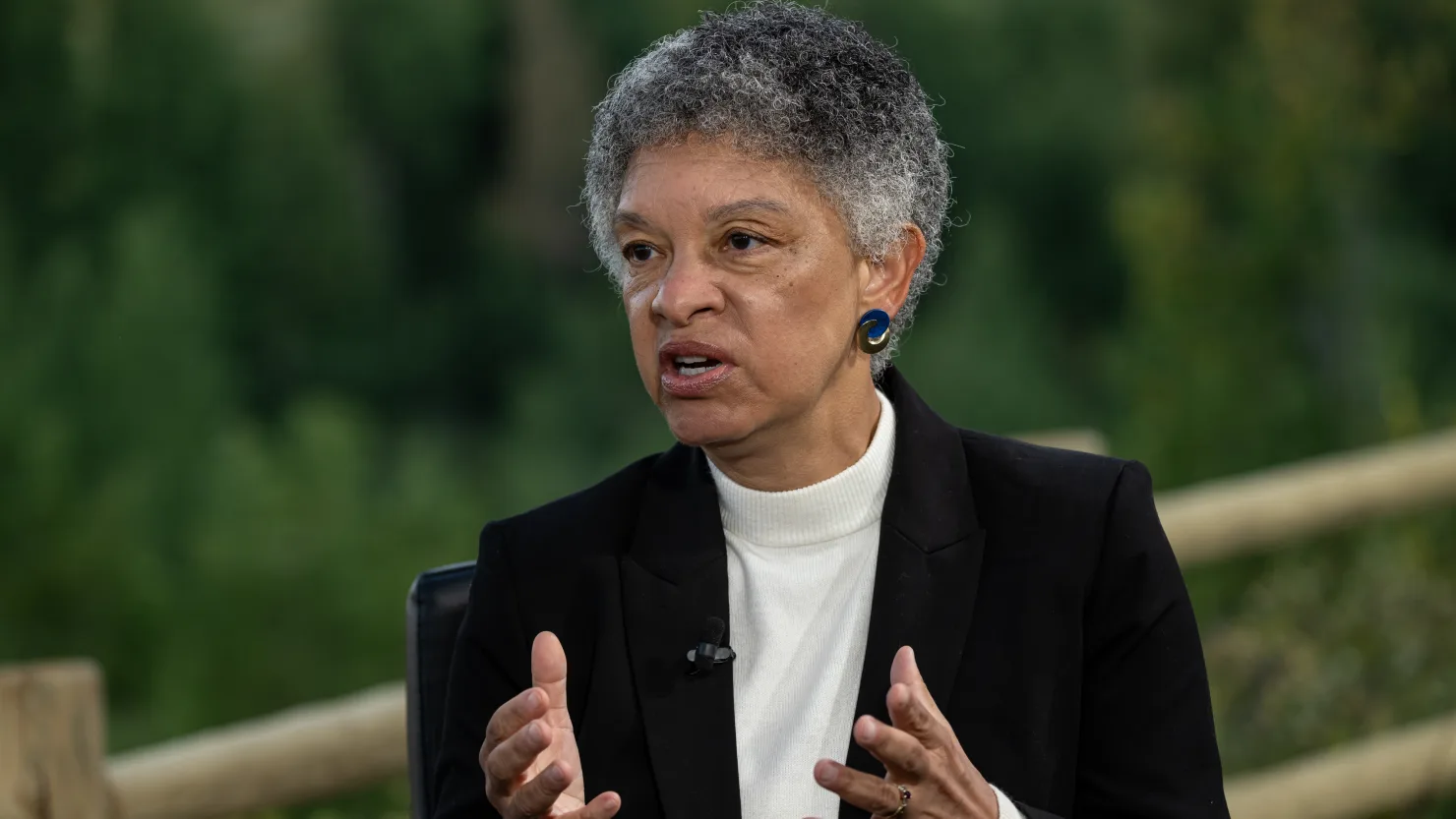
Boston Federal Reserve President Susan Collins expressed caution on Wednesday about supporting additional interest rate cuts, citing persistent inflation and the lack of key economic data caused by the recent government shutdown.
Speaking in her home district, Collins emphasized that the central bank must tread carefully in an uncertain economic environment. “Given my baseline outlook, it will likely be appropriate to keep policy rates at the current level for some time to balance the inflation and employment risks,” she said. “I see several reasons to have a relatively high bar for additional easing in the near term.”
Her comments carry particular weight, as she is a voting member of the Federal Open Market Committee (FOMC), the group responsible for setting U.S. interest rates. Collins’s stance places her among the more hawkish voices on the committee, underscoring the internal debate that prompted Chair Jerome Powell to caution in October that another rate cut at the December meeting was not guaranteed, despite strong market expectations.
Collins had supported the quarter-point rate reduction at the October meeting but suggested that moving too quickly toward further easing could undermine the Fed’s goal of bringing inflation back down to its 2% target. She warned that while the labor market shows signs of softening, inflationary pressures remain a greater concern for now.
“Against this backdrop, providing additional monetary support to economic activity runs the risk of slowing—or even stalling—the return of inflation to target,” she explained. “And with resilient demand, the downside risks to employment, while present, do not appear to have increased further since the summer.”
The recent government shutdown, which delayed or halted the release of critical economic data, is also influencing Collins’s cautious approach. Although the political impasse appears to have ended, the White House press secretary noted that some important reports on inflation and employment may not be available for October.
“Absent evidence of a notable labor market deterioration, I would be hesitant to ease policy further, especially given the limited information on inflation due to the government shutdown,” Collins stated.
The October FOMC meeting reflected a divided committee, with a 10-2 vote in favor of the rate cut. Governor Stephen Miran dissented because he favored a larger reduction, while Kansas City Fed President Jeffrey Schmid opposed the move entirely, arguing for no cut at all.
Collins’s remarks highlight a broader tension within the Federal Reserve as policymakers weigh how long to maintain elevated interest rates. With inflation still above target but economic growth showing signs of moderation, the Fed faces the delicate challenge of balancing price stability with employment objectives.
For now, Collins and other officials appear inclined to pause and wait for clearer signals from the data before deciding the next policy move—a decision complicated by the lingering effects of the government shutdown and the uncertainty clouding the U.S. economic outlook.