Andrew Ross Sorkin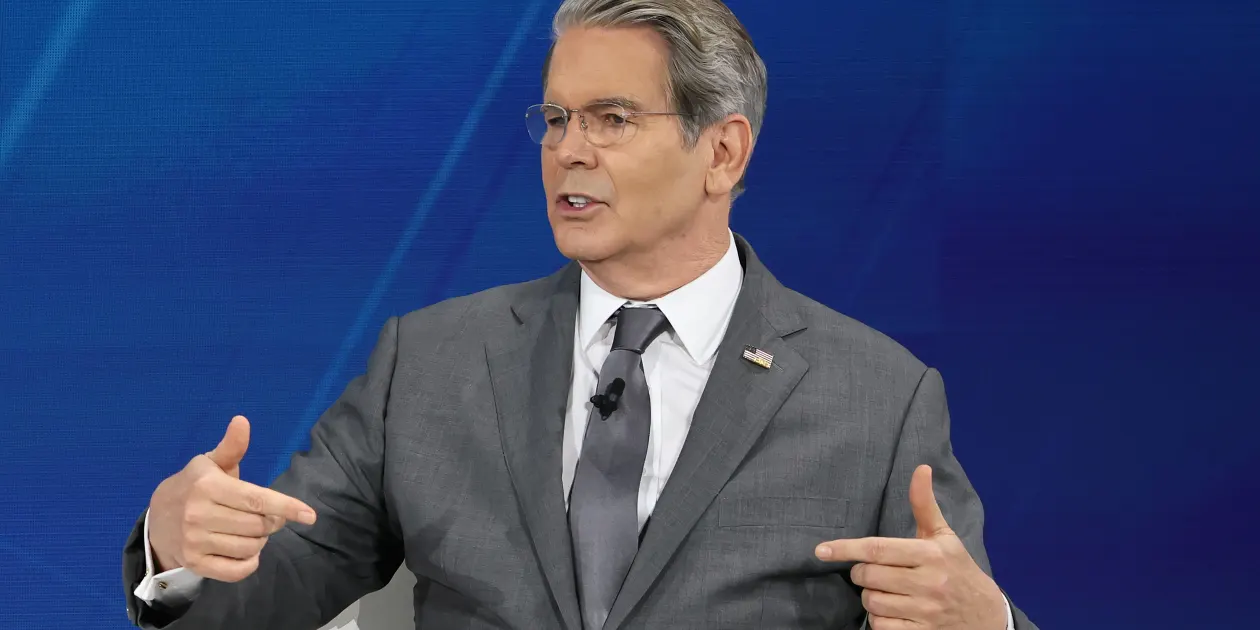
NEW YORK — Speaking at The New York Times DealBook Summit on Wednesday, Treasury Secretary Scott Bessent expressed confidence that the administration would be able to carry out its tariff policy even if it loses the closely watched Supreme Court case that could alter how presidents impose import duties.
During the discussion, Bessent reiterated a point he has emphasized repeatedly over the past several weeks: the legal authority that past administrations have relied on to manage trade policy remains largely intact. Even though the Supreme Court is reviewing the limits of presidential power under the International Emergency Economic Powers Act (IEEPA), Bessent said there are several other statutes that grant the White House broad tariff authority.
He pointed specifically to multiple provisions of the Trade Expansion Act of 1962, including Sections 301, 232, and 122. According to Bessent, these laws would allow the administration to re-establish its current tariff structure should the Court decide to curtail the president’s ability to use emergency powers in trade matters. Speaking on stage with DealBook founder and CNBC anchor Andrew Ross Sorkin, Bessent said these statutes provide a clear alternative path.
“We can recreate the exact tariff structure with 301, with 232, with 122,” he explained. When Sorkin pressed him on whether these measures would have to be implemented on a permanent basis, Bessent replied simply, “permanently.”
Section 122 allows the president to raise tariffs for up to 150 days in certain circumstances, while Sections 301 and 232 offer more flexible timelines. Section 301 authorizes trade action in response to unfair practices abroad, and Section 232 grants authority to impose duties on national security grounds. Bessent argued that these powers, taken together, give the administration considerable room to maneuver regardless of the Supreme Court’s final decision.
The debate over these authorities has intensified in recent years due to former President Donald Trump’s aggressive use of tariffs as leverage in trade negotiations. Trump imposed duties on an extensive range of goods—targeting not only strategic sectors such as steel and aluminum but also nearly all imports from China. Although some of those actions were later scaled back, the widespread use of tariffs reshaped America’s approach to trade policy.
Bessent highlighted what he described as clear wins from the administration’s tariff strategy. He pointed to China—a recurring focus of U.S. trade actions—and argued that recent progress can be attributed, in part, to ongoing pressure from U.S. tariffs. In particular, he cited the administration’s fentanyl-related tariffs aimed at curbing the flow of the synthetic opioid and its chemical precursors into the United States.
“Because of the fentanyl tariffs, the Chinese are making the first step forward that they’ve made,” Bessent said. He added that China has taken “a robust effort” to restrict the drug’s movement into the U.S., though tensions between the two nations remain elevated. Tariffs, he suggested, have helped drive these developments.
Despite the legal uncertainty surrounding the Supreme Court case, Bessent said he remains optimistic. The administration, he said, believes it has a strong argument that its actions fall within established presidential powers. While the Court’s ruling could limit reliance on emergency authorities like IEEPA, Bessent insists it will not derail the broader tariff agenda.
Later in the conversation, Bessent was asked to comment on a separate issue: speculation about who President Trump may choose as the next chair of the Federal Reserve. Reports in recent days have named National Economic Council Director Kevin Hassett as a leading contender, but the president has not formally announced a decision.
Bessent declined to weigh in directly on the selection process. Instead, he stressed that the chair’s influence, while significant, should not be overstated. He reminded the audience that the Federal Reserve operates as a board with multiple voting members, including regional bank presidents who play an important role in determining interest rate policy.
“The important thing to remember here is that it’s a board and there are several other voters from the regional banks,” he said. “The chair of the Federal Reserve has the ability to move and start the discussion, but at the end of the day, he or she is one vote.”
Earlier comments Bessent made to CNBC suggested he believed the president might make his decision by Christmas. However, more recent statements from Trump himself indicate the announcement could come after the start of the new year.
The Treasury Secretary’s appearance at the DealBook Summit underscored the administration’s intention to preserve its trade strategy even amid judicial scrutiny. The pending Supreme Court decision has drawn widespread attention, as it could reshape the balance of power between Congress and the presidency in matters of trade and national security. Still, Bessent maintained that alternative legal pathways will keep the administration’s tariff policy intact.
For the White House, tariffs have become a central instrument in redefining America’s economic relationships abroad. Whether used to address trade imbalances, push back against industrial policies in rival economies, or exert pressure on issues such as drug trafficking, tariffs are viewed not merely as economic tools but also as strategic levers. Bessent’s remarks made it clear that the administration sees these authorities as essential to its broader policy agenda.
As the nation awaits the Supreme Court’s ruling, the administration is preparing for multiple scenarios. Bessent’s message was unambiguous: regardless of how the justices decide, the underlying objectives of the tariff program will continue. The legal landscape may shift, but the administration believes it has ample authority to pursue its trade priorities.
In the coming weeks, attention will remain focused both on the Supreme Court’s decision and on the president’s upcoming choice for Federal Reserve chair—two issues that will shape the contours of U.S. economic policy heading into the next year. For now, though, the Treasury Secretary is signaling continuity, optimism, and a firm belief in the tools available to the executive branch.