Andrew Ross Sorkin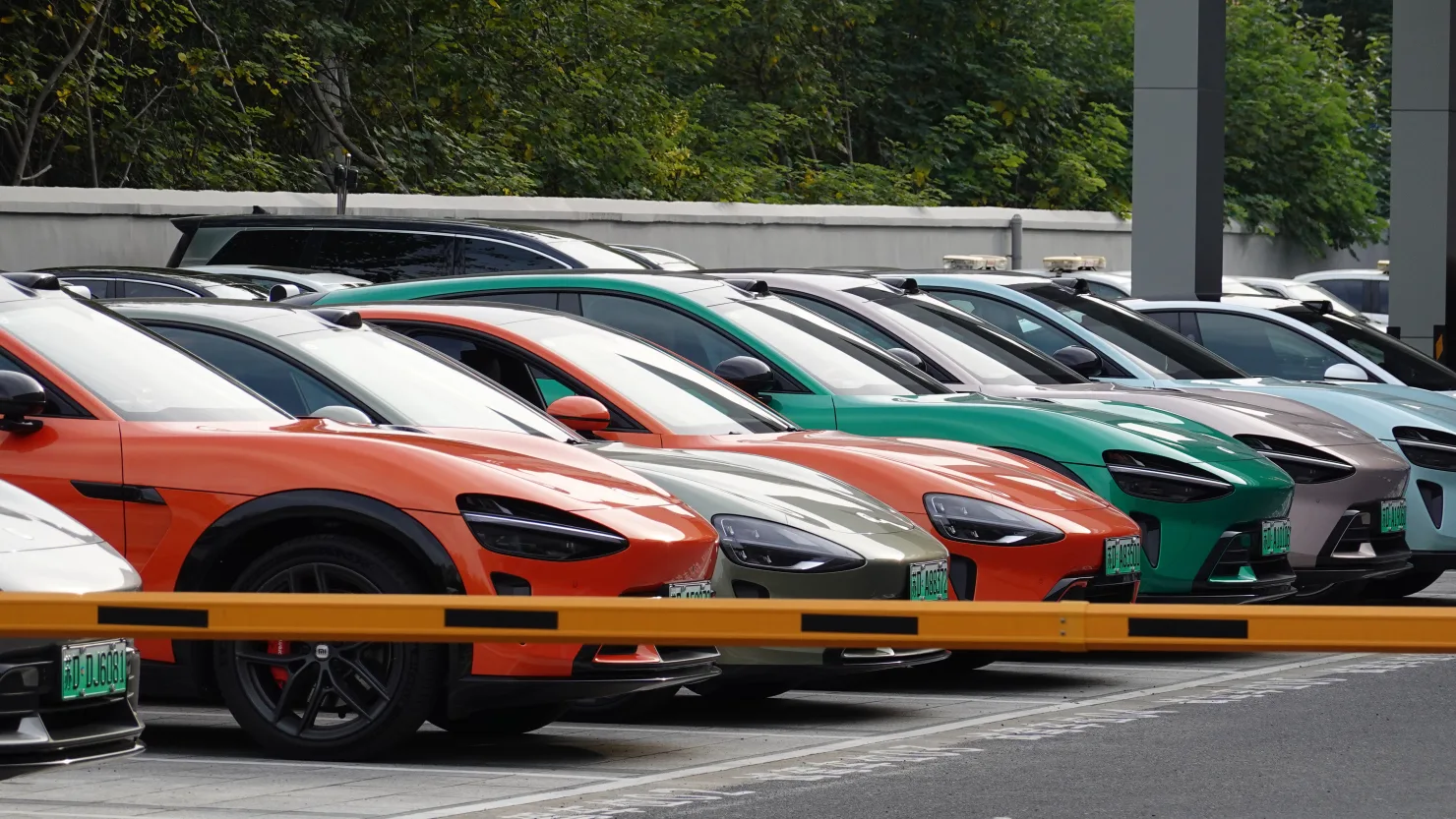
BEIJING — China’s electric vehicle (EV) market is entering 2025 on a subdued note, with sales showing a decline and analysts warning that an intense price war is likely to continue.
Data from the China Passenger Car Association, covering January through November, shows that Tesla’s sales fell 7.4% compared with last year, while market leader BYD also saw a 5.1% drop.
BYD experienced an even sharper decline in November, with passenger car sales down 26.5% year-on-year. Meanwhile, newer entrants such as Huawei-powered vehicles and Xiaomi models posted impressive growth, exceeding 90% during the same period.
The early U.S.-listed Chinese EV startups — Nio, Xpeng, and Li Auto — did not make the top 10 bestsellers for the month, despite showing improvements in monthly deliveries.
Market concentration in China’s EV sector has increased significantly. According to Xiao Feng, co-head of China Industrial Research at Citic CLSA, the top ten manufacturers now account for about 95% of the new energy vehicle market, up sharply from 60-70% just a few years ago. New energy vehicles include both battery-electric and hybrid models.
“I expect further industry consolidation, even though pricing is becoming more influential than brand,” Xiao said. “Consumers are unlikely to purchase a car from a brand they don’t know.”
The aggressive price cuts reflect mounting pressure on manufacturers. Autohome, a leading online car sales platform, tracks discounts, noting examples such as a 432,000 yuan ($61,660) reduction for the Mercedes-Benz EQS EV and a 147,000 yuan drop for the Volvo XC70.
Paul Gong, head of China autos research at UBS, predicts the price war will persist “for years,” while upcoming domestic policy adjustments are expected to temper growth next year. Beijing plans to reinstate the purchase tax and reduce trade-in subsidies, likely slowing EV sales. UBS forecasts that China’s EV growth rate could fall to roughly half of 2025’s 20% growth next year.
The domestic market is already highly penetrated, with new energy vehicles representing 59.4% of new passenger car sales in November, according to the China Passenger Car Association.
Overseas expansion
Facing slowing demand at home, Chinese automakers are increasingly turning to international markets, where profit margins can be higher.
In the first half of 2025, Geely, based in Hangzhou, reported that its EV exports quadrupled, bringing total vehicle exports to 184,000. The company entered Australia, Vietnam, and four other markets, expanding its presence to around 90 countries. Geely has also launched factories in Egypt, the Middle East, and Indonesia, and ranks second in China’s EV market behind BYD.
BYD is similarly expanding abroad, with a new factory in Hungary scheduled to begin production in 2026. The company exported more than 131,000 vehicles in November alone.
Tu Le, founder and managing director of Sino Auto Insights, anticipates more Chinese car manufacturers and battery producers establishing a stronger presence in Europe, intensifying competition with Tesla and U.S. automakers.
Foreign automakers
International carmakers remain eager to secure a share of China’s market. German automaker Volkswagen has partnered locally with Xpeng and Chinese automotive chip designer Horizon Robotics. Volkswagen’s largest R&D center outside Germany is in Hefei, where it can now conduct the full vehicle development and approval process locally for the first time, enabling faster model launches. Several new models are expected in 2026.
In the first three quarters of 2025, Volkswagen delivered over 17 million vehicles in China, up 8.5% from last year, significantly surpassing its 8.9 million deliveries in Western Europe.
China remains an attractive market for foreign companies. “It’s still important for U.S. automakers,” said Tu Le. General Motors continues to sell nearly 2 million cars annually in China and, like Ford, also exports vehicles produced locally. Le noted that if automakers can design models competitive in China, they could leverage this manufacturing capacity domestically, with GM closer to that goal than Ford.
Le cautioned that no manufacturer, whether domestic or foreign, can claim a permanent lead in the world’s largest auto market.
“In China, the top spot can change in a single quarter,” he said. “One month you’re leading, and the next, you’re trying to catch up.”