Andrew Ross Sorkin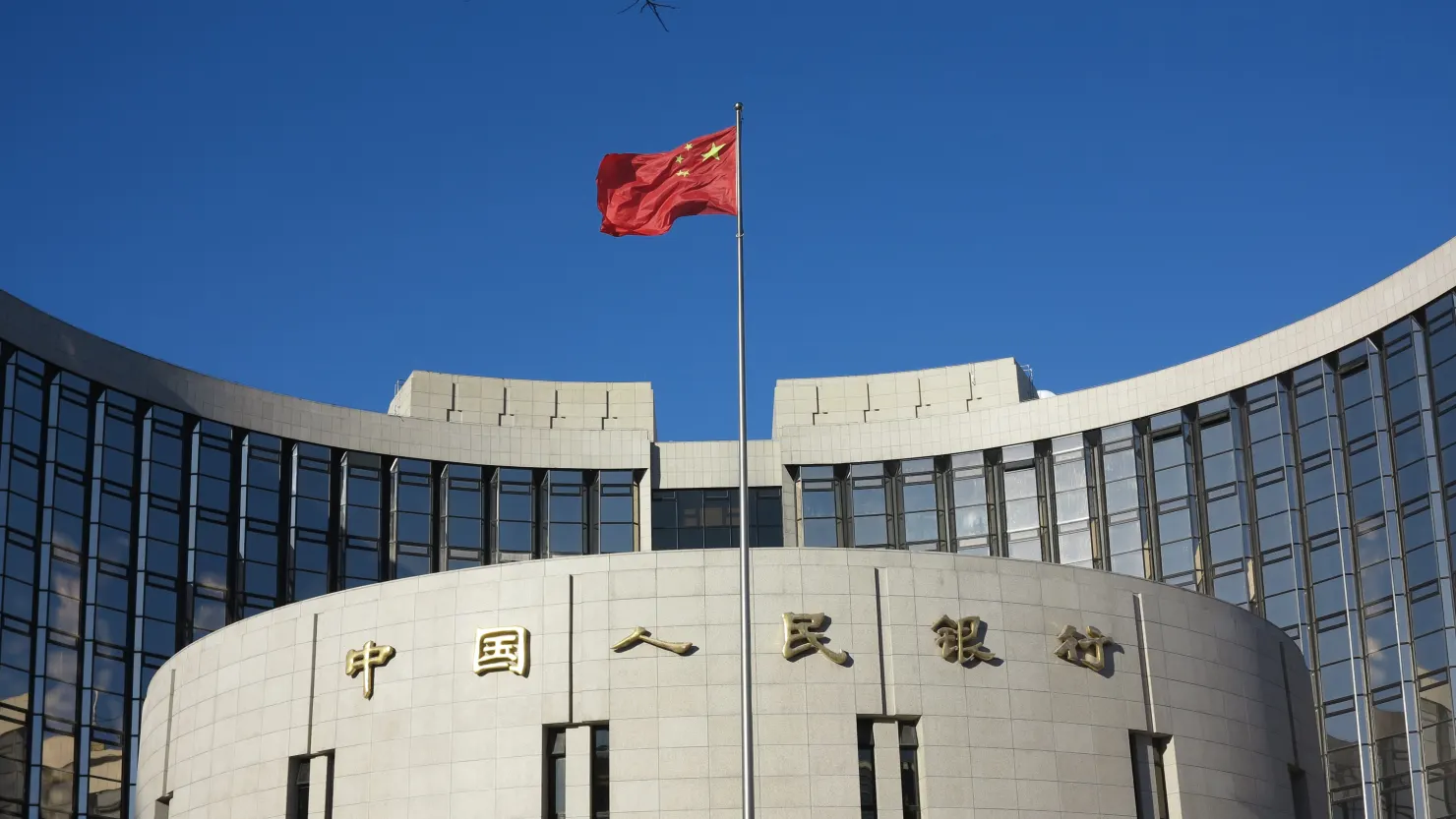
China’s central bank chose to keep its benchmark lending rates unchanged on Tuesday, signaling that policymakers are prioritizing targeted measures to support key sectors of the economy rather than launching broad-based monetary easing as growth continues to lose steam.
The People’s Bank of China maintained the one-year loan prime rate at 3 percent and the five-year rate at 3.5 percent, extending a pause that has now lasted for eight consecutive months. The one-year rate serves as a reference for most corporate and household loans, while the five-year rate plays a crucial role in mortgage pricing.
The decision comes against the backdrop of a noticeable slowdown in the world’s second-largest economy toward the end of 2025. In the fourth quarter, China’s gross domestic product expanded by 4.5 percent year on year, marking its weakest growth rate since the country emerged from strict pandemic controls in late 2022.
In nominal terms, GDP growth improved slightly to 3.8 percent in the final quarter, reflecting early signs that deflationary pressures may be easing. Erica Tay, director of macro research at Maybank, noted that the GDP deflator narrowed to minus 0.9 percent during the quarter, helped by tentative recoveries in industrial profits and tax revenues. Even so, this marked the eleventh consecutive quarter in which the economy remained in deflation.
Consumer activity remained particularly fragile. Retail sales growth dropped to just 0.9 percent in December, the lowest level in three years. Prolonged weakness in the property market, a challenging employment environment, and persistent deflation have continued to weigh heavily on household confidence and spending.
Economists have warned that the downturn in domestic demand is becoming increasingly concerning. Analysts at Nomura said Beijing is now facing one of the most severe slowdowns in internal demand seen in decades, adding pressure on policymakers to act.
Rather than cutting benchmark rates, the central bank has turned to more targeted tools. Last week, it reduced interest rates on several structural monetary policy instruments by 25 basis points, lowering the one-year rate on various relending facilities from 1.5 percent to 1.25 percent. The move took effect earlier this week.
The PBOC has also announced plans to introduce a dedicated relending program aimed at private enterprises and to expand quotas for technology innovation loans, with a focus on supporting small and medium-sized private firms. These steps are designed to channel credit more precisely into areas viewed as vital for long-term growth.
At the same time, officials have left the door open for broader easing later in the year. Deputy Governor Zou Lan said recently that there is still room to cut both the reserve requirement ratio and policy interest rates if conditions warrant. Analysts at Goldman Sachs expect the central bank to reduce the reserve requirement ratio by 50 basis points and trim policy rates by 10 basis points in the first quarter.
Recent credit data highlight the challenges facing the economy. New bank lending fell to 16.27 trillion yuan in 2025, according to official figures, pointing to weak borrowing demand and increasing pressure on the government to step up stimulus efforts.
Investment trends have also deteriorated. Fixed-asset investment in urban areas declined by 3.8 percent over the year, marking the first annual drop in decades. The fall was driven by a deepening slump in property investment, alongside Beijing’s efforts to control local government debt risks and curb excess capacity in certain industries.
Despite these headwinds, parts of the economy have shown resilience. Manufacturing output and exports remained relatively strong as companies adapted to rising trade barriers worldwide. Industrial production increased by 5.9 percent in 2025, while exports grew 5.5 percent, pushing China’s trade surplus to a record level of nearly $1.2 trillion.
Together, these trends illustrate the delicate balancing act facing Chinese policymakers as they seek to stabilize growth, support domestic demand, and manage financial risks without resorting to sweeping stimulus measures.