Andrew Ross Sorkin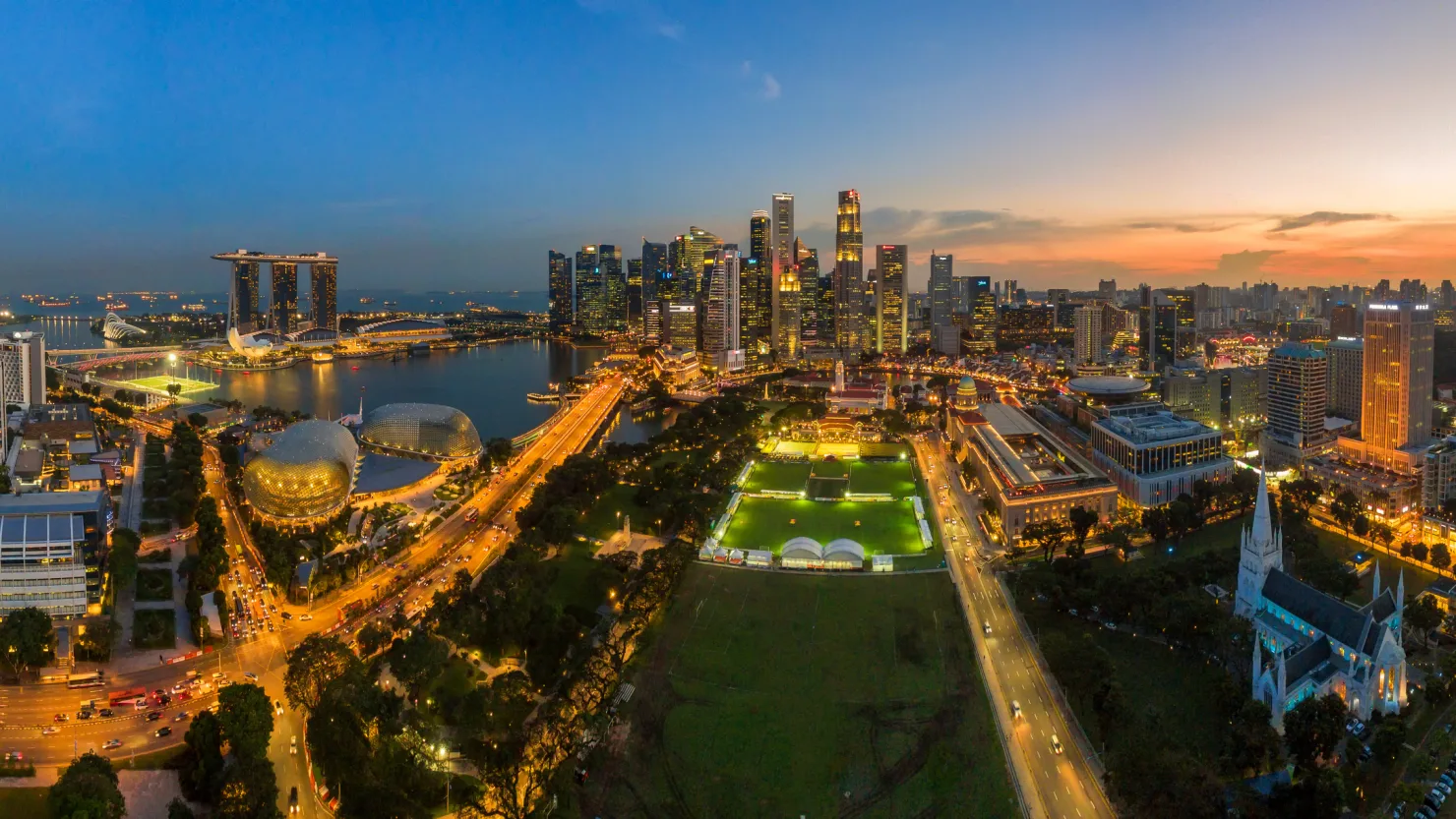
When KPMG executive Anton Ruddenklau relocated from a leafy London suburb to a high-rise apartment in Singapore, one of his earliest impressions was how smoothly business operates in the Southeast Asian city-state.
“People here are naturally inclined to build relationships,” he said in a phone interview.
Ruddenklau moved to Singapore in January 2021 to head KPMG’s financial services advisory division in the country. He quickly realized that the government plays an active role in shaping a business-friendly environment. “You soon see that there is a strong nation-building mindset that actively supports economic growth,” he explained.
Although Ruddenklau noted that Singapore on its own is “not especially compelling” as a market due to its small population, he said investors value it for its strategic location, English-based legal system, and deep private capital markets. He described the country as a critical gateway through which investment flows into and out of Asia.
According to the World Bank, Singapore’s foreign direct investment as a share of GDP ranks among the highest globally, reflecting its reputation as a stable and secure destination for international capital.
Geoff Howie, a market strategist at the Singapore Exchange, said credibility is a major factor behind the city-state’s appeal. “Singapore offers consistent policies, reliable institutions, extensive trade networks, and a stable currency that is increasingly seen as a symbol of fiscal discipline,” he wrote in an email.
The Singapore dollar recently reached its strongest level against the U.S. dollar since 2014, trading at around 1.26.
Over the five years Ruddenklau has lived in Singapore, he has seen its image evolve from a small, quiet nation often jokingly called a “little red dot” on the map to a country with growing global influence. He now views it as a significant middle power on the world stage.
Access to emerging markets
Tian Ong Foo, regional head of Private Banking at Standard Chartered, described Singapore as a strategic launchpad for investing in neighboring economies such as Indonesia, Malaysia, and Thailand. He said companies can operate from Singapore while avoiding the regulatory and operational complexities of those markets.
Ride-hailing giant Grab, for instance, is headquartered in Singapore while serving customers in seven other Southeast Asian countries.
Foo added that Singapore stands out from other financial hubs due to its lower geopolitical risk, transparent regulations, and sophisticated financial system.
Srini Nagarajan, head of Asia at British International Investment, said Singapore is ideally positioned for funding development projects in emerging economies across the region. His organization focuses on climate-related investments in countries such as Vietnam, Indonesia, and the Philippines, with hundreds of millions of pounds earmarked for green initiatives.
In October, BII committed $60 million to a sustainability partnership launched by Singapore’s central bank to support renewable energy projects.
A safe haven?
Morgan Stanley has described Singapore as an “illiquid safe haven,” but also predicted that recent policy changes could transform its stock market. The Monetary Authority of Singapore has injected billions of dollars to improve liquidity for smaller companies.
The bank estimates that Singapore’s main stock index could double in value by 2030, as the country shifts from being primarily a financial refuge to a center of innovation and wealth creation.
While some investors see Singapore as a shelter from global instability, Howie argued that its appeal goes beyond safety. He said the country offers a well-governed and evolving economy that attracts long-term, value-oriented investors.
Ruddenklau agreed that high-net-worth individuals and family offices often treat Singapore as a secure base for their assets.
Another advantage is the country’s relatively low level of financial crime compared to other regional markets. Although Singapore slipped slightly in a recent global fraud ranking, it remains one of the most trustworthy financial centers in Asia.
Where to invest
Howie pointed to equities as an attractive opportunity, noting that Singapore’s stock market recently experienced its strongest rally in 20 years, driven by corporate earnings rather than speculation. Banks, infrastructure firms, and industrial companies performed particularly well.
Kelvin Tan, CEO of Straits42 Group, highlighted residential property as especially appealing to American buyers, since they are exempt from an additional stamp duty that applies to most foreign purchasers.
Meanwhile, Singapore has become a growing hub for fintech investment, attracting more than $1 billion in the first half of 2025 alone. Payments, digital assets, and artificial intelligence startups have been major beneficiaries, with local payments company Airwallex reaching an $8 billion valuation.
Singapore has also taken a proactive approach to regulating digital currencies, becoming one of the first countries to establish clear rules for stablecoins. Its central bank has begun experimenting with tokenized government securities as well.
Downsides
For investors seeking extreme risk and rapid returns, Singapore may not be the most exciting market. Yet some analysts argue that its reputation for being “boring” is outdated.
Howie suggested that in today’s uncertain world, stability and reliability are becoming valuable assets rather than drawbacks.
Ruddenklau echoed this sentiment, saying that investors prefer predictability over surprises, and Singapore consistently delivers that.