Andrew Ross Sorkin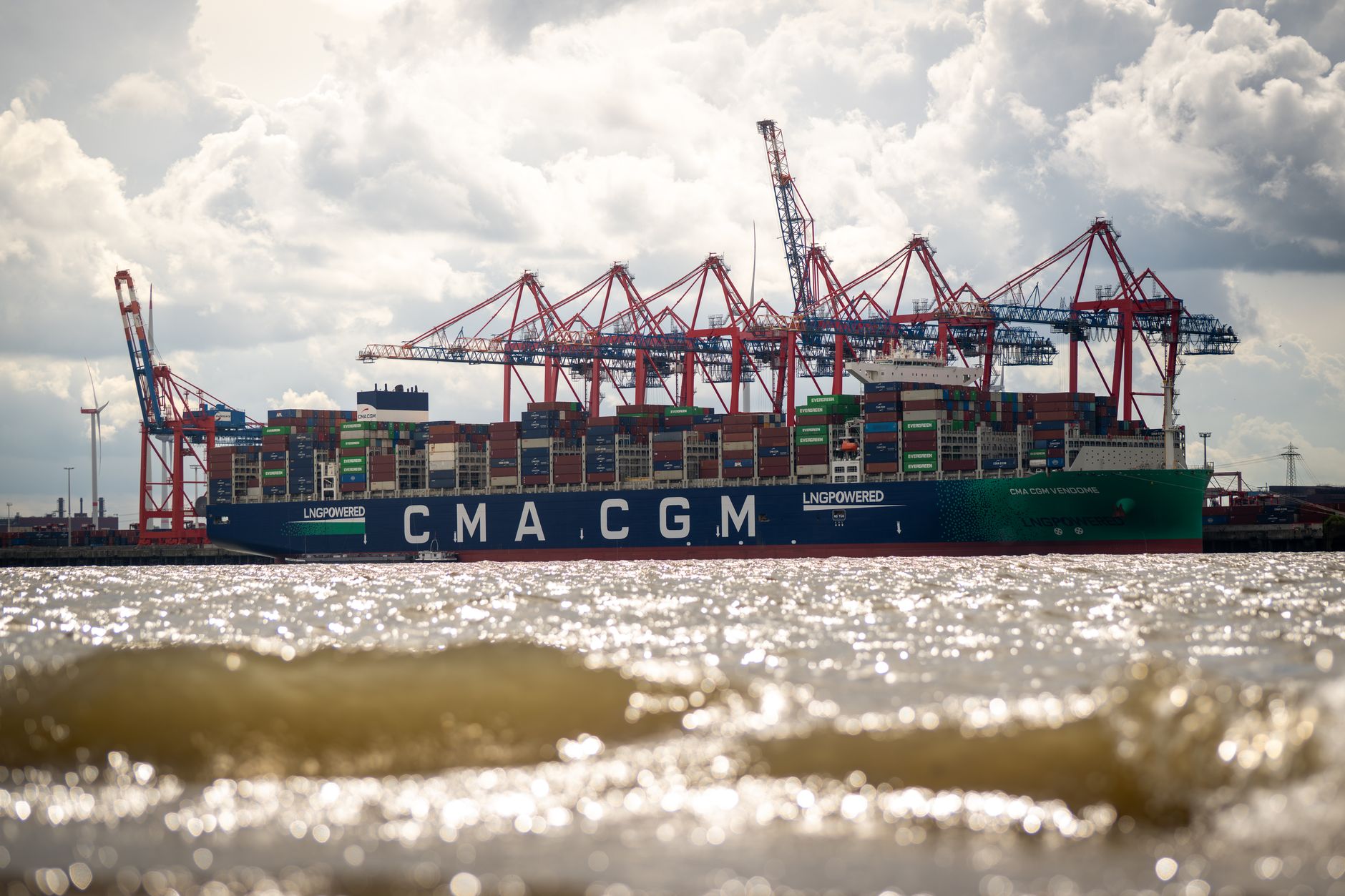
Partners in LNG Canada could make a final investment decision on a proposed second-phase expansion as early as October, bringing one of Canada’s largest prospective energy investments closer to a decisive milestone as global LNG buyers seek more geographically diversified supplies.
Three people familiar with the matter told Reuters that the Shell-led consortium could reach a decision next month on Phase 2, which would add approximately 14 million metric tons per annum of liquefied natural gas capacity at the project’s Kitimat, British Columbia, site. The expansion would effectively double LNG Canada’s designed capacity from about 14 million tons per year to 28 million tons.
The possibility of an October decision represents an acceleration from the more general timetable LNG Canada and Canadian governments had previously outlined. The venture has publicly said it hopes to reach an investment decision before the end of 2026, while federal and British Columbia authorities have spent much of this year working with the project to resolve commercial, infrastructure and investment issues that could affect the partners’ decision.
No final approval has yet been announced. LNG Canada said that any decision remains subject to its joint-venture participants independently satisfying commercial, fiscal, regulatory and governance requirements. Shell similarly said it continues to work with its partners on potential pathways for Phase 2 and that competitiveness, affordability, government support and stakeholder requirements will influence the outcome.
The venture is led by Shell, which holds a 40% interest. Malaysia’s Petronas owns 25%, PetroChina and Mitsubishi Corp. each hold 15%, and Korea Gas Corp., or KOGAS, owns the remaining 5%. That ownership structure means a final commitment requires alignment among five large international energy companies with different investment portfolios, capital-allocation priorities and exposure to global LNG markets.
Shell continues to identify the LNG Canada expansion as one of its major pre-final-investment-decision opportunities. For the company, the project forms part of a broader integrated-gas strategy built around connecting upstream resources with liquefaction, shipping, trading and downstream customers. LNG Canada also gives Shell exposure to a new North American LNG supply basin that has different feedgas economics and shipping characteristics from projects on the U.S. Gulf Coast.
Phase 1 was built at a cost of roughly C$40 billion and became the first large-scale Canadian LNG export project to reach operation. Its first cargo departed Kitimat in June 2025. The two initial liquefaction trains have combined designed capacity of approximately 14 million tons per year, providing western Canadian natural gas producers with direct access to international LNG markets from the Pacific coast.
Kitimat’s geography is central to the project’s commercial proposition. Cargoes can move across the Pacific directly toward major Asian importing markets without the longer voyage required from U.S. Gulf Coast terminals. Shell has described LNG Canada’s shipping route to Asia as materially shorter than Gulf Coast alternatives, giving the project potential transportation-cost and voyage-time advantages while reducing dependence on routes through the Panama Canal.
Those advantages have gained additional strategic relevance as energy buyers reassess supply-chain security. Reuters reported that Asian LNG buyers are placing increased emphasis on supply diversity amid conflict in the Middle East, interruptions affecting Red Sea shipping and uncertainty around transit through the Strait of Hormuz. Supply disruptions and outages elsewhere have also reinforced interest in LNG production from politically and geographically distinct regions.
Shell’s 2026 LNG Outlook illustrates the larger market environment facing the LNG Canada partners. The company estimates that global LNG demand could rise by around 65% from 2025 levels to nearly 700 million metric tons annually by 2050. Shell said 422 million tons of LNG were traded globally in 2025, while disruption affecting Middle Eastern exports and shipping has contributed to tighter conditions during 2026.

The outlook is Shell’s own industry forecast rather than a guaranteed demand trajectory, and LNG developers face significant uncertainty over future prices, competing projects and energy-policy changes. Still, the expansion decision comes as producers across North America, the Middle East and other exporting regions are positioning new capacity for the next phase of global gas demand.
For Canada, Phase 2 would broaden an export industry that began operating at large scale only recently. The country has abundant western natural-gas resources but historically sent most pipeline exports to the United States. LNG Canada created a direct route from British Columbia to overseas markets, and doubling the terminal would increase the volume of Canadian gas capable of reaching customers outside North America.
The expansion would also require supporting infrastructure beyond the liquefaction plant. Coastal GasLink, the pipeline connecting natural-gas production in northeastern British Columbia with Kitimat, is central to those plans. In March, TC Energy said Coastal GasLink had entered commercial agreements with LNG Canada establishing a framework to advance a proposed Phase 2 pipeline expansion.
Under that framework, LNG Canada would act as execution manager for construction of the pipeline expansion while Coastal GasLink would provide technical advisory services. TC Energy said Coastal GasLink would remain the pipeline’s owner, operator and permit holder. The arrangements were designed to advance engineering, cost and schedule work while limiting Coastal GasLink’s direct capital commitments and exposure to construction risk.
TC Energy has said expansion of Coastal GasLink could approximately double the amount of natural gas transmitted through the system to support the additional LNG production. The pipeline component remains dependent on an LNG Canada final investment decision as well as the approvals required within the Coastal GasLink structure.
Preparatory spending has already moved beyond preliminary discussions. In May, Canada’s federal government and the government of British Columbia announced an enhanced investment-cooperation arrangement with LNG Canada intended to help resolve outstanding issues for a possible 2026 FID. The announcement followed a May 1 decision by the LNG Canada partners to authorize hundreds of millions of dollars in incremental funding for work needed to advance the expansion.
According to Natural Resources Canada, that spending could support further engineering, possible procurement of long-lead equipment, commercial work involving the pipeline and supply chain, agreements with First Nations and construction activity associated with LNG Canada’s marine offloading infrastructure. The commitment did not amount to a final sanction of Phase 2, but it demonstrated that the partners were prepared to spend significant sums to preserve the option of proceeding.
The Canadian government’s Major Projects Office lists LNG Canada Phase 2 as a priority project and estimates that the expansion could attract approximately C$33 billion in private-sector capital. That figure illustrates the economic scale involved, although the ultimate project cost, timing and scope would depend on the final investment plan approved by the partners.
Indigenous participation has also become an important part of the proposed financing and stakeholder structure. Reuters reported that MNT Investments LP, representing five neighboring First Nations, has an option to invest as much as C$1 billion in the Phase 2 expansion. Such an investment would make Indigenous communities direct economic participants in a project located within a region where major energy and transportation infrastructure intersects with First Nations territories and interests.

The partners must nevertheless weigh substantial execution risks. Large LNG projects require multiyear construction schedules, complex engineering, significant labor resources and long-term coordination across upstream supply, pipelines, liquefaction infrastructure and marine facilities. Cost inflation or schedule delays can materially change project returns, especially when billions of dollars must be committed years before all production capacity is available.
Market competition is another consideration. A new wave of LNG capacity is being developed or ramped up in the United States, Qatar and other producing regions. Additional supply could eventually ease market tightness and put pressure on prices, particularly if demand growth falls short of industry expectations. Buyers are also increasingly seeking flexibility in contract structures, creating both opportunities and commercial uncertainty for developers planning assets expected to operate for decades.
LNG Canada has several characteristics that its owners view as differentiating factors. Besides the shorter shipping distance to Asia, the facility can source natural gas from western Canada, including the Montney formation, one of North America’s largest unconventional gas resources. Shell has expanded its exposure to the region and has emphasized the strategic value of integrating Canadian gas production with LNG exports.
For investors, an October FID would therefore be significant not just for LNG Canada but for companies throughout the western Canadian energy chain. More liquefaction capacity could support higher long-term demand for natural gas production and transportation, while generating additional contracting opportunities across construction, engineering and industrial services. It could also reinforce Canada’s role in the growing Pacific LNG trade.
For Shell, the decision will be examined through the lens of capital discipline. The company owns the largest interest in the project, so its share of any Phase 2 spending would be substantial. Shell has simultaneously been expanding its global LNG portfolio while emphasizing investment returns and disciplined project selection, making the commercial threshold for sanctioning another large liquefaction project an important consideration.
An October approval would not mean the additional 14 million tons of capacity arrives immediately. It would instead move Phase 2 from an advanced development option into a committed capital project, allowing engineering, procurement, pipeline work and construction to proceed under a defined execution plan. The size of the project means its impact on Canadian gas supply, infrastructure investment and LNG exports would unfold over a period of years.
Conversely, a decision later than October would not necessarily mean the expansion had been abandoned. LNG Canada’s publicly stated objective remains to reach an investment decision before the end of 2026, and the partners have already committed substantial funds to keep development work moving. The timing ultimately depends on whether each participant concludes that the project meets its internal investment standards.
The next several weeks will therefore be closely watched across the global LNG sector. LNG Canada Phase 1 established Canada as a meaningful exporter from the Pacific coast. Phase 2 would test whether its international owners are prepared to commit another major round of capital to transform Kitimat into a 28-million-ton-per-year LNG hub at a moment when energy security, infrastructure economics and long-term gas demand are simultaneously reshaping global investment decisions.