Andrew Ross Sorkin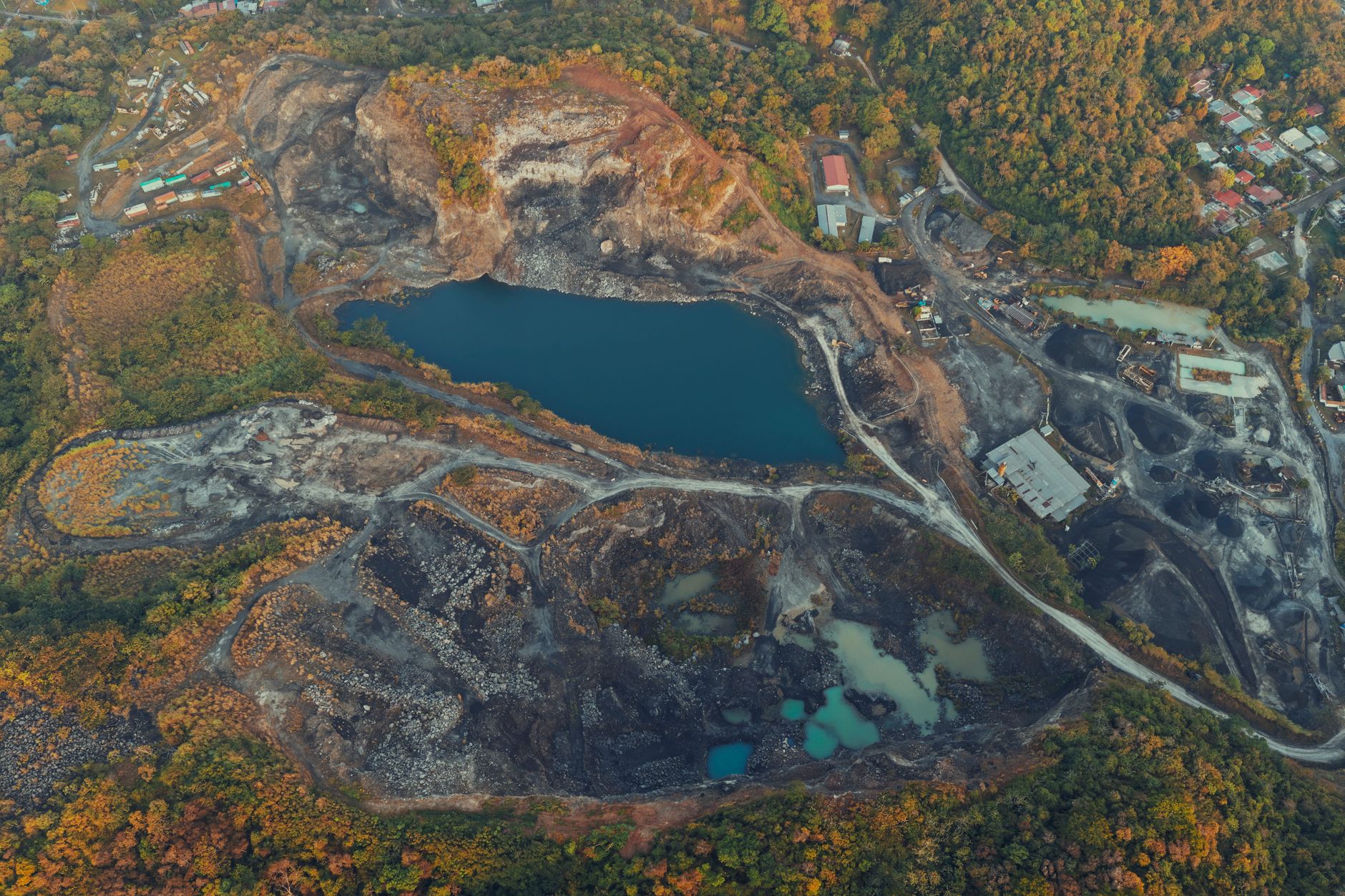
Anglo Asian Mining PLC delivered a step-change in first-half earnings as record copper output and higher metal prices transformed the revenue contribution from its expanded mining portfolio in Azerbaijan. The AIM-listed producer reported revenue of $141.2 million for the six months ended June 30, compared with $40.9 million in the corresponding period of 2025, an increase of about 245%. The reporting period was the first half-year in which the newer Gilar and Demirli mines contributed throughout all six months, providing a significantly larger production base than a year earlier.
Copper was the principal driver of that expansion. Anglo Asian produced 8,840 tonnes of copper during the half, compared with 1,188 tonnes in the first six months of 2025. That represented an increase of more than sevenfold and marked the company’s highest-ever half-year copper output. Gold production was comparatively stable at 12,329 ounces, versus 12,114 ounces a year earlier, while silver production increased to 92,855 ounces from 62,348 ounces. The production mix illustrates how quickly copper has moved from a secondary contributor toward the center of Anglo Asian’s operating model.
The earnings impact was substantial. Gross profit reached $78.0 million from $13.8 million in the prior-year period, as revenue grew much faster than cost of sales. Cost of sales increased to $63.1 million from $27.1 million, reflecting the full-period operation of both Gedabek and Demirli, but the increase was absorbed by the much larger revenue base. Operating profit rose to $71.1 million from $8.8 million, while profit before tax climbed to $68.5 million from $7.1 million.
After an income-tax charge of $22.4 million, profit attributable to shareholders was $46.1 million, compared with $4.7 million a year earlier. Basic and diluted earnings per share were each 40.28 U.S. cents, versus 4.07 cents in H1 2025. The improvement therefore extended well beyond the top line, with both operating leverage and stronger commodity pricing feeding through to shareholder earnings.
Cash generation strengthened in parallel. Net cash generated from operating activities rose to $78.5 million from $11.4 million in the comparable period. Anglo Asian finished June with a net cash position of $57.7 million, compared with only $2.6 million at the end of December 2025. Management separately reported cash reserves of about $70 million and debt excluding leases of $12.3 million, underscoring the extent to which first-half operating cash flow strengthened the balance sheet.
The stronger financial position allowed the board to declare an interim dividend of six U.S. cents per ordinary share for 2026. The distribution is scheduled to be paid on November 26 to shareholders on the register on November 6, with the shares due to trade ex-dividend on November 5. Anglo Asian estimated the cash cost of the interim dividend at approximately $6.9 million. The board is also developing a formal capital-allocation policy intended to balance shareholder distributions with the investment required for the group’s next phase of mine development.
The sales figures show the increasing importance of concentrate production. Anglo Asian sold 50,688 dry metric tonnes of concentrate during the first half for total proceeds of $125.9 million. Gedabek accounted for 18,993 dry metric tonnes with a sales value of $54.5 million, while Demirli contributed 31,695 dry metric tonnes valued at $71.4 million. Gold bullion sales totaled 7,126 ounces at an average realized price of $4,664 an ounce. The company also benefited from higher market prices for both gold and copper during the reporting period.
Higher copper volumes were led by the continuing ramp-up at Demirli and the contribution from Gilar at the wider Gedabek operation. Demirli processed about 1.50 million tonnes of ore grading 0.48% copper and produced 28,805 tonnes of concentrate containing 5,499 tonnes of copper during the half. At Gedabek, concentrate production contained 3,341 tonnes of copper as Gilar continued to supply higher-grade underground ore to the group’s processing facilities.

Anglo Asian has also invested in improving processing performance at Gedabek. Nine high-efficiency Imhoflot pneumatic flotation cells were commissioned during the half, alongside a rebuilt flotation-plant control room and other processing modifications. A road linking Gilar and Ugur was completed after the reporting period, allowing ore haulage to the processing facilities entirely over private roads and enabling trucks to use their full carrying capacity. These investments are intended to support higher throughput and improve the flexibility of the processing system as the mine mix evolves.
Despite the sharp earnings improvement, management reduced its full-year gold production expectation. Guidance now stands at 26,000 to 30,000 ounces, down from the previous range of 28,000 to 33,000 ounces. Anglo Asian attributed the revision to variability in the gold-bearing minerals encountered in Gilar ore, which produced lower-than-expected gold recoveries during the first half. The cut is notable because total first-half gold production was still slightly higher year over year; the issue is therefore recovery performance against the company’s previous 2026 assumptions rather than a broad collapse in reported gold output.
Copper and silver guidance was left unchanged. Anglo Asian continues to expect full-year copper production of 20,000 to 25,000 tonnes and silver output of 170,000 to 210,000 ounces. With 8,840 tonnes of copper produced in the first half, the company needs another 11,160 tonnes to reach the bottom of its annual copper range and 16,160 tonnes to reach the top. That places greater weight on higher second-half output as Demirli progresses toward steady-state production.
The latest results also contain a modest change in the timetable for the Demirli ramp-up. In its July production update, Anglo Asian said full production was expected to be achieved during the third quarter. The September interim report now describes Demirli as being on track for steady-state production during the fourth quarter. The company has not changed its full-year copper volume target, indicating that management still expects the broader production plan to support its 20,000-to-25,000-tonne guidance despite the later steady-state timing.
Cost performance provided an offset to the reduced gold outlook. Anglo Asian lowered full-year copper all-in sustaining cost guidance to $6,000 to $7,000 per tonne after first-half costs came in below budget. The company reported first-half group copper AISC of $5,158 per tonne excluding the Demirli property-complex lease and gold AISC of $1,224 per ounce. Including the Demirli lease, group copper AISC was $5,808 per tonne.
The distinction between the two copper cost measures is important because the company treats the Demirli lease separately for guidance purposes. Anglo Asian did not incur the original capital cost of constructing the Demirli mine and processing facilities and instead leases the complex from the government. Management said including the lease would add roughly $1,000 per tonne to its copper AISC guidance. Even on that basis, the first-half cost performance provides management with greater flexibility as output scales up.
The company spent $13.4 million on property, plant and equipment during the first half, up from $8.0 million a year earlier. Major items included approximately $7.2 million for assets under construction, principally underground mine development, $4.2 million on producing mines and $2.7 million on plant, equipment and vehicles. Capitalized exploration and evaluation spending was $0.9 million, with most of the expenditure directed toward the Demirli and Gedabek contract areas.

Those investments sit within a wider growth program designed to turn Anglo Asian into a multi-asset, mid-tier copper producer. The company says copper is now its primary product and has set a longer-term objective of reaching annual copper production of roughly 50,000 to 55,000 tonnes by 2030. Gilar and Demirli, which both entered production in 2025, are the first major additions supporting that transition.
The next development priorities are Xarxar and Garadag. Anglo Asian appointed Worley Europe to conduct feasibility studies for both projects and has begun a 90,000-meter core-drilling program covering 2026 and 2027. Management currently expects Xarxar to enter production in 2028 and Garadag in 2029. The two assets are central to the company’s plan to increase copper volumes materially over the remainder of the decade.
Anglo Asian’s stronger cash position is therefore significant not only for dividends but also for financing that development pipeline. Net assets rose to $131.6 million at the end of June from $85.2 million at the end of 2025, while the company’s stated gearing ratio fell to 34.8% from 78.5%. The change gives management a more robust financial base from which to fund exploration, feasibility work, underground development and processing upgrades without relying solely on external capital.
Commodity prices remain another major variable in the earnings outlook. The company said first-half revenue benefited from higher average gold and copper market prices and that revenue was running ahead of budget as a result. Anglo Asian reported no hedging activity during the first half, leaving earnings and cash flow directly exposed to changes in realized metal prices. That exposure was strongly beneficial during H1 2026, but it also means future profitability will remain sensitive to the copper and gold markets alongside production volumes, grades and recovery rates.
For the second half, the earnings story is therefore centered on whether operational momentum can continue as the production base expands. Maintaining the copper target requires a higher level of second-half output than in the first six months, while the revised gold range reflects a specific recovery challenge at Gilar that management must incorporate into processing and mine planning. At the same time, lower copper cost guidance and a significantly stronger balance sheet provide financial support for continued investment.
The first-half numbers nevertheless mark a major change in Anglo Asian’s scale. Revenue has moved from roughly $41 million to more than $141 million in a year, copper production has increased more than sevenfold, pretax profit has risen to $68.5 million and net cash has expanded sharply. The gold guidance cut tempers that performance, while the later Demirli ramp timetable adds an execution point for investors to monitor, but the company’s unchanged copper guidance indicates that management continues to expect the mine portfolio to deliver substantially greater volumes in the second half of 2026.