Andrew Ross Sorkin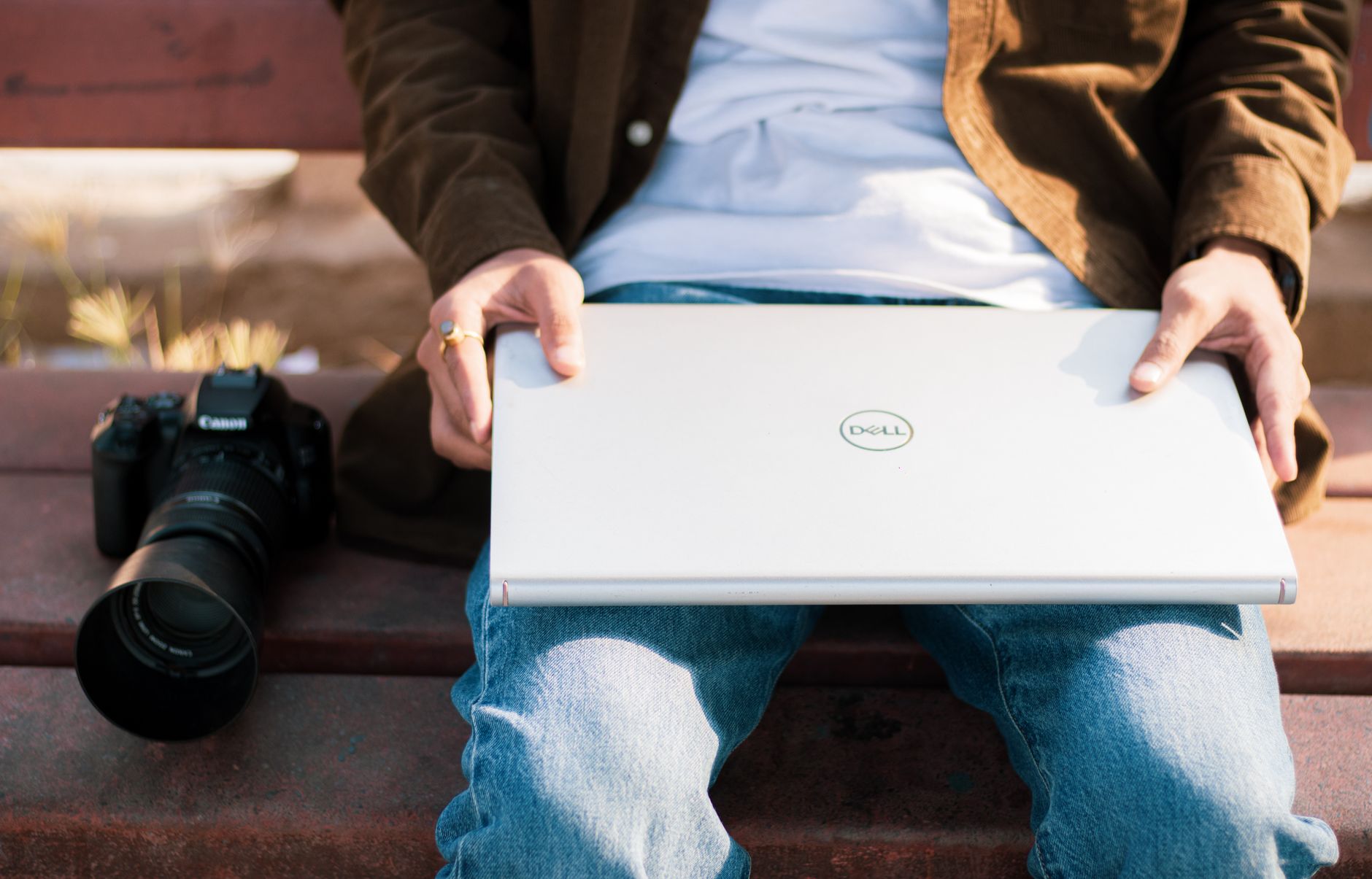
Dell Technologies is making one of its most consequential consumer-PC platform moves in years by introducing the XPS Googlebook, a premium 13-inch laptop that combines the company’s flagship XPS hardware design with Google’s newly launched Googlebook software ecosystem and Qualcomm’s Snapdragon X Elite silicon.
Announced September 21, the machine is Dell’s first XPS system designed specifically around Gemini Intelligence and marks the first time the XPS name has been applied to Google’s new laptop category. Dell said the computer is aimed particularly at Android users who want tighter continuity between their phones and PCs, while retaining the materials, display quality and thin-and-light construction associated with the XPS portfolio.
The launch comes as Google attempts to establish Googlebook as a premium computing category rather than simply an extension of the Chromebook market. Google says Googlebook is built on the Android technology stack while incorporating desktop foundations from ChromeOS, creating a platform designed around Android applications, desktop-class Chrome browsing and Gemini-powered artificial intelligence. Acer, ASUS, Dell, HP and Lenovo are among the initial hardware partners.
For Dell, placing the XPS brand on the platform is strategically notable. XPS has traditionally represented the company’s premium Windows notebook business, competing against products such as Apple’s MacBook line and high-end Windows machines from Lenovo, HP and other vendors. By extending XPS to Googlebook, Dell is effectively signaling that Google’s new platform is intended to compete at a similar level of the consumer-PC market rather than remain confined to lower-cost education or web-centric devices.
The XPS Googlebook uses Qualcomm’s Snapdragon X Elite processor, bringing Arm-based PC silicon into the center of Dell’s Googlebook strategy. Dell says the processor is paired with up to 32GB of LPDDR5X memory, while Google’s product listing identifies a configuration with 16GB of RAM and 512GB of storage. The platform includes a neural processing unit capable of up to 45 trillion operations per second, or TOPS, giving the system dedicated hardware for workloads that can be processed locally rather than entirely in the cloud.
That NPU capacity is particularly important because Dell and Google are presenting the laptop as an AI-native product rather than a conventional PC with an assistant added later. Gemini Intelligence is integrated directly into the operating environment, giving users access to features designed around contextual understanding, task automation, voice interaction and cross-application assistance.
One of the most visible examples is Magic Pointer. Google says users can quickly move or “wiggle” the cursor to activate Gemini in the context of whatever is currently displayed. The system can then analyze selected text, images or other screen content and respond without requiring the user to manually copy information into a separate chatbot interface. Google has demonstrated potential uses such as scheduling activities from information on a webpage, evaluating suspicious email content or combining multiple images into a new visual workflow.
Google says Magic Pointer remains inactive until deliberately summoned, an important design consideration as AI systems gain more visibility into what users are doing on their computers. The approach reflects a broader industry effort to reduce the friction between conventional graphical interfaces and generative-AI assistants by bringing AI directly to the cursor, application window and desktop instead of requiring users to move between independent tools.
Another Googlebook feature, Rambler, is designed to turn natural spoken input into structured writing. Rather than functioning as conventional word-for-word dictation, Google says the system can interpret context, remove filler language and organize spoken thoughts into more polished text. Googlebook also includes Create My Widget, which allows users to describe a desired desktop widget in natural language rather than writing code.
For more advanced users, Google is also positioning the platform for development workflows. Googlebook includes Antigravity, Google’s AI-oriented development environment, as well as access to a Linux terminal. Google says developers can run tools including Claude Code or its own Antigravity command-line interface within the system. That combination highlights Google’s ambition to make the platform relevant beyond basic browser and mobile-app usage.

Dell’s hardware design reinforces the premium positioning. The XPS Googlebook uses a solid aluminum chassis and weighs 2.2 pounds, or roughly one kilogram. Dell lists the system at 12.7 millimeters thick, making portability one of its principal selling points. The computer uses a backlit chiclet keyboard and glass touchpad and has been designed with fewer visible parting lines to maintain the minimalist industrial design associated with recent XPS hardware.
The 13.4-inch InfinityEdge touchscreen has a 2560-by-1600 resolution, 500-nit brightness and 100% coverage of the DCI-P3 color gamut, according to Dell. Its refresh rate can dynamically adjust between 30Hz and 120Hz. Variable refresh technology can lower the refresh rate when high-frequency updates are unnecessary, reducing power consumption, while increasing it for scrolling, animation and other motion-sensitive tasks.
Dell also uses a dual-fan thermal system, reflecting the performance expectations around the Snapdragon X Elite platform. Qualcomm has increasingly emphasized its PC processors as an alternative to established x86 chips, with performance-per-watt and dedicated AI acceleration serving as central parts of the company’s strategy. The XPS Googlebook gives Qualcomm another premium design in which its silicon becomes closely associated with AI functionality rather than only conventional CPU performance.
Battery life is another major component of the positioning. Dell says the XPS Googlebook can deliver up to 16 hours of Netflix streaming under its own laboratory test conditions. That figure was measured on a system with Snapdragon X Elite, a 2.5K LCD, 16GB of memory and a 512GB solid-state drive, with the display set to 150 nits and wireless networking enabled. Dell cautions that real-world battery life will vary according to configuration, applications, connectivity, display settings and other operating conditions.
Google’s own XPS Googlebook product page separately advertises up to 18 hours of battery life under controlled web-browsing testing. The difference reflects the separate workloads used in Dell’s streaming test and Google’s browsing benchmark rather than necessarily conflicting hardware specifications. The product page lists a 52Wh battery and 65-watt USB-C charging on the detailed configuration.
The software-hardware integration is equally central to the product’s differentiation. Googlebook is designed around a shared Android foundation, allowing compatible Android phones and the laptop to exchange settings, files and application context more directly than a traditional PC-phone pairing. Google says saved passwords, Wi-Fi networks, messages and other settings can transfer during setup, with end-to-end encryption protecting supported data.
The operating system also includes Continue On, which allows users to resume supported tasks that began on an Android phone. Files stored on the phone can be accessed through the laptop’s Files application, reducing the need for manual transfers or email attachments. Cast My Apps can stream and control phone applications from a desktop window, giving users another way to interact with mobile software without repeatedly switching devices.
Dell describes similar capabilities on the XPS Googlebook, saying users can view, search and insert files, photographs and downloads from an Android phone directly on the computer. Notifications, messages and application context can remain synchronized, while Android applications can be accessed from the Googlebook environment.
This Android continuity strategy gives Googlebook a clear competitive objective. Apple has spent years strengthening integration among the iPhone, Mac and other devices, while Microsoft and its PC partners have continued to develop links between Windows and smartphones. Google now has an opportunity to build a laptop platform around the enormous Android installed base rather than relying primarily on third-party Windows integration.
The significance for Dell is that the company can participate in that ecosystem without abandoning its existing Windows portfolio. Instead, the XPS Googlebook creates another variant of premium personal computing that may appeal to users whose digital activity is concentrated around Android, Chrome, Google services and Gemini. The product therefore expands Dell’s addressable premium-PC portfolio while allowing the company to test demand for an alternative operating-system architecture.

Google is also emphasizing application compatibility as part of the Googlebook proposition. The platform combines Chrome and browser extensions with access to Android applications through the Play Store. Google says applications including Adobe Photoshop, Adobe Lightroom and CapCut are available, while entertainment options include Android games and streaming services. Every Googlebook purchase also includes promotional access to selected software and services, including a 12-month Google AI Pro subscription under Google’s current launch offer.
Security is another area where Google is drawing on its ChromeOS heritage. The company says Googlebook uses a hardware root of trust, layered security architecture and on-device malware detection. Google also says the platform contains an isolated Linux environment supported by a security-certified pKVM hypervisor, giving developers access to Linux tools without removing the broader operating-system protections intended for mainstream users.
For Dell, the challenge will be demonstrating that Googlebook can sustain the type of premium pricing traditionally associated with XPS hardware. The company lists the XPS Googlebook as starting at $999. Dell said it became available through Best Buy and Google Stores on September 21 and is scheduled to reach Dell.com in October. Google’s broader Googlebook lineup begins at $899, with retail availability for the category scheduled to expand in the United States beginning October 4.
The pricing places Googlebook directly into a segment dominated by established Windows ultrabooks and Apple’s MacBook family. That means hardware quality alone may not determine adoption. Consumers and businesses will also evaluate application compatibility, peripheral support, enterprise management, AI usefulness and the degree to which Android continuity improves everyday workflows.
The inclusion of the XPS name gives Google an important endorsement as it introduces the platform. Dell has considerable experience selling PCs to both consumers and large organizations, and attaching its premium brand to Googlebook could help Google establish credibility among buyers who might otherwise associate Google-powered laptops primarily with Chromebooks used in schools and lower-cost computing environments.
Qualcomm also stands to benefit if Googlebook gains traction. Snapdragon X Elite has become part of a broader effort by the chipmaker to build a larger presence in PCs by combining Arm-based CPU technology with strong integrated AI acceleration. A Googlebook architecture built around Android technologies could offer Qualcomm a software environment with closer technical ties to the mobile ecosystem where its processors already have substantial reach.
At the same time, the product highlights how quickly artificial intelligence is changing competitive positioning across the PC industry. Manufacturers are increasingly differentiating systems not merely by processor speed, memory capacity and display quality, but by the availability of local AI processing, embedded assistants and software capable of acting on information across applications.
Dell’s XPS Googlebook represents a particularly direct version of that shift. Gemini is positioned as part of the computer’s primary interaction model, Qualcomm’s NPU provides dedicated local AI capability, and Android-phone integration extends the system beyond the laptop itself. The result is a product designed to make the operating ecosystem and AI layer as central to the buying decision as conventional hardware specifications.
Whether that proposition becomes a durable third force in premium personal computing will depend on adoption after the initial launch period. For now, Dell’s decision to put XPS branding behind Googlebook gives Google’s new platform a prominent hardware partner and gives Dell a new route into the expanding market for AI-centered PCs.