Andrew Ross Sorkin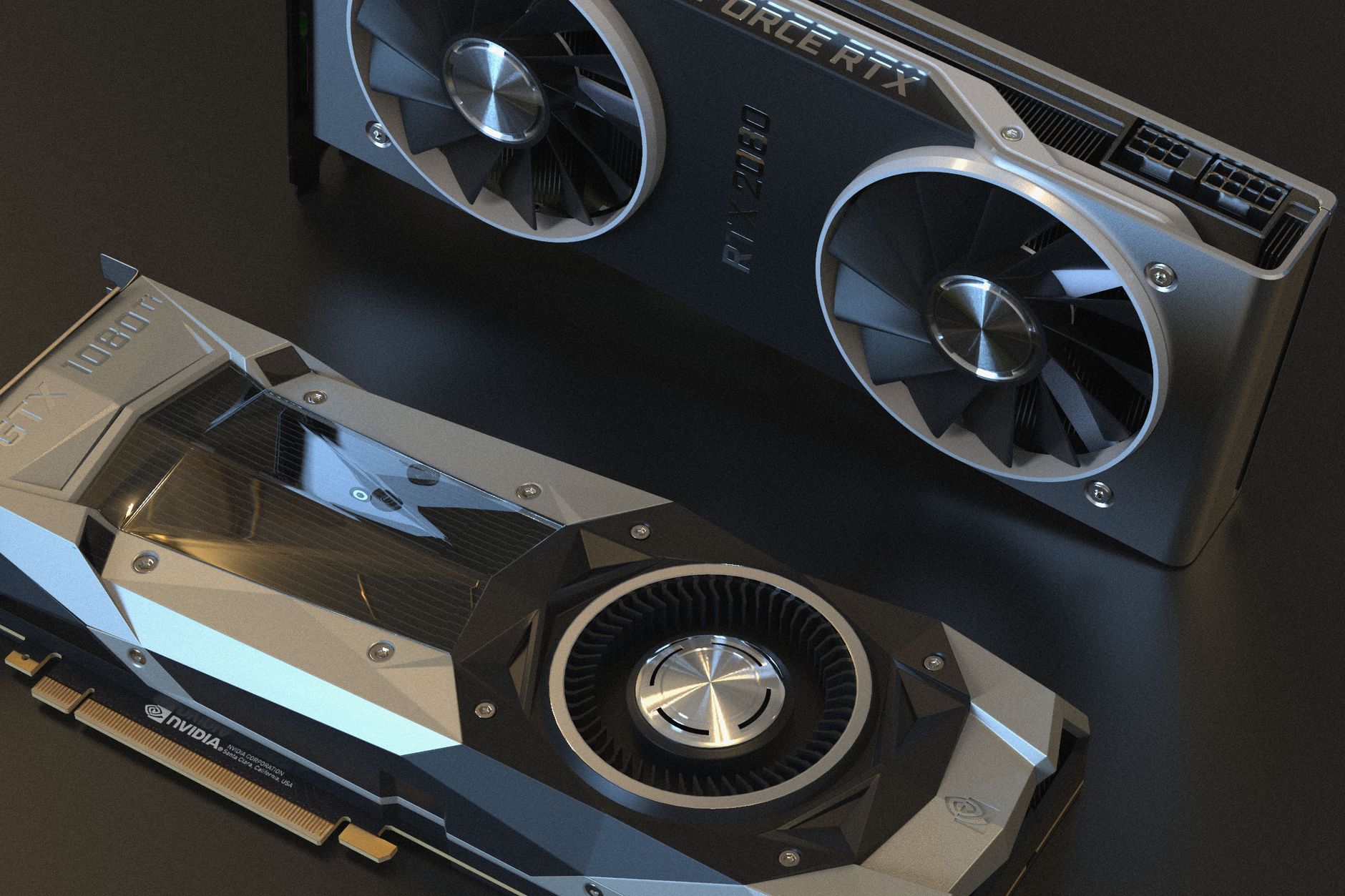
Perplexity has brought its Portable Computer AI agent to Windows PCs equipped with high-memory NVIDIA RTX graphics processors, expanding a local-first computing strategy designed to move more generative AI work away from centralized cloud infrastructure and onto users’ own machines. The September 14 release makes Portable Computer available inside the Perplexity Windows application on compatible NVIDIA GeForce RTX PCs and NVIDIA RTX PRO workstations. NVIDIA said the Windows implementation supports GPUs with at least 24GB of video memory.
Portable Computer is the locally executed version of Perplexity Computer, the company’s agentic platform for planning and carrying out multistep assignments. Rather than limiting the PC to serving as an interface for models running remotely, Portable Computer uses local models accelerated by NVIDIA GPUs to analyze data, combine information from multiple files and handle recurring workflows directly on the device. That architecture is intended to give users greater control over where sensitive information is processed while reducing dependence on metered cloud inference.
NVIDIA said information involved in locally completed work stays on the device and those tasks do not consume Perplexity Computer credits. The system is not entirely disconnected from the cloud, however. Portable Computer can determine when a task could benefit from more advanced reasoning or remote capabilities and ask the user for permission before transmitting information off the machine. That creates a hybrid operating model in which routine or confidential processing can remain local while more demanding work can be escalated when necessary.
The Windows release is significant because it moves Perplexity’s local agent strategy beyond specialized desktop AI hardware and Linux-based systems into the mainstream PC software environment. Portable Computer was initially introduced with NVIDIA for DGX Spark, with Perplexity describing the product as an on-device implementation of its Computer agent. The company said at that launch that the orchestrator, planner, tool router, scheduler, durable task queue and local search index could all operate on the machine.
The broader availability also gives NVIDIA another software workload for its RTX ecosystem. NVIDIA has spent years expanding the role of its GPUs beyond traditional graphics processing, first into content creation and professional visualization and increasingly into generative AI inference. Local agents provide another avenue for GPU demand because they require sustained model execution, significant memory capacity and software optimization rather than occasional acceleration of individual applications.
The 24GB VRAM requirement is an important limitation. It means Portable Computer’s Windows launch is aimed initially at relatively high-end GeForce systems and professional RTX workstations rather than the entire Windows PC market. That hardware threshold reflects the memory requirements of running capable local language models alongside the agent framework and other desktop workloads. It also illustrates one of the central commercial trade-offs in local AI: users can reduce their reliance on cloud inference, but doing so requires substantial computing resources at the endpoint.
NVIDIA said the application can simplify local-model deployment using a model such as Qwen 3.8 27B that has been post-trained to operate with Perplexity Computer and optimized for RTX GPUs. The goal is to avoid forcing users to manually research models, configure inference software or assemble the collection of tools normally required to build a local agent environment. Instead, Perplexity packages the model, orchestration layer and agent tools into the application experience.
That approach could prove important to adoption. Running an open or downloadable model locally is no longer unusual among developers and AI enthusiasts, but turning a model into a useful autonomous or semi-autonomous agent is more complicated. An agent must manage context, tools, permissions, files, task state and execution across multiple steps. By packaging those components, Perplexity is attempting to make local agentic computing accessible to users who would not otherwise build or administer their own inference stack.

Perplexity’s original description of Portable Computer emphasized that its local model can read files, search documents and code, take actions on a device and keep jobs running. The company also designed the orchestration layer to decide when a task should move beyond local resources. Perplexity said cloud escalation can be used for current information, browser-based work, connected services or advanced reasoning, while content leaving the device requires user authorization.
On Windows, NVIDIA said Portable Computer can use Computer’s built-in browser and Perplexity’s proprietary SPACE sandbox. Connectors extend the agent into Microsoft Outlook, OneDrive and Word as well as Google Drive, Gmail, Slack and GitHub. Those connections make the product more relevant to enterprise and professional workflows because an agent can potentially operate across the documents, communications systems and development platforms where work already resides rather than requiring users to move everything into a separate AI interface.
NVIDIA offered several examples of the kinds of workloads Perplexity is targeting. For engineering teams, Computer can review open pull requests in a connected GitHub project, organize them by status, identify next actions and flag outdated documentation. For startup teams, an agent can examine locally stored funnel data to investigate changes in user activation and then communicate findings through Slack. The examples demonstrate that Perplexity is positioning Portable Computer as an execution system for workflows, not merely a question-and-answer application.
Financial and professional-services use cases highlight the privacy argument behind local processing. NVIDIA described a scenario in which a user analyzes brokerage statements, tax documents and historical account information locally to identify avoidable fees or tax drag. The commercial appeal is straightforward: documents containing sensitive financial or corporate information can be analyzed without first being uploaded to a general-purpose chatbot service. Tasks requiring outside research can then be separated from the confidential material retained on the machine.
For organizations evaluating generative AI, that separation could address one of the practical barriers to deploying agents around proprietary information. Many companies already permit some cloud AI services under negotiated data-handling policies, but highly confidential documents, source code or customer information can remain subject to tighter controls. A local execution option does not eliminate security or governance requirements, yet it gives companies another architectural choice for deciding which workloads can remain at the endpoint and which can use external infrastructure.
Perplexity has also built isolation into the agent architecture. In its original Portable Computer announcement, the company said code and tool execution operate inside sandboxed environments with controlled access to files and connected applications. Such controls are particularly relevant for AI agents because their ability to take actions creates a larger security surface than conventional conversational systems. Local execution may reduce exposure to external infrastructure, but permission management and containment remain critical when software can manipulate files or interact with other applications.
The Windows expansion also reflects a broader competition over where AI inference will occur. Cloud providers continue to invest heavily in centralized accelerator capacity for frontier models, but chipmakers and software developers are simultaneously pushing inference toward PCs, workstations and other edge devices. Smaller and more efficient models have improved enough to handle an expanding range of tasks locally, while the most demanding reasoning can still be routed to large models running in data centers.
For NVIDIA, that hybrid model strengthens the strategic role of high-memory GPUs in client computing. If users increasingly expect PCs to run persistent agents rather than only traditional desktop software, available GPU memory, inference throughput and power efficiency become more important purchasing criteria. The software ecosystem can in turn increase the utility of premium hardware: applications optimized for local AI give owners of powerful GPUs more reasons to use their installed compute capacity outside gaming, rendering or engineering workloads.

For Perplexity, local execution creates a different economic model from cloud-only agent services. The company said work performed by local models does not consume Computer credits, meaning frequent workloads can use hardware the customer already owns rather than drawing continuously on metered remote compute. Perplexity described that model at Portable Computer’s original launch as a way to make high-volume AI work more practical when users control the underlying computing resources.
That does not mean cloud models become unnecessary. Local models face limits in model size, up-to-date knowledge and available compute, and Portable Computer is explicitly designed around escalation rather than strict offline operation. The resulting architecture resembles a computing hierarchy: sensitive or routine work runs on the PC, while cloud infrastructure is used selectively when the task requires broader information or more powerful reasoning. This division could become increasingly common as AI software learns to choose dynamically among local and remote resources.
The Windows launch therefore represents more than another application release. It is an early test of whether consumers and professional users will treat powerful desktop GPUs as private AI infrastructure capable of supporting agents that remain active across files, applications and recurring work. Success will depend on model quality, reliability, hardware availability and users’ confidence in the permission boundaries between local and cloud execution.
Near-term reach will remain constrained by the 24GB memory requirement. Many Windows computers do not have a discrete GPU with that capacity, meaning Portable Computer currently addresses a narrower group of AI enthusiasts, developers, creators, professional workstation users and organizations willing to deploy higher-end hardware. Over time, improvements in model efficiency, quantization and hardware memory capacity could lower the entry point for comparable local agents.
NVIDIA said support for its DGX Station platform is expected to follow, adding another hardware option alongside DGX Spark, Linux RTX systems and the newly supported Windows PCs. The sequence shows Perplexity steadily broadening the environments in which its local agent can operate while retaining cloud escalation as a complementary layer rather than abandoning remote models altogether.
The competitive significance will ultimately depend on whether local agents become a mainstream layer of PC software. Microsoft, PC manufacturers, chipmakers and independent AI developers are all working to make more inference happen on client devices. Perplexity’s approach differs by combining local models with an established agent framework, application connectors, sandboxing and optional access to cloud reasoning. That integration could make local inference more useful to people who care less about running a model for its own sake and more about completing real work.
Portable Computer’s arrival on Windows gives that strategy a larger proving ground. By pairing Perplexity’s agent software with NVIDIA’s RTX hardware, the two companies are betting that personal computers can take over a meaningful portion of AI workloads now handled in data centers. The immediate audience is still defined by premium GPU requirements, but the direction is clear: the AI software stack is beginning to treat the PC itself as an inference platform, with the cloud becoming one resource among several rather than the mandatory destination for every prompt and every file.