Andrew Ross Sorkin
Saudi Arabia’s East-West oil pipeline is expected to remain heavily disrupted for several weeks after a drone attack damaged critical infrastructure along the system, extending what initially appeared to be a short-term operational interruption into a significant new constraint on global crude flows. The pipeline, operated by Saudi Aramco and also known as Petroline, has become central to the kingdom’s ability to maintain exports while shipping through the Strait of Hormuz remains severely disrupted.
Two regional officials briefed on the damage told The Associated Press that repairs could take between three and five weeks, including work required at a major pumping facility. One official said the system could potentially operate at reduced capacity during the repair period, although neither official provided an estimate of how much crude might be moved under a partial restart. Aramco had not publicly provided a detailed repair schedule or confirmed a firm date for restoring full operations when the assessment was reported.
Other industry reporting has pointed to an even longer timetable. Sources cited by Reuters said full repairs could require five to six weeks, although limited pumping might resume sooner if individual sections of the pipeline can be returned to service before the entire system is restored. The difference between a partial restart within days and a broadly constrained pipeline for more than a month is becoming one of the most important near-term variables for international oil markets.
The East-West pipeline runs approximately 1,200 kilometers, or 745 miles, across Saudi Arabia from the kingdom’s principal eastern oil-producing region to Yanbu on the Red Sea. From Yanbu, crude can be loaded onto tankers without passing through the Strait of Hormuz, historically one of the most important energy chokepoints in the world. That bypass function has become far more valuable as military conflict and attacks on commercial shipping have restricted normal Persian Gulf export routes.
The latest attack struck infrastructure associated with the pipeline after drones were reported to have originated in Iraq. Saudi authorities blamed the incident on drones linked to Iranian-backed militias, while Iraq opened an investigation into the use of its territory. Earlier reporting based on U.S. officials and satellite imagery indicated that pumping stations were hit and that significant fire damage was visible at at least one facility. The extent of damage to the pipeline itself has been less clear, making pumping infrastructure and control systems central to estimates of how quickly the route can recover.
The attack matters because Saudi Arabia had increasingly relied on the East-West system as its primary alternative to Gulf shipping. Rystad Energy estimates cited by AP indicate that the pipeline moved an average of about 2.6 million to 4 million barrels per day from late August through the period immediately before the shutdown. At the upper end of that range, a complete loss of throughput represents a significant portion of globally traded crude and an amount that cannot easily be replaced through a single alternative route.
Reuters-linked estimates have placed the amount potentially at risk at around 4% of global supply if the outage prevents Saudi Arabia from maintaining exports after inventories available near the Red Sea coast are drawn down. That does not mean global production immediately falls by the same amount. Crude can remain in storage or be rerouted where infrastructure permits. The more immediate constraint is logistical: oil produced in eastern Saudi Arabia becomes substantially more difficult to deliver to international buyers when both the principal Gulf route and the main overland bypass face restrictions.
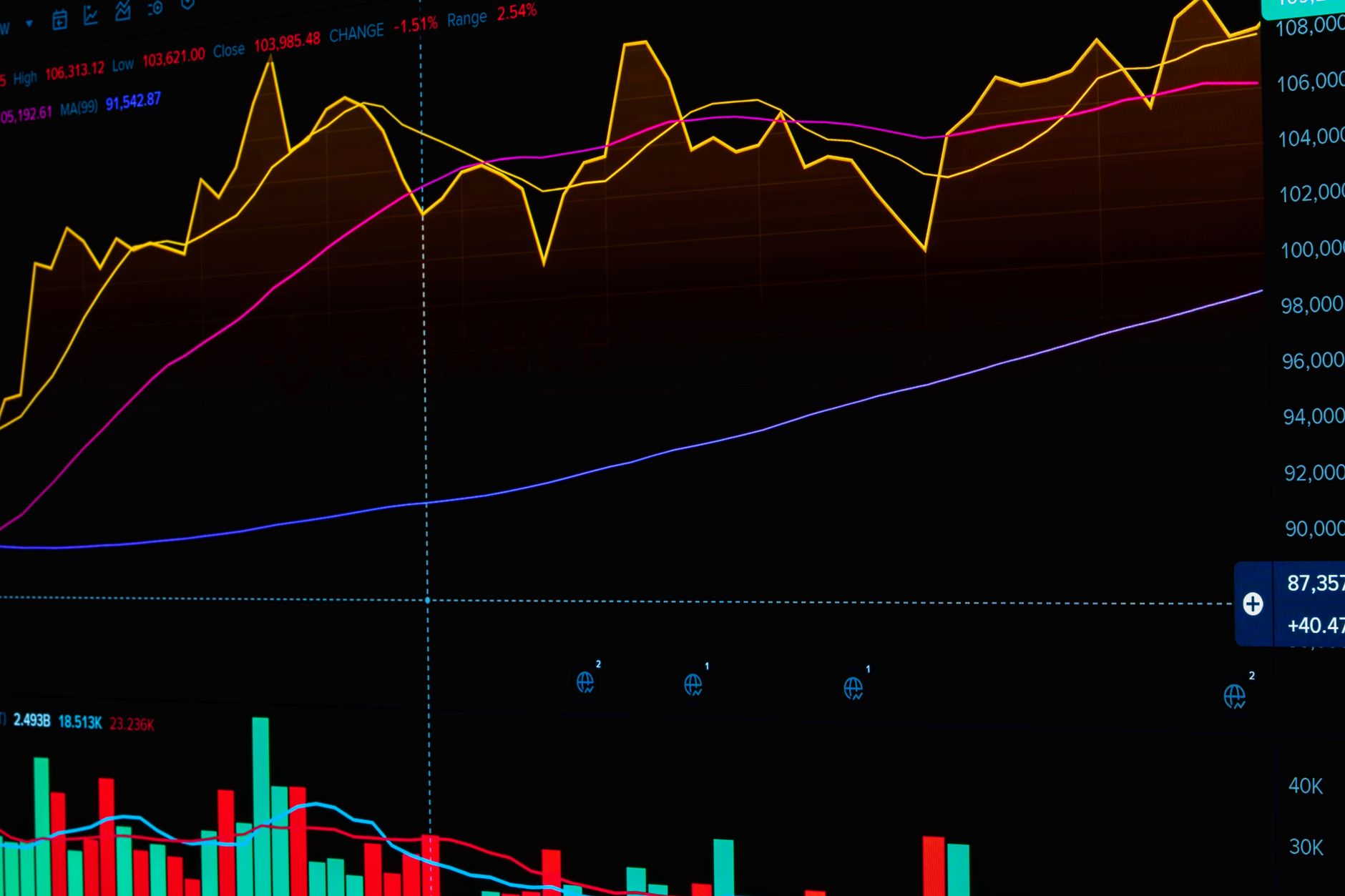
Oil prices responded quickly to the new uncertainty. Brent crude rose more than 2% as investors assessed the repair outlook, and AP reported that the international benchmark reached about $109 a barrel. The move reflected not only the physical volumes potentially affected but also the loss of redundancy within Saudi Arabia’s export network. Energy markets tend to place a higher risk premium on infrastructure outages when alternative transportation routes are already operating under geopolitical stress.
The duration of the shutdown is therefore more consequential than the initial attack itself. If Saudi Aramco can restore meaningful partial capacity relatively soon, the physical impact could be reduced even while repairs continue. If most capacity remains unavailable for several weeks, however, refiners could be forced to compete more aggressively for alternative grades from other producing regions, increasing spot crude premiums and potentially widening price differences between prompt and later-dated contracts.

A prolonged outage would also complicate Saudi Arabia’s ability to use production capacity as a stabilizing force in the global market. The International Energy Agency said Saudi crude production fell to about 6 million barrels per day in August, compared with nearly 10 million barrels per day in September of the previous year, according to figures cited by AP. Lower output and constrained transportation capacity together reduce the flexibility that buyers normally associate with the world’s largest crude exporter.
The problem extends beyond the pipeline. Red Sea shipping conditions have also deteriorated as Yemen’s Houthi movement expanded its presence near strategic waterways. AP reported that Houthi forces had seized additional islands near the Bab el-Mandeb Strait, adding another layer of uncertainty to Saudi crude shipments originating from Yanbu. Even when barrels reach Saudi Arabia’s western coast, the safest and most commercially efficient path to customers is no longer guaranteed.
That security environment has already altered tanker routing. With threats near the southern entrance to the Red Sea, a significant share of vessels loading at Yanbu has moved north toward the Suez Canal or into Egypt’s pipeline system rather than passing directly through Bab el-Mandeb toward Asia. For Saudi Arabia’s large customer base in China, India, South Korea and other Asian markets, those longer routes increase voyage times, ship utilization and freight requirements.
Higher freight costs can magnify the economic effect of a crude-price increase. Refiners purchase not only the commodity but also transportation, insurance and financing throughout the cargo’s journey. When vessels must travel farther or incur higher war-risk insurance premiums, the delivered price of crude can rise even when the benchmark oil price is unchanged. The combination of higher benchmarks and higher logistics costs can therefore create a larger increase in refinery feedstock expenses than headline crude prices alone suggest.
Asian refiners could be particularly exposed because they have traditionally relied heavily on Middle Eastern crude due to geographic proximity and the scale of Gulf production. Refiners capable of processing a wide range of crude qualities may respond by increasing purchases from West Africa, the Americas or other producing regions. Less flexible facilities have fewer substitution options, which can lead to stronger premiums for grades with similar sulfur levels and density characteristics to the Saudi barrels they would otherwise process.
Such reallocation has consequences far outside the Middle East. If Asian buyers bid more aggressively for Atlantic Basin crude, European refiners may face stronger competition for those same cargoes. U.S. and Latin American exporters could receive higher netbacks, while tanker demand would increase because replacement barrels often travel longer distances. The economic effect of the pipeline outage can therefore propagate across several markets even without an equivalent decline in worldwide oil production.
Refined products are another area of concern. Higher crude acquisition costs can eventually raise the cost of producing diesel, gasoline, jet fuel and petrochemical feedstocks. Diesel is particularly important to broader inflation because it is widely used in trucking, construction, agriculture and industrial transportation. When diesel prices rise, the effects can spread through supply chains and appear in the delivered cost of food, manufactured goods and consumer products.
That inflation channel makes the Saudi pipeline disruption relevant beyond the energy complex. Persistent oil and fuel price increases can complicate expectations for interest rates by slowing progress on headline inflation even if underlying demand is weakening. Bond yields, currencies, transportation companies and consumer-sensitive equities can all react when investors believe an energy shock will persist long enough to affect inflation data or corporate margins.
Airlines, shipping groups, chemical producers and other energy-intensive businesses are particularly sensitive to the duration of the disruption. Many large companies hedge part of their fuel exposure, limiting the immediate impact of a short-lived price spike. A multiweek or multi-month increase can be more difficult to absorb because hedges eventually roll off, suppliers revise contract pricing and surcharges begin appearing in transportation agreements.

For oil producers outside Saudi Arabia, the disruption could support realized prices and improve cash flow if benchmark prices remain elevated. The benefit is less straightforward for integrated energy companies because refining and trading operations may experience higher volatility even as upstream businesses earn more on crude production. The distribution of gains and losses will depend on regional exposure, refinery configurations and the ability to source replacement barrels.
Saudi Aramco itself faces a more complex financial tradeoff. Higher global oil prices can lift the value of barrels the company successfully exports, but constrained infrastructure limits its ability to capitalize fully on those prices. Repairs also introduce direct costs, while longer shipping routes and operational adjustments can increase expenses. For the Saudi government, whose fiscal position remains closely tied to hydrocarbon revenue, maintaining export continuity is consequently as important as the headline oil price.
The uncertainty surrounding partial pipeline operations will remain a central market focus. A restart at even a portion of normal throughput could ease concerns because it would demonstrate that damaged sections can be isolated and operated around. Conversely, confirmation that major pumping facilities require extensive reconstruction would reinforce expectations that the disruption will last through much of the repair window.
Infrastructure security is also likely to receive greater attention. The East-West pipeline was designed in part to provide strategic resilience by moving Saudi crude away from vulnerable Persian Gulf shipping lanes. The latest attack illustrates that bypass infrastructure itself can become a target. That changes the risk calculation for traders because diversification of routes offers less protection if multiple components of the export system can be disrupted at the same time.
Saudi Arabia has repaired attacks on the East-West system relatively quickly in the past, including an earlier incident in 2026 that was followed by a restoration of capacity within days. The current damage appears more extensive, particularly because officials cited by AP now describe a repair period measured in weeks. That distinction is why the market reaction has been more persistent than it would be for a conventional unplanned shutdown.
The next significant indicators will be any formal Aramco or Saudi government estimate of restored throughput, the pace at which tanker loadings from Yanbu can be maintained and evidence of how quickly Saudi inventories are being drawn down. Traders will also watch physical crude differentials, tanker freight rates and the Brent forward curve for signs that buyers expect the shortage to extend beyond the immediate period.
For now, the central market issue is not whether the East-West pipeline will eventually return to service, but how much capacity Saudi Arabia can restore before the broader repair program is completed. A meaningful partial restart could prevent the outage from translating into a sustained loss of millions of barrels per day. Failure to achieve that would increase pressure on alternative producers, tanker capacity and global crude inventories.
The episode has turned a single infrastructure attack into a wider test of the global oil system’s resilience. With the Strait of Hormuz already constrained and Red Sea security deteriorating, Saudi Arabia has fewer reliable options for moving crude than it would under normal market conditions. A three-to-six-week disruption to its principal overland bypass therefore carries consequences that reach beyond Saudi production, touching freight, refining, inflation and financial markets. Until substantial flows resume, oil prices are likely to retain a larger geopolitical risk premium tied directly to the pipeline’s repair progress.