Andrew Ross Sorkin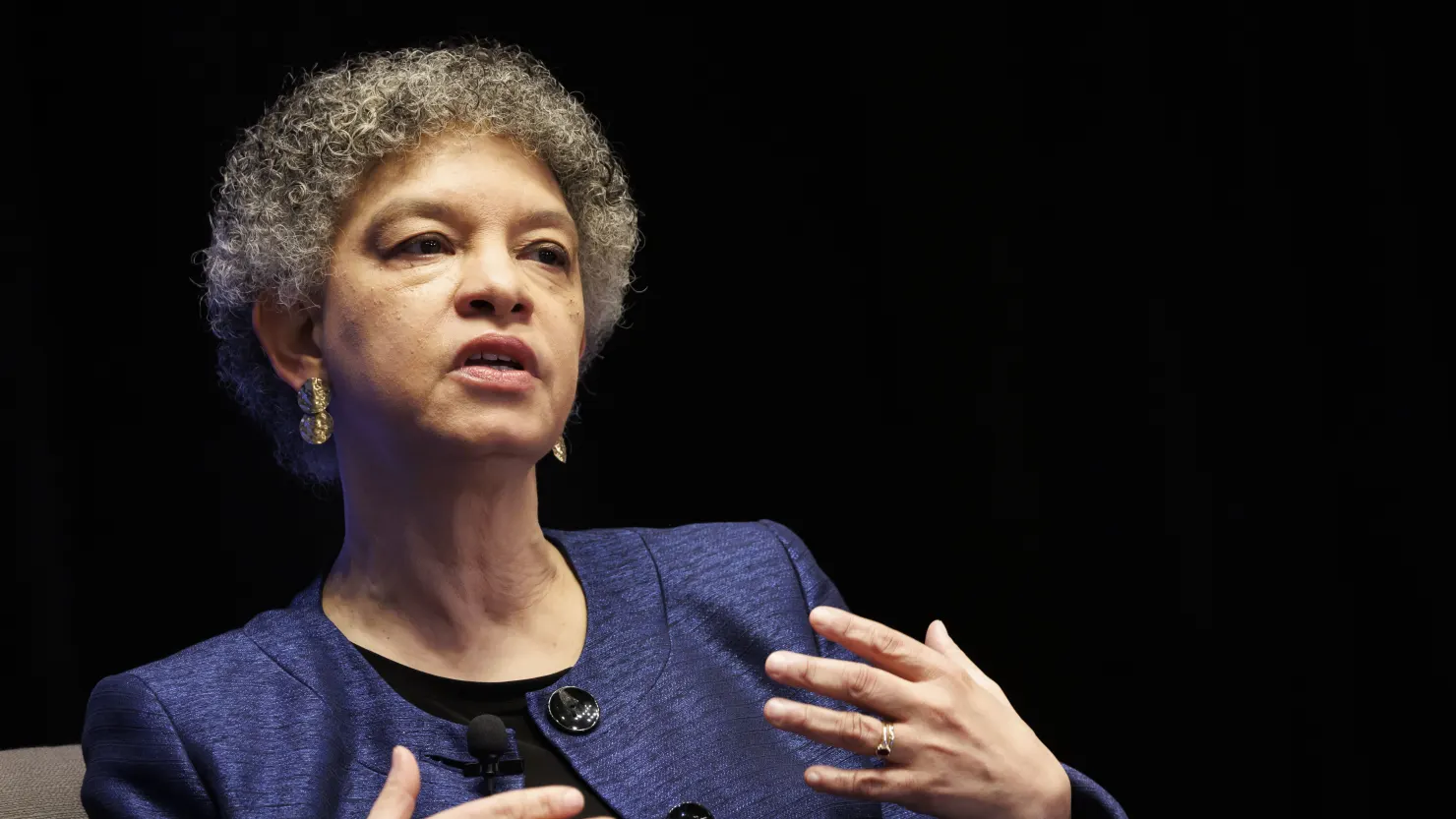
Boston Federal Reserve President Susan Collins voiced support on Tuesday for the recent interest rate cut, while cautioning that future reductions should be approached carefully due to lingering inflationary pressures.
Speaking at an event in New York, Collins highlighted that the U.S. economy continues to face dual challenges — persistent inflation and a gradually cooling labor market — both of which require a delicate policy balance.
“In my view, a small degree of easing was justified, given the recent shift in risks between inflation and employment,” Collins said in her prepared remarks. “However, I still consider maintaining a moderately restrictive policy stance to be appropriate as we aim to restore price stability and avoid further deterioration in labor market conditions.”
Her description of the current policy as “modestly restrictive” reflects the Federal Reserve’s approach of slowing economic growth just enough to curb inflation, while being mindful of rising unemployment and weaker payroll growth.
Collins, who votes on the Federal Open Market Committee (FOMC) this year, emphasized that policymakers are navigating a “highly uncertain environment,” where both stubborn inflation and potential job market declines remain real possibilities.
“While inflation risks from the labor market have eased somewhat, making the upside threats I worried about earlier this year less significant, additional policy adjustments could still be warranted later this year,” she said. “That decision, however, will depend entirely on the data.”
At the September FOMC meeting, officials projected the possibility of two more rate cuts before the end of the year — a forecast that has since been mirrored in market expectations.
However, the central bank faces another complication: a potential government shutdown. The U.S. Department of Labor has announced it would halt data collection and release on employment metrics during the impasse, raising uncertainty ahead of Friday’s key nonfarm payrolls report.
Earlier in the day, Federal Reserve Governor Philip Jefferson also voiced support for the Fed’s September decision to lower its benchmark interest rate by 0.25 percentage points. Jefferson, a permanent voting member of the FOMC, did not signal any clear direction for future policy but acknowledged growing economic strain on both sides of the Fed’s dual mandate.
“Given the outlook, I see downside risks for employment and upside risks for inflation,” Jefferson said. “That means both our goals — maximum employment and stable prices — are currently under pressure.”
Market analysts largely expect the FOMC to move forward with another rate cut when it meets again in October, reflecting continued concerns about the pace of economic growth and the persistence of inflationary risks.