Andrew Ross Sorkin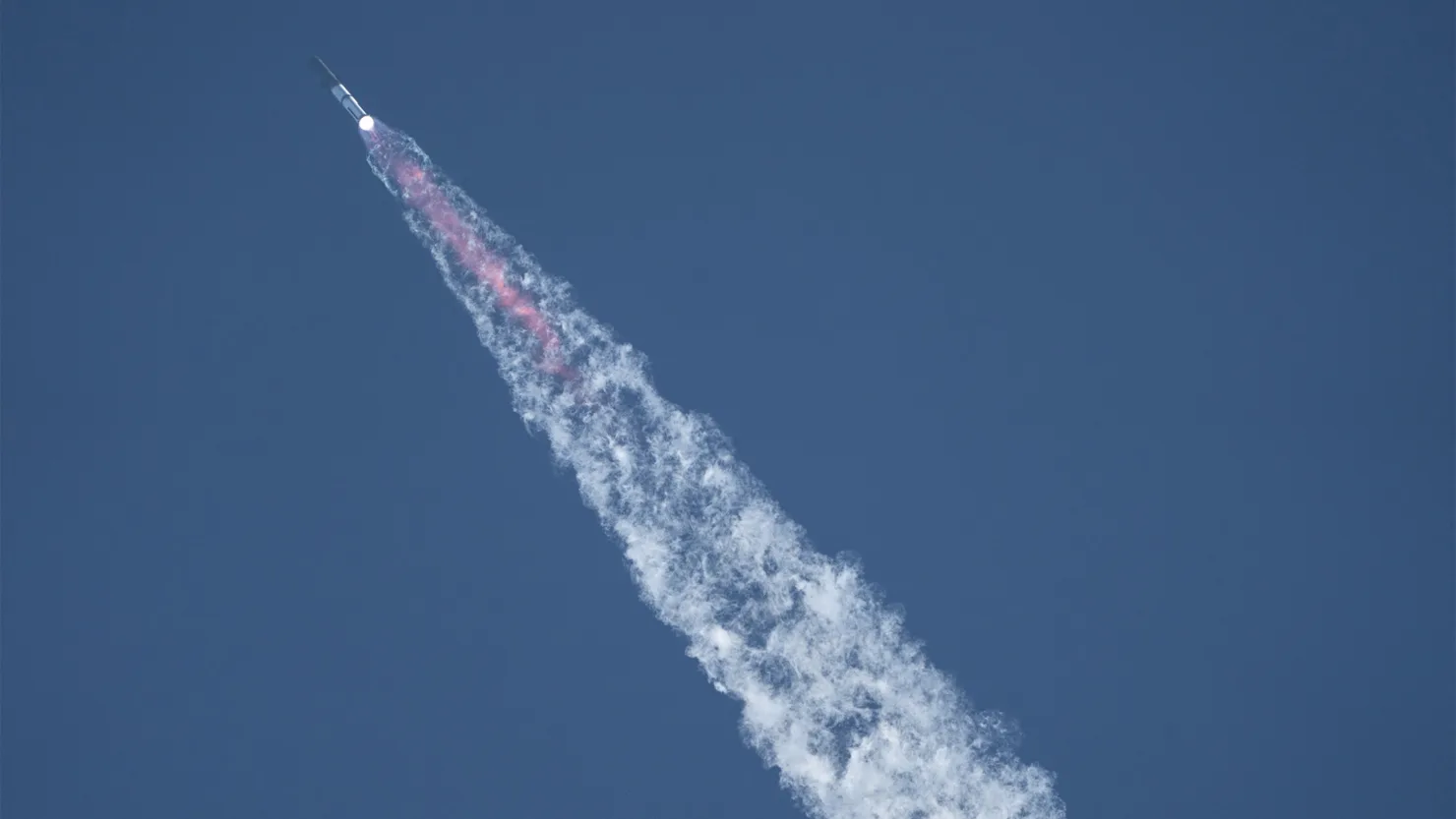
Elon Musk’s SpaceX reached another milestone on Monday as it launched its 11th Starship rocket from Texas and successfully landed it in the Indian Ocean. The mission marks the final flight before SpaceX begins testing a new version of the massive spacecraft designed for future moon and Mars expeditions.
The fully integrated Starship system — consisting of the upper-stage Starship spacecraft mounted atop its Super Heavy booster — lifted off from SpaceX’s Starbase facility in Boca Chica, Texas, at 6:23 p.m. CT (2323 GMT). About ten minutes later, the Super Heavy booster executed a controlled splashdown in the Gulf of Mexico, while the Starship upper stage continued into orbit.
This successful flight follows a streak of testing improvements. The company’s last Starship mission in August demonstrated significant progress after several early setbacks. Monday’s mission mirrored that one, deploying a batch of mock Starlink satellites, briefly reigniting engines in orbit, and testing upgraded heat shield tiles during reentry. The spacecraft ultimately splashed down safely west of Australia.
NASA’s Acting Administrator, Sean Duffy, praised the test on X, calling it “another major step toward landing Americans on the Moon’s south pole.”
According to SpaceX, the next phase of testing will involve a more advanced Starship prototype equipped with critical systems for long-duration missions. These upgrades include docking adapters and new hardware that will enable orbital refueling — a complex process in which two Starships connect in space to transfer super-cooled propellant.
“This next iteration is the vehicle that could truly take humans to the Moon and Mars,” SpaceX President Gwynne Shotwell said during a conference in Paris last month. She added that the company expects the upgraded version to launch by the end of this year or early next year.
Elon Musk, SpaceX’s CEO, has also confirmed that the company aims to conduct its first in-orbit refueling demonstration between two Starships next year. NASA initially anticipated that such a mission could happen as early as this year, underscoring the technical challenges involved.
The refueling test is one of several remaining hurdles before Starship can carry astronauts to the lunar surface, a mission currently scheduled for 2027 under NASA’s Artemis program. SpaceX’s role in this effort stems from a $3 billion contract awarded by NASA in 2021, placing the company at the center of America’s renewed race to the Moon — and in direct competition with China, which is pursuing its own crewed lunar landing by 2030.
NASA’s Aerospace Safety Advisory Panel recently cautioned that delays in developing key elements of the Starship lunar lander could postpone the U.S. Moon program by several years. Achieving a successful test landing on the Moon’s rugged terrain remains one of SpaceX’s most critical objectives.
As the world’s most powerful rocket, Starship dwarfs SpaceX’s reliable Falcon 9 in both size and capability. Beyond lunar missions, it is expected to play a major role in deploying larger Starlink satellites to expand SpaceX’s global broadband network — a key component of the company’s commercial ambitions.
Ultimately, Starship represents more than a technological triumph. It embodies Elon Musk’s long-term vision of creating a sustainable pathway for human life beyond Earth, from the Moon to Mars and beyond.