Andrew Ross Sorkin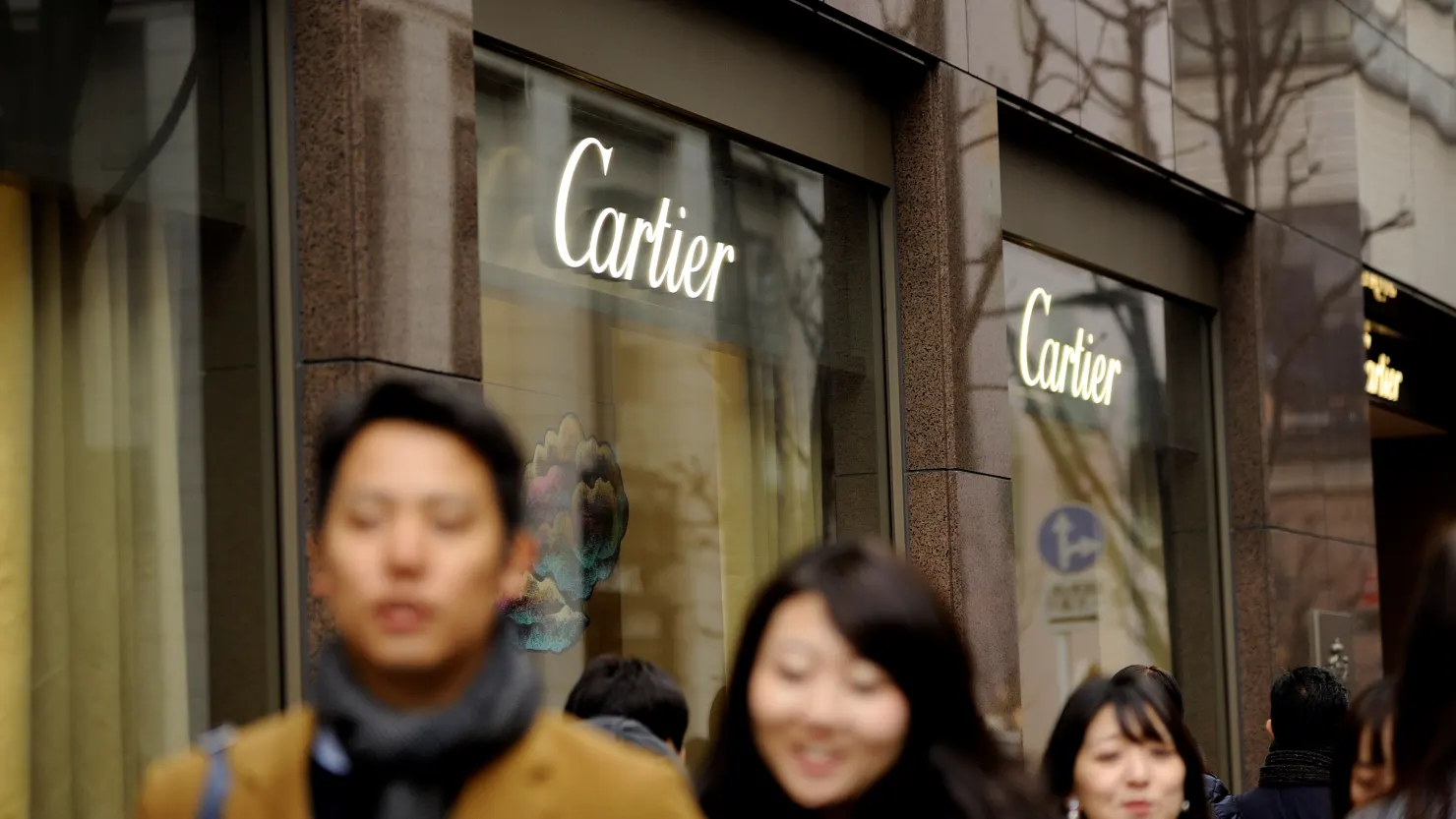
After an extended surge fueled by a weakened yen, Japan’s luxury market is finally showing signs of fatigue — and that shift is beginning to hit the Swiss luxury powerhouse Richemont.
In its latest quarterly results released Wednesday, Richemont reported that sales in Japan fell 15% year-on-year at constant exchange rates during the fiscal first quarter. The company, which owns prestigious brands including Cartier, Van Cleef & Arpels, and Buccellati, attributed the decline to a sharp appreciation of the Japanese yen in recent months, which has curbed spending by foreign tourists.
Despite the slowdown in Japan, Richemont’s global revenue still climbed 6% at constant exchange rates to 5.41 billion euros ($6.28 billion) for the three months ending in June. That result narrowly exceeded analysts’ expectations of 5.37 billion euros in an LSEG survey. Shares of the company rose 1.2% following the announcement, suggesting investors remain confident in its broader performance.
The contrast between this year’s decline and last year’s explosive growth is striking. In the same quarter of 2024, Richemont’s Japan revenues had jumped 59%, driven by a surge in international tourism and a wave of currency-fueled luxury spending. The yen’s steep depreciation during that period had made Japan an especially attractive destination for high-end shoppers, particularly from mainland China.
The situation began to shift after the Bank of Japan ended its long-standing negative interest rate policy and dismantled its yield curve control framework earlier this year. These moves were followed by a modest strengthening of the yen, which had previously fallen to a 38-year low, trading beyond 161 yen per U.S. dollar in mid-2024. That turning point brought an end to what many luxury analysts described as Japan’s “currency discount shopping spree.”
Richemont, along with rivals such as LVMH, Kering, and Burberry, had all benefited from the weaker yen throughout 2024. Their Japanese boutiques became magnets for tourists who viewed Japan as one of the best-value destinations for luxury goods. For several quarters, Richemont enjoyed consistent sales growth of 20% to 25% in the region.
But as the yen gained strength through early 2025, that advantage evaporated. According to Richemont’s statement, “Sales in Japan declined by 15% against a challenging +59% comparative in the prior-year period, with a strengthening yen strongly reducing tourist spend, most notably from Chinese clientele, whilst local demand remained positive.”
The company’s remarks underscore the sensitivity of Japan’s luxury retail market to exchange rate movements. A strong yen not only makes luxury goods more expensive for tourists but also diminishes the spending power of travelers from China, who had been driving much of the growth. Industry analysts say this trend could continue in the short term if the yen remains firm and global economic uncertainty dampens discretionary spending.
Even so, Richemont continues to stand out among global luxury players, many of which have struggled with slowing sales in key markets such as China and Europe. The company’s high-end jewelry brands have proven remarkably resilient. In the latest quarter, Richemont’s Jewellery Maisons division — which includes Cartier and Van Cleef & Arpels — recorded an 11% increase in sales at constant exchange rates.
This growth has helped offset weaker performance in other segments. The company’s Specialist Watchmakers division, which features brands such as Piaget and Roger Dubuis, reported a 7% decline in sales. The downturn in watch sales reflected a broader cooling in demand across several Asian markets, including China, Hong Kong, and Macau.
Richemont also noted that while sales in Asia Pacific softened, revenues in the Americas saw encouraging growth, signaling a degree of geographic diversification in consumer appetite. This regional balance has allowed the group to maintain steady overall momentum despite challenging conditions in parts of Asia.
The broader luxury sector, however, is navigating a more complex environment. After several years of record-breaking performance following the pandemic, growth has slowed as inflation, higher interest rates, and changing travel patterns weigh on global consumer behavior. For many brands, Japan had become a bright spot — a reliable growth engine driven by foreign tourists and the favorable currency exchange. But as that tailwind fades, companies are now reassessing their strategies in the region.
Analysts note that Richemont’s performance reflects both its exposure to shifting currency dynamics and its ability to adapt to them. The company’s focus on timeless jewelry pieces, which tend to hold long-term appeal regardless of economic cycles, continues to attract affluent buyers. By contrast, more fashion-driven brands have found it harder to maintain momentum amid fluctuating consumer confidence.
Industry observers are also watching how Richemont manages its pricing and inventory strategies in Japan moving forward. With local demand still holding steady — despite weaker tourist spending — the company could seek to deepen engagement with domestic consumers through exclusive collections and in-store experiences.
Looking ahead, Richemont’s management remains cautiously optimistic. While the firm acknowledged that global macroeconomic uncertainty could limit growth in the near term, it reaffirmed its commitment to maintaining brand prestige and long-term profitability. Its continued investment in craftsmanship, digital retail integration, and sustainability initiatives may further strengthen its resilience.
For now, the company’s performance in Japan serves as a reminder of how closely the luxury market’s fortunes are tied to currency trends. The yen’s rebound has effectively reversed last year’s “luxury shopping boom,” but Richemont’s diversified global portfolio and strong brand equity position it well to navigate the shifting tides of the luxury economy.
As the world’s second-largest luxury group by market capitalization, trailing only LVMH, Richemont’s quarterly results are often viewed as a bellwether for the broader industry. And though Japan’s brief spending frenzy may have ended, the long-term allure of Cartier’s diamonds and Van Cleef’s signature motifs continues to sparkle — even amid an evolving global marketplace.