Andrew Ross Sorkin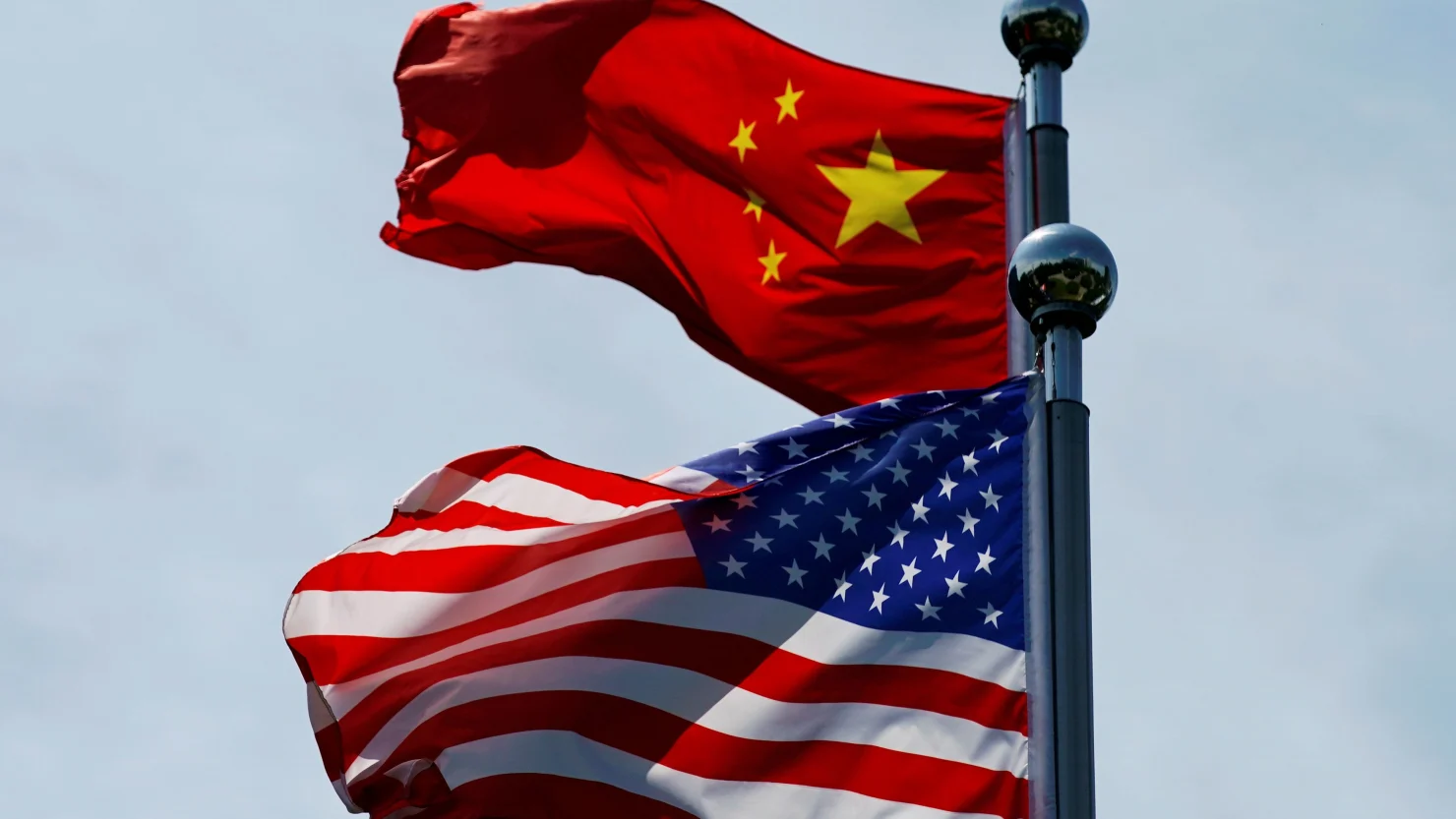

BEIJING — The renewed friction between the United States and China over the weekend underscores the growing mistrust separating the world’s two largest economies.
Just days after China wrapped up its Golden Week holiday, Beijing rolled out a new framework tightening controls on rare earth exports, added several U.S. firms to its blacklist, and imposed new docking fees on ships linked to the United States.
In response, U.S. President Donald Trump threatened to double tariffs on Chinese goods. Beijing swiftly countered, describing its export restrictions as a “legitimate” and defensive measure.
“The root cause of these tensions lies in a lack of mutual trust,” said Larry Hu, Chief China Economist at Macquarie, in a note released Monday. “During the London talks in June, both sides reached an understanding around a ‘rare earth for tech’ exchange. But each now feels betrayed, believing the other side has not acted in good faith.”
According to Hu, the escalation stems largely from misinterpretations on both sides. Analysts agree that what one country views as a defensive adjustment, the other perceives as an aggressive provocation.
Beijing likely sees the U.S. decision to expand export controls on September 29 — extending restrictions to majority-owned subsidiaries of listed companies — as an escalation requiring a response. Washington, however, might consider it merely a technical update.
Similarly, while Beijing may regard its rare earth export limits as mirroring U.S. technology restrictions, Washington views them as a bargaining tactic — a way to gain leverage ahead of a potential meeting between the two nations’ leaders.
Impact on U.S. Chipmakers
The latest developments are reverberating through financial markets. Friday’s stock sell-off reflected growing investor anxiety about the trade fallout.
“One new rule requires companies to obtain a license from China’s Commerce Ministry to export any product made globally that contains Chinese rare earths valued at 0.1% or more of the product’s total worth,” explained Gabriel Wildau, Managing Director at Teneo, in a weekend note. “This could, in theory, mean companies like Nvidia, TSMC, and Intel need Chinese approval to sell certain products within the United States.”
Wildau also noted that China’s policy resembles the U.S. Commerce Department’s “foreign direct product rule,” which requires licenses for any goods made using U.S. technology — regardless of where they are produced.
Chinese markets opened lower on Monday following declines in the U.S., though U.S. futures later rebounded as investors hoped tensions might not spiral further.
“Both sides may seek a short-term truce,” said Jianwei Xu, Senior Economist for Greater China at Natixis. “However, it will not resolve the deeper issues. The trust that once existed has already eroded.”
Trump has indicated that he is open to meeting Chinese President Xi Jinping at the APEC summit in South Korea later this month. Beijing has yet to confirm or deny such plans.
From China’s perspective, Washington’s strategy of sustained pressure is unlikely to change, even if the leaders meet face-to-face, said Liu Weidong, a researcher at the Chinese Academy of Social Sciences’ Institute of American Studies.
“History shows that pressure from the U.S. is counterproductive and only pushes the two nations toward greater confrontation,” Liu said. He characterized China’s latest export measures as a signal — warning unfriendly companies while reassuring cooperative partners — and described the move as an attempt to maintain stability through “measured and strategic counteractions.”
Although Trump and Xi spoke by phone last month, they have not met in person since Trump took office in January. Trump has also hinted at a possible visit to China next year, with Xi expected to travel to the U.S. afterward.
Negotiations are ongoing as both nations monitor the timeline of their respective measures. Ting Lu, Chief China Economist at Nomura, noted that “Trump’s tariff hike, set for November 1, comes a full month before Beijing’s December 1 implementation of rare earth restrictions.”
This gap, Lu said, leaves a narrow but critical window for diplomacy — a final opportunity to defuse rising trade tensions before they harden into a prolonged economic standoff.