Andrew Ross Sorkin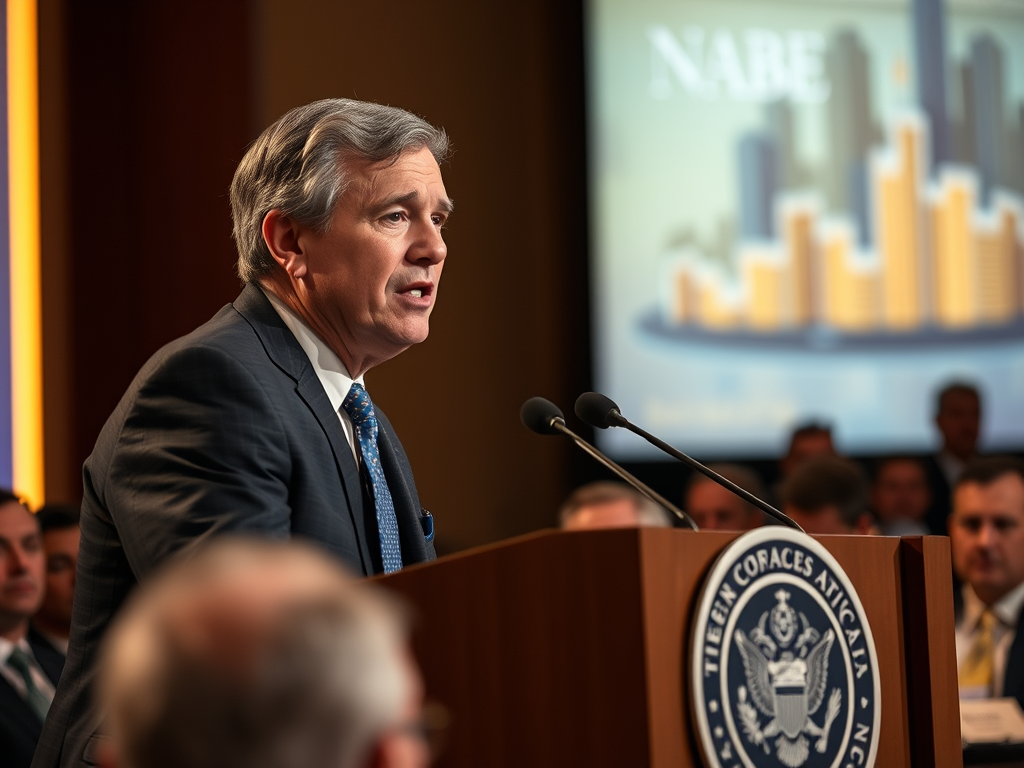
Federal Reserve Chair Jerome Powell is set to deliver a keynote address on Tuesday at the National Association for Business Economics conference in Philadelphia, an event that has drawn significant attention from financial markets eager for clues about the central bank’s next steps on interest rates.
This appearance comes just two weeks before the next meeting of the Federal Open Market Committee (FOMC), making it likely the final time Powell will speak publicly before policymakers gather to decide the future direction of monetary policy. Investors and analysts alike will be listening closely for any signals about whether the Fed plans to maintain, ease, or accelerate its current stance.
In his recent remarks, Powell has underscored the delicate balance the Federal Reserve must maintain between its two primary objectives: achieving full employment and keeping inflation under control. He has acknowledged that while unemployment remains historically low, the pace of job growth has slowed enough to raise concerns about maintaining a stable labor market in the months ahead.
At the same time, inflation continues to hover above the Fed’s long-term 2% target, posing another challenge. Powell has suggested that recent inflationary pressures may be partly driven by temporary factors such as tariffs, implying that price increases could ease once those effects fade. Nonetheless, the persistence of elevated prices has left the Fed walking a tightrope as it attempts to guide the economy toward a “soft landing” without triggering a deeper slowdown.
Financial traders are already placing bets on what comes next. Current market expectations suggest that the central bank will move to cut interest rates at both its October and December meetings, a move intended to support growth amid moderating economic momentum. However, the long-term policy trajectory remains uncertain, with analysts divided over how aggressively the Fed should act if inflation continues to retreat while employment weakens.
As Powell takes the stage in Philadelphia, his words are expected to shape not only short-term market sentiment but also the broader outlook for monetary policy heading into 2025. Investors will be watching for any shift in tone that could hint at the Fed’s evolving view of economic risks — and how it plans to navigate the challenging balance between sustaining growth and curbing inflation.