Andrew Ross Sorkin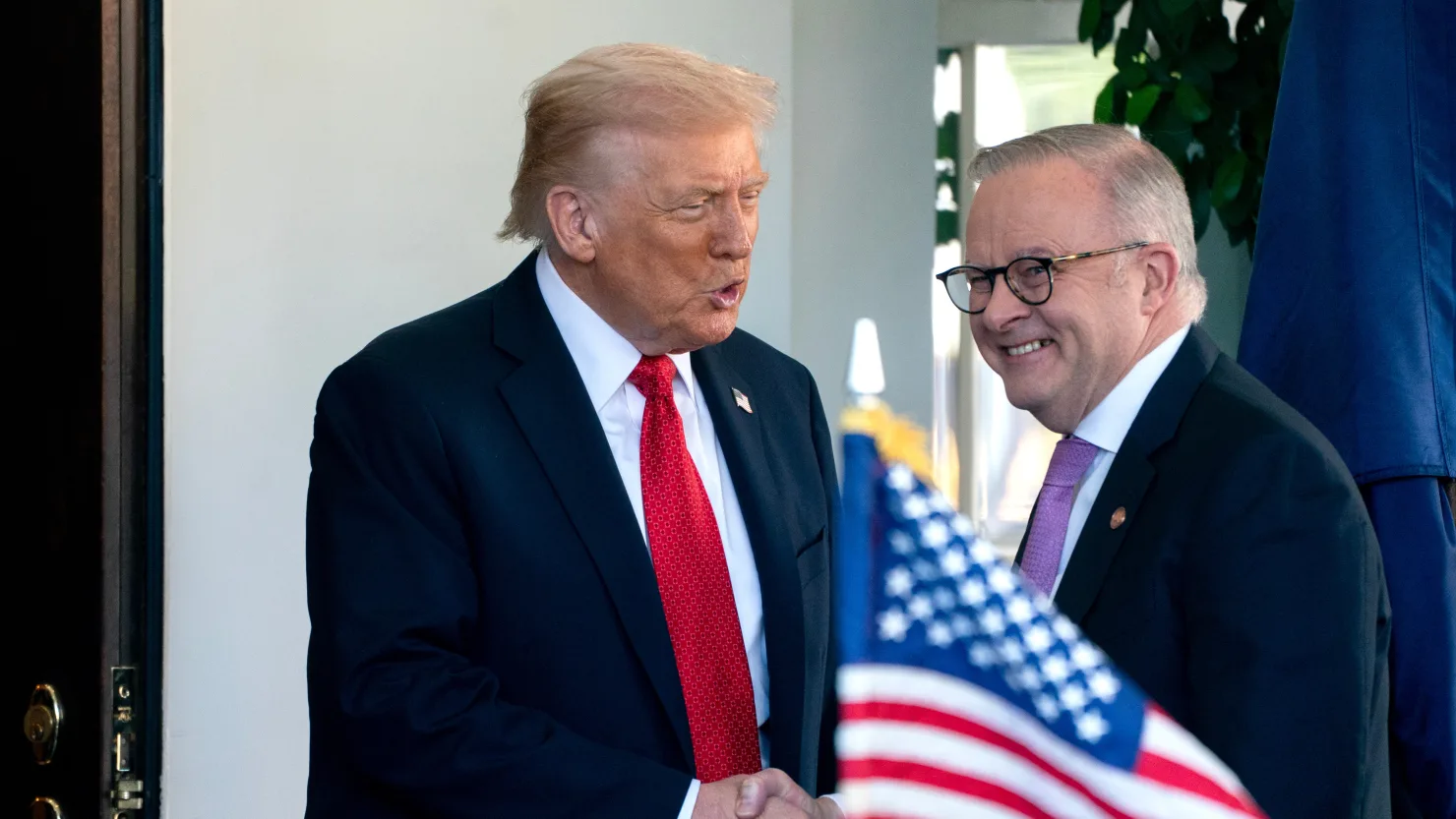
Shares of major Australian critical metals and rare earths companies surged on Tuesday following the announcement of a landmark minerals agreement between the United States and Australia valued at up to $8.5 billion.
The deal, signed on Monday by U.S. President Donald Trump and Australian Prime Minister Anthony Albanese, includes funding for multiple initiatives aimed at strengthening the supply of essential materials used in defense manufacturing and energy security projects.
Lynas Rare Earths, Australia’s largest rare earths producer by market capitalization, saw its shares climb approximately 4.7% in early Asian trading. Mineral sands company Iluka Resources rose more than 9%, while lithium producer Pilbara Minerals gained around 5%.
Smaller rare earth miners also experienced substantial gains, with VHM jumping nearly 30% and Northern Minerals rising over 16%. Latrobe Magnesium, Australia’s main magnesium producer, surged by almost 47%.
NYSE-listed Alcoa, which is advancing a project in Western Australia to recover and refine gallium, was identified as one of the two priority projects under the new deal. The U.S. government will make an equity investment in the initiative. Shares of Alcoa, also traded on the Australian Securities Exchange through depositary receipts, increased by nearly 10%.
Rare earths and other critical metals are vital for high-tech industries, including electric vehicles, semiconductors, and defense equipment. China, which dominates global production of rare earths and many critical minerals, has recently tightened export controls amid an ongoing trade dispute with the U.S., driving international efforts to diversify supply chains.
Prime Minister Albanese noted that both countries would contribute $1 billion each over the next six months to projects that are “immediately available.” However, a White House fact sheet later clarified that Washington and Canberra plan to invest more than $3 billion in critical mineral projects during the same period, describing the agreement as a “framework.”
The White House also highlighted that the Export-Import Bank of the United States will issue seven letters of interest totaling more than $2.2 billion in financing, potentially unlocking up to $5 billion in overall investment.