Andrew Ross Sorkin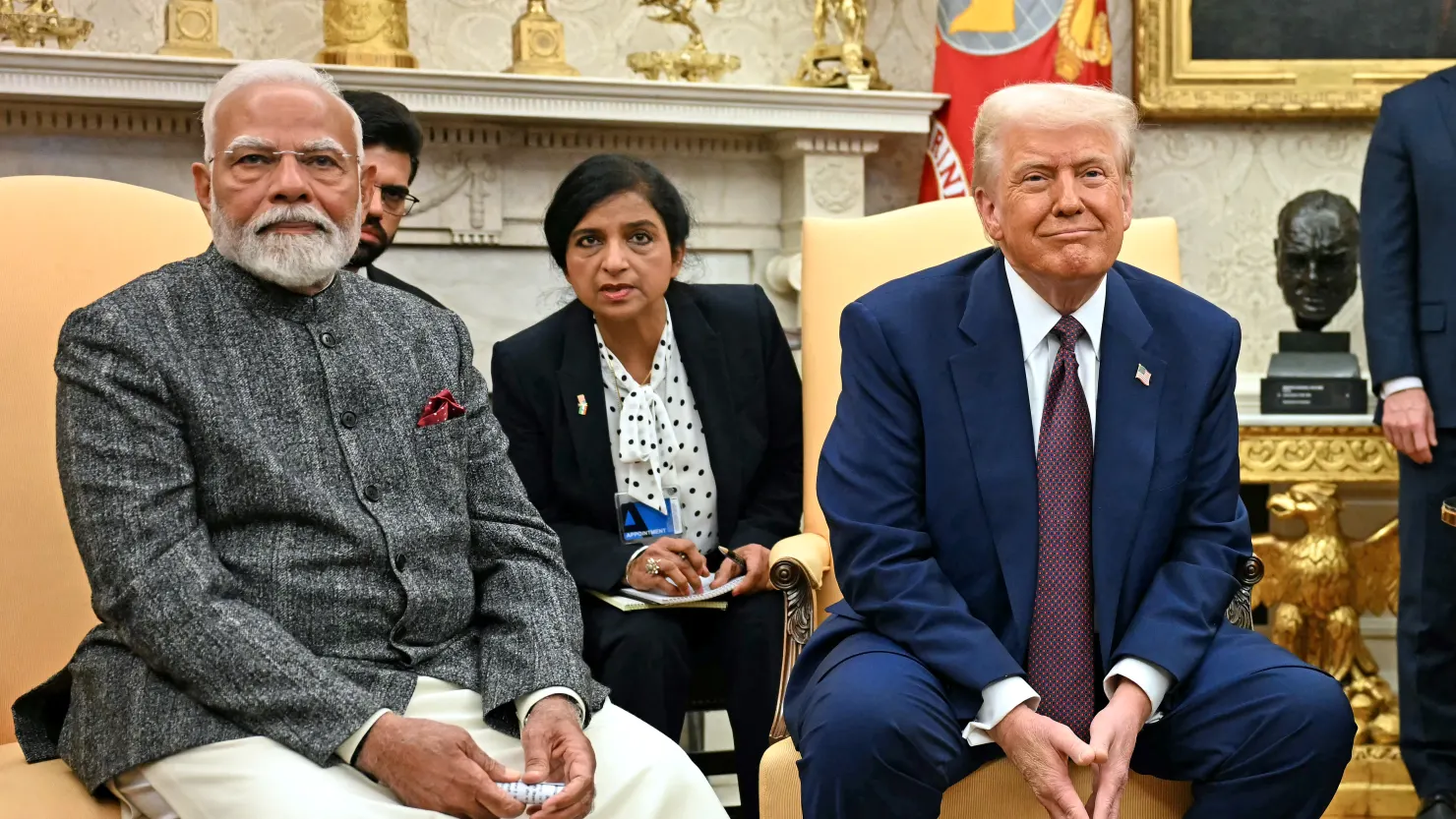

The United States is reportedly moving closer to a landmark trade agreement with India that could significantly reduce tariffs on Indian exports and reshape the broader geopolitical dynamics surrounding Russian oil, according to a report by Indian publication Mint, citing three unnamed officials familiar with the negotiations.
As part of the proposed deal, Washington may cut tariffs on Indian goods from the current average rate of approximately 50% down to a substantially lower range of 15% to 16%. If confirmed, this would mark one of the most significant tariff rollbacks in recent U.S.-India trade history and could strengthen bilateral economic relations that have experienced tensions in recent years due to disagreements over energy imports and market access.
India Weighs Concessions on Oil and Corn Imports
In parallel with tariff reduction discussions, India is reportedly evaluating the possibility of increasing its import quota for non-genetically modified corn from the United States. Currently capped at 0.5 million metric tons per year with a 15% import duty, this quota may be expanded as part of a broader trade-off aimed at enhancing agricultural cooperation.
Negotiators are said to be exploring a review mechanism that would allow both sides to periodically reassess tariffs and reassess market accessibility in key sectors such as agriculture, manufacturing, energy, and technology. Such a mechanism would ensure long-term flexibility and help the agreement adapt to shifting economic conditions.
A key expectation from Washington’s side, however, appears to be India’s willingness to scale back its crude oil imports from Russia—a topic that has been a longstanding strategic flashpoint in bilateral talks since the onset of the Ukraine conflict in 2022.
Trump Pressures New Delhi to Reduce Russian Energy Purchases
On Tuesday, U.S. President Donald Trump publicly stated that Indian Prime Minister Narendra Modi had assured him in a phone conversation that New Delhi would significantly reduce its purchases of Russian oil.
“He’s not going to buy much oil from Russia. He wants to see that war end as much as I do,” Trump told reporters aboard Air Force One, emphasizing that India risked continuing to face heavy tariffs if it maintained high levels of energy trade with Moscow.
However, Modi’s official post on X (formerly Twitter), made the following day, focused on cooperation against global terrorism and ongoing bilateral ties without directly addressing any commitment related to cutting Russian oil imports.
This discrepancy follows an earlier incident in which Trump claimed that Modi had already agreed to reduce Russian oil purchases, a statement later refuted by India’s foreign ministry, which said it was unaware of any such conversation at that time.
New Delhi’s Position: Energy Security First
Responding to previous American pressure, India’s foreign ministry reiterated that energy policy decisions are driven by national consumer interests.
“India is a significant importer of oil and gas. It has been our consistent priority to safeguard the interests of the Indian consumer in a volatile energy scenario,” a spokesperson said, emphasizing that decisions on import sources are determined by economic stability and supply security.
Since Western sanctions on Russia altered global oil flows, India has emerged as one of the largest buyers of Russian crude, benefiting from discounted pricing. According to the U.S. Energy Information Administration, India’s imports of Russian crude surged from 50,000 barrels per day (bpd) in 2020 to approximately 1.6 million bpd in the first half of 2025, making it the second-largest global buyer after China.
Trade Tensions and Diplomatic Shifts
Tensions between Washington and New Delhi escalated last August when the U.S. imposed an additional 25% tariff on Indian exports as a punitive measure tied to India’s Russian oil purchases, bringing total tariffs to about 50%. This move strained relations and caused several rounds of trade discussions to stall.
India has insisted that if it is to scale down imports from Russia, there must be a credible strategy to stabilize global energy markets and ensure replacement supply from alternative sources such as the U.S., the Middle East, or Africa.
Earlier this year, both countries had set an ambitious goal of increasing bilateral trade to $500 billion by 2030. However, talks broke down when India reportedly refused to allow greater U.S. access to its dairy and agricultural sectors—industries with strong domestic political sensitivities.
Further complicating negotiations, Modi’s recent engagement with Russian President Vladimir Putin and Chinese President Xi Jinping at a trilateral meeting in Beijing was interpreted by Washington as a possible signal that India may seek deeper ties with Moscow and Beijing if pressured excessively by the U.S.
A Softer Tone in Recent Weeks
Despite earlier confrontational language, Trump has recently adopted a more conciliatory approach, publicly praising Modi and expressing optimism that an agreement could be reached soon.
Officials suggest that the final terms of the deal may be unveiled during the upcoming ASEAN summit later this month, although neither Trump nor Modi has officially confirmed participation in the event. According to Mint, while the core framework of the agreement is largely complete, politically sensitive sectors such as energy and agriculture still require top-level approval.
A Record Year for Bilateral Trade
According to data from the India Brand Equity Foundation, U.S.-India trade reached a historic high of $132.2 billion in the fiscal year ending March 2025, reflecting more than 10% year-over-year growth.
India’s exports to the U.S. climbed 11.6% to $86.51 billion, buoyed by strong demand for textiles, pharmaceuticals, information technology services, machinery, and manufactured goods. Meanwhile, U.S. exports to India rose 8% to $45.69 billion, driven mainly by energy products, agricultural commodities, and advanced technology components.
What Lies Ahead
If the trade agreement is finalized with substantial tariff reductions, it could unlock new growth opportunities for Indian exporters in sectors such as textiles, engineering goods, and consumer products, while providing U.S. exporters greater access to India’s rapidly expanding consumer market.
However, much depends on how both countries reconcile their divergent interests on Russian oil, food security concerns, and agricultural market access. The coming weeks will likely determine whether this deal becomes a historic step toward deeper strategic alignment—or another missed opportunity in an increasingly complex geopolitical environment.