Andrew Ross Sorkin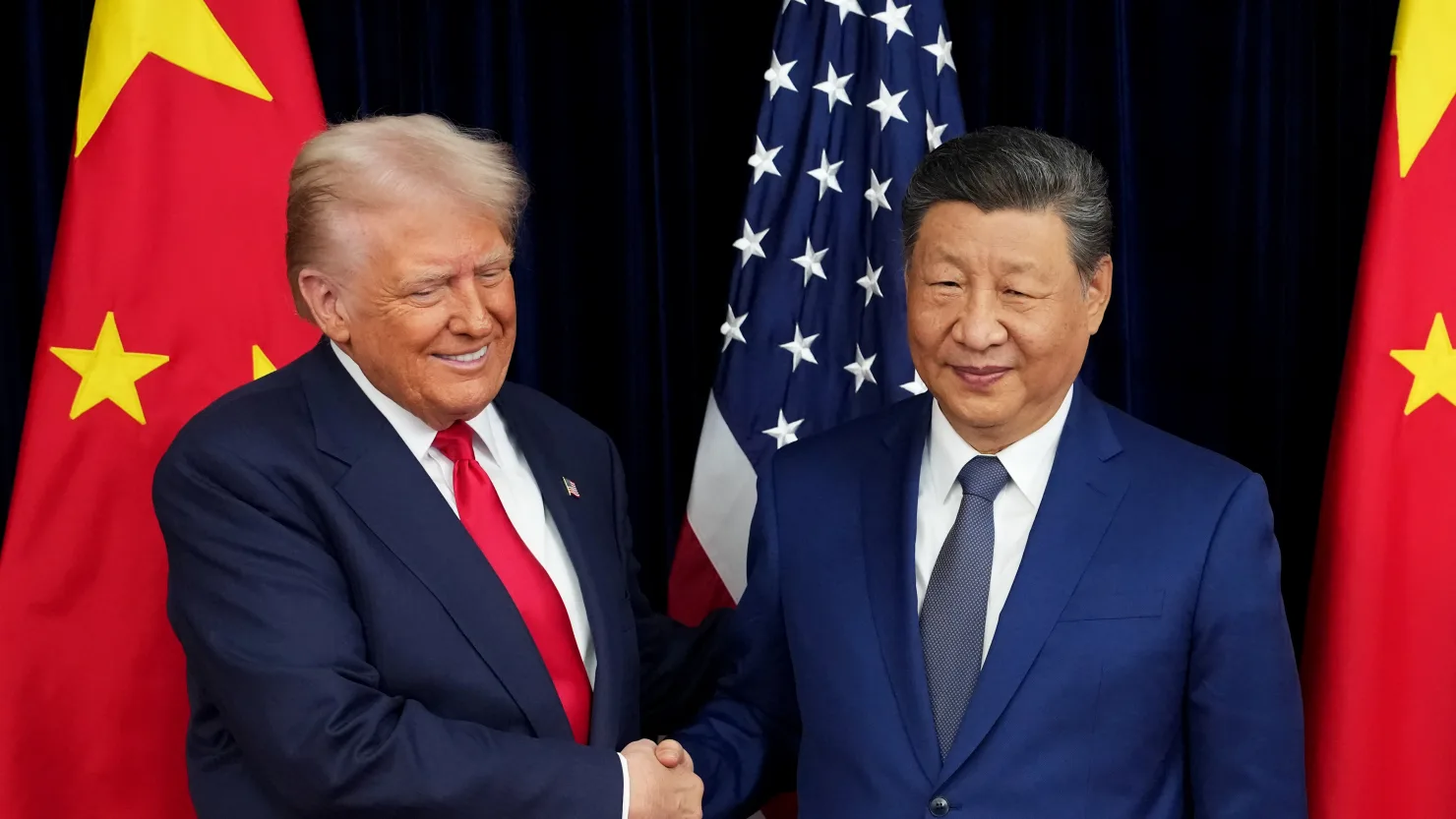
Chinese President Xi Jinping and U.S. President Donald Trump arrived in Busan, South Korea, on Thursday for a closely watched meeting aimed at easing long-standing trade and tariff tensions between the world’s two largest economies.
The two leaders appeared together for an official photo session ahead of their private meeting, scheduled for 11 a.m. local time (10 p.m. ET, Wednesday). This marks the first in-person encounter between Xi and Trump since the beginning of Trump’s second term in January, and expectations are high that the dialogue could reset the tone of U.S.-China relations.
The meeting comes at a critical time. Over the past year, Washington and Beijing have clashed repeatedly over issues ranging from technology exports to global market access. The latest flare-up occurred earlier this month when China imposed new export restrictions on critical minerals, prompting the United States to consider banning certain software-based exports to Chinese companies. The escalating tensions have rattled financial markets and left global investors uncertain about the direction of future trade policy.
Despite the challenges, both sides appear to be approaching the meeting with cautious optimism. U.S. officials have outlined a list of priorities they hope to advance with Beijing, including limiting the flow of fentanyl and its chemical precursors into the United States, pushing for the divestiture of TikTok from its Chinese parent company ByteDance, and negotiating new terms around tariffs, rare earth exports, and technology sharing.
For China, the stakes are equally high. The country is seeking to stabilize its slowing economy amid sluggish domestic demand and growing external pressures. Beijing has been more reserved in its public statements about the meeting’s potential outcomes. However, signs of progress have begun to emerge. According to Reuters, China recently purchased its first cargo of U.S. soybeans in months — a move widely interpreted as a gesture of goodwill ahead of the summit.
President Xi’s visit to South Korea marks his first state visit to the country in more than a decade. From Thursday through Saturday, he is scheduled to participate in the APEC Economic Leaders’ Meeting in Gyeongju, where trade, regional development, and digital cooperation are expected to dominate discussions.
Meanwhile, Trump’s attendance in Busan underscores his administration’s intent to strengthen U.S. influence in Asia while pressing China on key economic and security issues. During his campaign and early months of his second term, Trump pledged to renegotiate trade terms he described as “unfair” and to reduce America’s reliance on Chinese manufacturing. Thursday’s meeting offers a new test of whether those promises can be balanced with the need for economic stability and collaboration.
Markets across the world have reacted with cautious optimism. Stock indices in Asia and Europe edged higher earlier in the week as investors speculated about the possibility of a breakthrough or at least a temporary truce in trade tensions. Analysts note that even a modest easing of tariffs could bolster confidence across industries dependent on global supply chains.
Still, skepticism remains. Previous rounds of U.S.-China talks have often ended with vague commitments and limited follow-through. The Biden administration’s attempts to mend trade ties in recent years produced only partial progress, and many experts say that deep structural disagreements — particularly in technology and national security — will not be easily resolved.
The Busan summit, however, is being viewed as a potential turning point. If both leaders manage to outline a framework for continued negotiations, it could help defuse some of the uncertainty that has plagued global markets for much of the year. In a world still recovering from inflationary pressures and geopolitical instability, a step toward improved dialogue between Washington and Beijing could have significant global implications.
Beyond trade, there are also broader diplomatic considerations. Analysts believe Xi’s participation in the APEC meeting and his engagement with Trump reflect Beijing’s desire to project stability and leadership amid growing competition with the United States. For Washington, the meeting offers an opportunity to demonstrate that it remains committed to constructive diplomacy in the Indo-Pacific region.
In Busan, both sides are expected to discuss not only trade but also areas of potential cooperation — including clean energy, artificial intelligence regulation, and the reopening of academic and business exchanges that were curtailed during the pandemic years. Diplomats familiar with the negotiations say that while a sweeping agreement is unlikely, even incremental progress could mark a meaningful shift in tone.
As the two presidents prepare for closed-door talks, global attention remains fixed on the port city of Busan. Reporters, investors, and policymakers are watching closely for any signals of reconciliation or renewed confrontation. For now, the world waits to see whether Xi and Trump’s meeting will bring a long-awaited easing of tensions — or simply another round of cautious promises in a complex and evolving U.S.-China relationship.