Andrew Ross Sorkin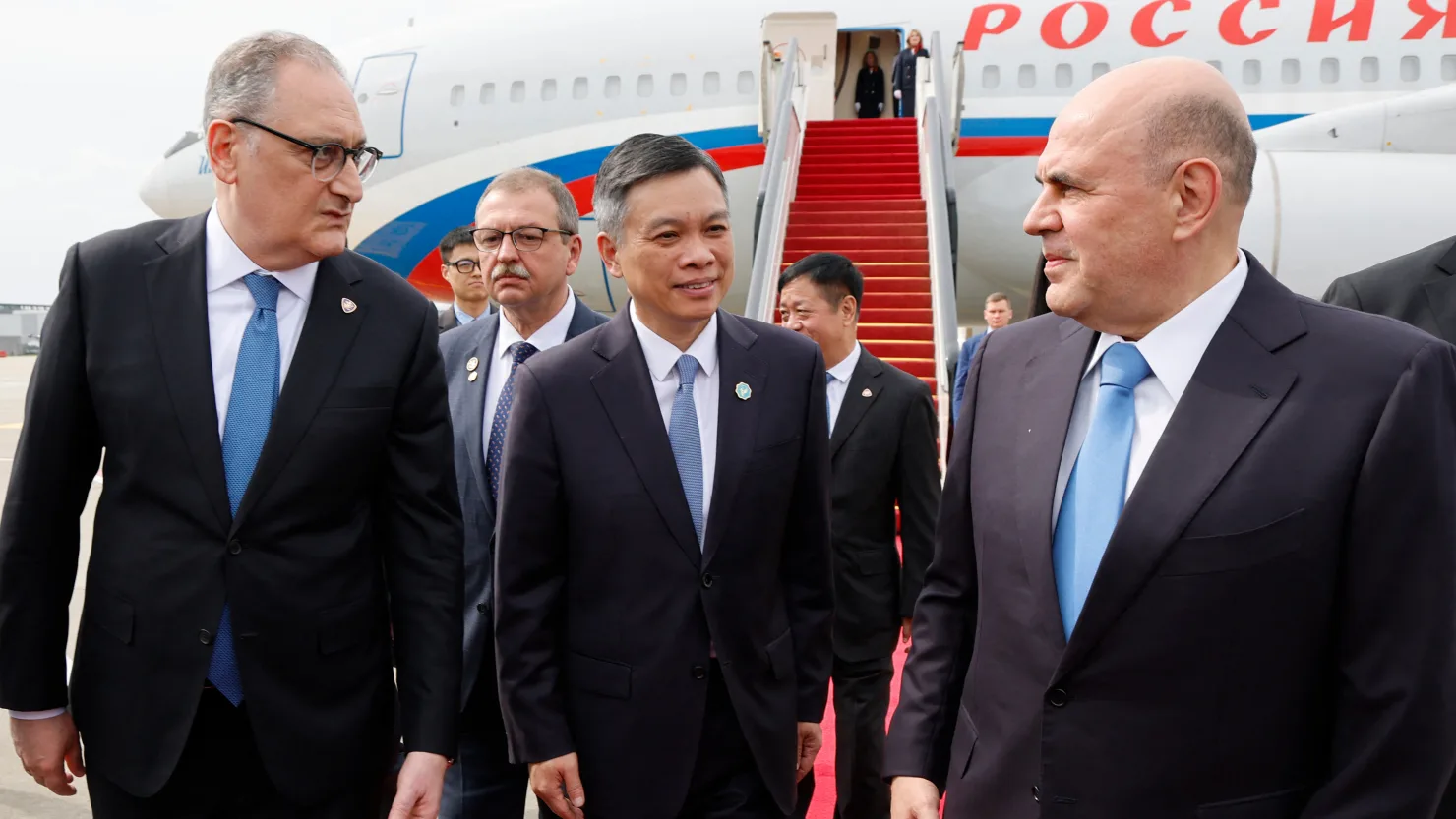
In a move that underscores Moscow’s desire to reaffirm its strategic alliance with Beijing, Russian officials appeared eager on Monday to strengthen ties with China following U.S. President Donald Trump’s much-publicized meeting with Chinese President Xi Jinping.
Only days after Trump described his discussions with Xi as “amazing,” Russia sent a high-level delegation to China, signaling its commitment to deepening bilateral cooperation across multiple sectors. Russian Prime Minister Mikhail Mishustin arrived in Hangzhou on Monday for two days of meetings with his Chinese counterpart, Premier Li Qiang. According to Russian state media, the two sides signed a series of agreements aimed at expanding collaboration in trade, investment, energy, transportation, agriculture, and even space exploration.
Mishustin referred to Li Qiang as his “dear friend” and emphasized the growing strength of the relationship between Moscow and Beijing. Speaking to Russia’s Ria Novosti news agency, Mishustin noted that ties between the two nations are “at their highest level in centuries” and continue to advance “despite various obstacles and illegal Western sanctions.” His remarks reflect Russia’s continued pivot toward China as it faces mounting isolation from the West over its war in Ukraine.
Premier Li Qiang echoed these sentiments, stating that China remains ready to bolster cooperation with Russia despite “new external risks and challenges.” According to reports from TASS, Li emphasized that both nations “support each other, build strategic contacts and interactions, and jointly overcome difficulties.” He described the partnership as proof that “China and Russia are good neighbors and reliable partners who can always trust each other.”
Beijing has long been Russia’s most significant international partner. Since the start of Moscow’s full-scale invasion of Ukraine in 2022, China has refused to condemn Russia’s actions, instead referring to the conflict as a “crisis.” This language closely mirrors Moscow’s own rhetoric and highlights the political alignment between the two powers.
In the weeks leading up to the invasion, Presidents Vladimir Putin and Xi Jinping announced a “no limits” partnership, pledging to support each other across political, economic, and security fronts. For Russia, this alliance has become increasingly important as Western sanctions continue to shrink its access to global markets and hinder its lucrative energy exports. By strengthening economic and diplomatic ties with China, Moscow hopes to mitigate the impact of those restrictions and demonstrate that it still maintains powerful allies on the world stage.
The scale of the Russian delegation to China further underscores the importance of this trip. Alongside Prime Minister Mishustin were several top officials, including deputy prime ministers and ministers responsible for finance, agriculture, transport, economic development, and trade. Leaders from Roscosmos and Rosatom—the agencies overseeing space and nuclear energy—also joined the visit, reflecting the broad scope of planned cooperation.
Observers have noted the timing of the visit as particularly noteworthy. The Russian delegation’s arrival came just days after Trump’s high-profile meeting with Xi Jinping, during which both leaders appeared to take steps toward easing trade tensions between the United States and China. Trump announced that he and Xi had reached agreements on several key issues, including a one-year deal on rare earth supplies and a reduction of tariffs related to fentanyl-linked products. The new arrangement, described by analysts as a “trade truce,” effectively cut total U.S. tariffs on Chinese goods to 47%.
Xi, for his part, stated that Beijing and Washington should act as “partners and friends,” signaling a temporary thaw in a relationship marked by years of economic rivalry. However, this apparent warming of ties between China and the U.S. may have created unease in Moscow, which has grown increasingly dependent on Beijing both economically and diplomatically.
While China appeared to be improving relations with Washington, Russia found itself facing renewed tensions with the U.S. Trump recently canceled a planned face-to-face meeting with Russian President Vladimir Putin, saying he did not want to “have a wasted meeting” and expressing frustration over Moscow’s lack of progress in resolving the Ukraine war. “Every time I speak to Vladimir, I have good conversations,” Trump said, “and then they don’t go anywhere.”
The Kremlin reacted coolly to the cancellation, with senior Russian officials blaming Western media and so-called “fake news” for derailing the talks. Nonetheless, the decision left Moscow diplomatically sidelined, reinforcing the significance of its partnership with Beijing as a counterbalance to Western isolation.
As Mishustin’s meetings in Hangzhou wrapped up, analysts viewed the visit as more than just routine diplomacy—it was a carefully timed statement of intent. Faced with growing geopolitical pressure and limited engagement with the West, Russia is doubling down on its relationship with China, betting that a deepened alliance can offer both nations greater strategic leverage in an increasingly polarized world.
Whether this renewed emphasis on the Moscow-Beijing axis will strengthen both countries’ positions or merely highlight their mutual dependence remains to be seen. For now, however, the message from Hangzhou is clear: Russia and China are determined to project unity, signaling that despite shifting global dynamics, their partnership endures—and, for the moment, continues to grow stronger.