Andrew Ross Sorkin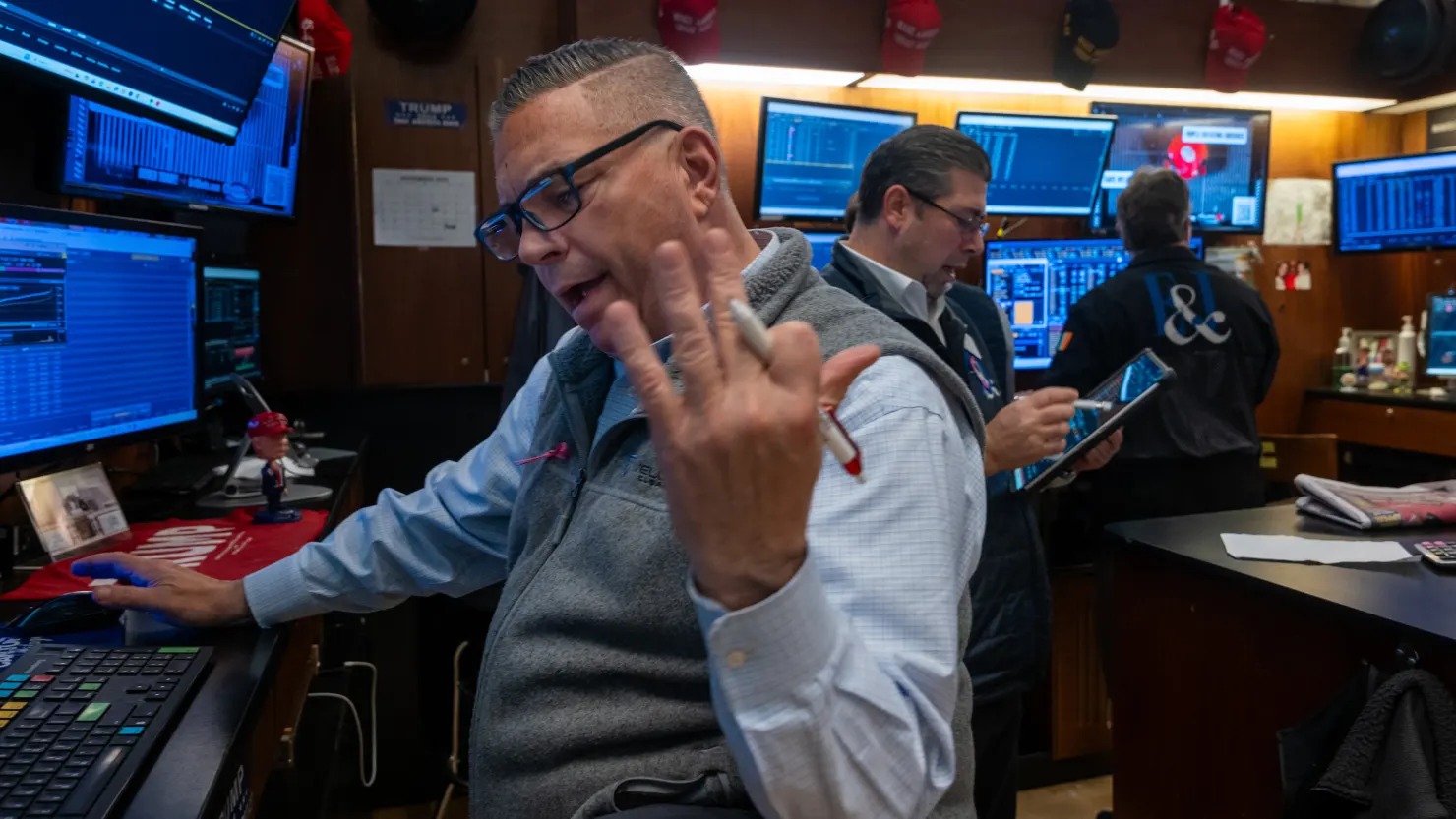
The contrasting movements of the Dow Jones Industrial Average and the Nasdaq Composite on Wednesday highlighted a striking reality: the U.S. stock market appears to be split in two — one powered by artificial intelligence, and another made up of everything else.
While the Dow surged to achieve its second consecutive record high, crossing the 48,000 mark for the first time, the Nasdaq slipped into negative territory. This divergence underscores the widening gap between traditional “old economy” giants and tech-driven growth companies.
The Dow, home to 30 blue-chip firms, has long been viewed as a barometer of America’s industrial strength. Its components include banking, healthcare, and manufacturing stalwarts like Goldman Sachs, Eli Lilly, and Caterpillar — companies that have defined the U.S. economy long before Silicon Valley began shaping the digital age. On Wednesday, it was these legacy names that powered the Dow’s historic climb.
Although newer tech players such as Nvidia and Salesforce also sit within the Dow, the index’s price-weighted structure gives greater influence to firms with higher individual share prices. As a result, traditional sectors continue to have an outsized impact on the Dow’s performance.
By contrast, the Nasdaq Composite, weighted by market capitalization and dominated by technology stocks, saw declines as shares of Oracle and Palantir fell. Even a 9% jump in Advanced Micro Devices — buoyed by optimism about its growth in AI — couldn’t prevent the index from closing lower.
This split does not necessarily signal a bubble in artificial intelligence stocks. Instead, it reflects investors recalibrating their portfolios after months of rapid gains. “There’s nothing wrong, in our view, with trimming back, taking some gains, and re-diversifying across other areas of the equity markets,” said Josh Chastant, portfolio manager at GuideStone Fund.
Still, many investors hope the two diverging paths of Wall Street will eventually converge. When both traditional and technology sectors move upward in tandem, it often points to a more balanced and sustainable market environment.
Market Highlights
Dow Jones Hits Record Territory
The Dow rose 0.68% on Wednesday, closing above 48,000 points for the first time. The S&P 500 was little changed, while the Nasdaq Composite slipped 0.26%. In Europe, the Stoxx 600 gained 0.71%, signaling continued optimism across global markets.
Anthropic to Invest $50 Billion in U.S. AI Infrastructure
Artificial intelligence firm Anthropic announced plans to spend $50 billion to build next-generation data centers in Texas and New York, expected to go live in 2026. The company will partner with AI cloud platform Fluidstack to develop these custom-built facilities, with additional locations to follow.
Possible Delay in U.S. Jobs and Inflation Data
Concerns are rising that key U.S. economic data for October — including jobs and inflation reports — might not be released on time due to the ongoing government shutdown. White House Press Secretary Karoline Leavitt warned that disruptions could harm the government’s data-collection capabilities, though most analysts believe the impact will be temporary.
House Prepares for Critical Vote on Shutdown Bill
The U.S. House of Representatives cleared a procedural step late Wednesday, paving the way for a vote on a bill aimed at ending the government shutdown. Lawmakers were expected to vote as of press time.
CIO Highlights Opportunity in U.S. Mining Stocks
Stephen Yiu, Chief Investment Officer of the U.K.-based Blue Whale Capital, identified a promising play in U.S. mining stocks. He pointed out that factors such as a weak U.S. dollar and persistent fiscal deficit could provide long-term support for the sector.
The Rise of “Zombie Companies” in Private Equity
In the world of private equity, a new challenge has emerged: the rise of “zombie companies.” These are businesses that are too weak to grow yet too stable to fail — generating just enough cash to pay off debts but unable to attract buyers, even at steep discounts.
Such companies remain stuck in private equity portfolios long after their expected holding periods, effectively trapping capital that could have been redeployed elsewhere. The prolonged low-growth environment, coupled with high interest rates, has only worsened the problem.
Private equity firms now face tough choices: inject more capital into these stagnant assets, accept steep losses through discounted sales, or wait indefinitely for better conditions. None of these options are appealing, but the growing number of “undead” firms is forcing the industry to confront a reality it can no longer ignore.
As markets continue to evolve — from the AI boom in public equities to stagnation in private holdings — investors are witnessing a tale of two economies. One thrives on innovation and digital transformation, while the other struggles under the weight of slower growth and rising debt. The key question is whether these two worlds will eventually merge, or drift even further apart.