Andrew Ross Sorkin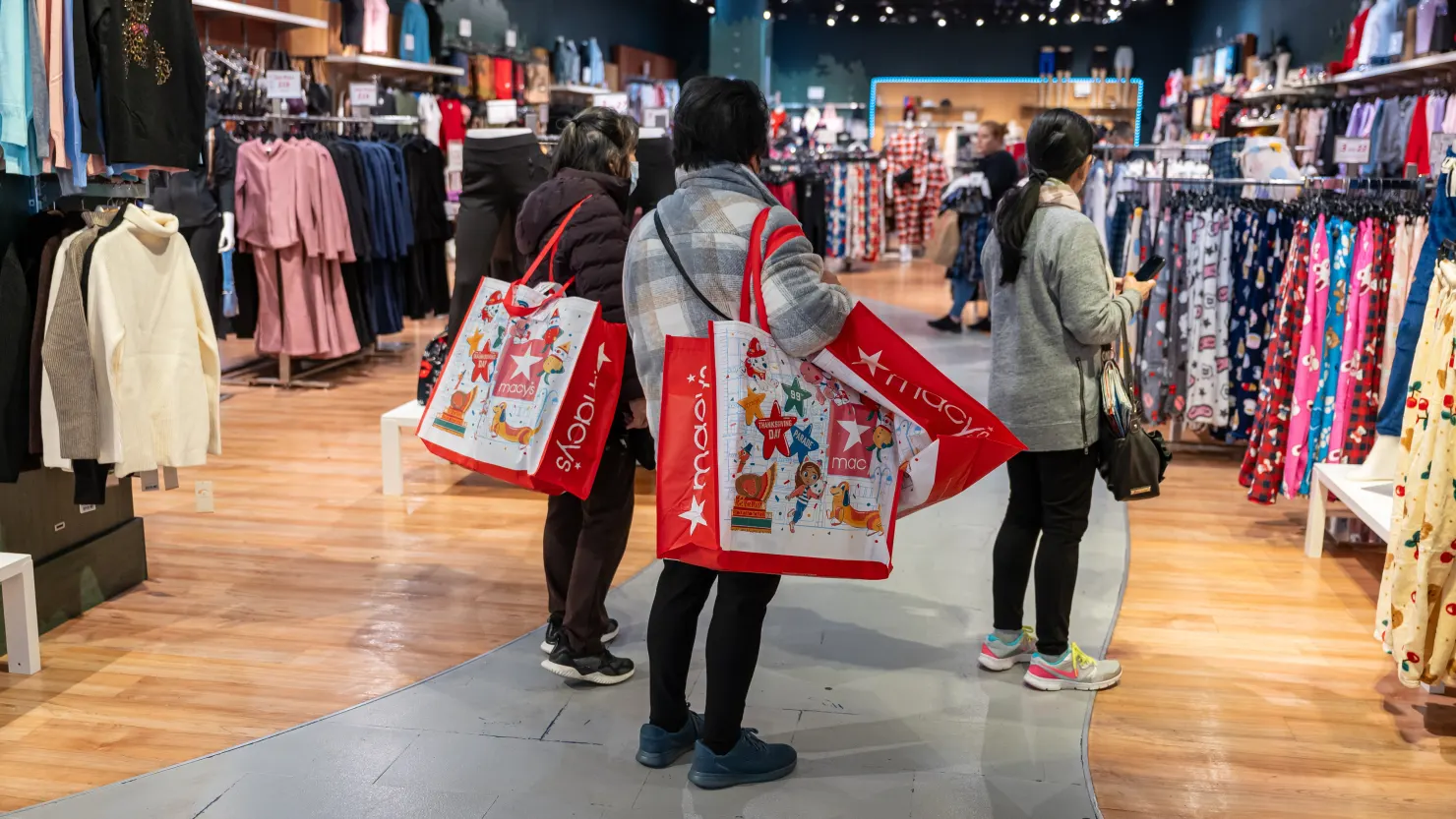
American consumers brushed aside weeks of anxiety over inflation and economic uncertainty, launching into the holiday season with a massive burst of online spending. Over the three-day period following Thanksgiving, shoppers spent an estimated $23.6 billion online, a figure that exceeded analysts’ expectations and signaled the strong momentum heading into the year-end retail rush.
According to Adobe Analytics, online spending on Monday alone reached $9.1 billion by early evening, marking a 4.5% increase from the same point last year. Adobe projected that spending would land between $13.9 billion and $14.2 billion before Cyber Monday ended, putting total online sales for the broader five-day Thanksgiving period at roughly $43.7 billion.
Industry experts had anticipated a more cautious consumer environment. Household confidence has been dampened by months of tariff-driven price pressures and overall economic unease. Yet spending patterns showed a more nuanced picture: wealthier households continued to shop aggressively, while middle-income families stretched already tight budgets to ensure they could purchase gifts for the holidays. Retailers’ substantial promotions also played a crucial role in nudging shoppers toward “checkout,” and some consumers turned to short-term financing tools to help cover their purchases.
Adobe’s estimates suggested that Cyber Monday sales could rise as much as 6.3% over last year—remarkable growth considering the mixed economic signals leading up to the holiday week.
Mark Mathews, chief economist at the National Retail Federation, said the trends revealed that shoppers were focusing less on their economic anxieties and more on taking advantage of discounts. “Consumers spent their wallets, not their psyches,” he said. Although concerns such as the recent U.S. government shutdown lingered, other economic indicators, including wage growth, remained supportive.
Black Friday continued its record-setting trajectory as well. U.S. online spending reached $11.8 billion, the highest ever for that day, according to Adobe’s analysis of traffic across online retail platforms.
Yet this surge in spending did not erase broader behavioral shifts. Consumer research groups noted that buyers were more cautious and deliberate than in previous years. Analysts at Kantar, who track both in-store activity and consumer sentiment, said shoppers made notably fewer impulse purchases this season. Physical retailers such as Walmart and Target also adopted more precise language in their promotional signage, responding to a public increasingly wary of deceptive or exaggerated Black Friday claims.
Rachel Dalton, head of retail insights at Kantar, described shoppers as being “on alert for being misled.” She also noted that leading e-commerce players, including Amazon, rolled out deeper discounts on high-ticket items such as electronics, hinting that even affluent customers have become more price-sensitive.
Many retailers expanded their discounting strategies beyond traditional categories. Items like household essentials—which are often excluded from major holiday promotions—were included this year. Jack O’Leary, an e-commerce specialist at NielsenIQ, said this marked a noticeable shift as companies sought to attract more hesitant or budget-conscious buyers.
Amazon offered steep markdowns on everything from earbuds and computers to everyday necessities like batteries. “We have prices that are 30, 50, 60 percent off,” said J. Ofori Agboka, Amazon’s vice president of people experience and technology. “People can enjoy to their heart’s content.”
Preliminary data show that higher-income consumers drove much of the weekend’s spending strength. Marshal Cohen, chief retail advisor at Circana, said wealthier shoppers appeared confident and willing to splurge. Meanwhile, lower-income consumers, many of whom benefited from government stimulus funds earlier in the pandemic, were more constrained this year. Mathews from the NRF noted that those financial cushions have largely been exhausted, placing more pressure on household decision-making.
Although online sales continue to grow, the pace has slowed significantly compared to the extraordinary spike seen during the COVID-19 pandemic. Adobe’s data shows that for the past five years, online holiday spending has risen by single-digit percentages annually, a sharp contrast to the double-digit jumps recorded between 2015 and 2020.
With budgets tightening, short-term financing options have gained traction. “Buy now, pay later” (BNPL) services such as Affirm and Klarna saw another strong year as consumers looked for ways to spread out their expenses.
A CivicScience survey found that 38% of respondents used a BNPL service for at least one Black Friday purchase. Younger and lower-income individuals were especially likely to rely on these tools. Adobe’s data showed a 9% year-over-year increase in BNPL activity on Black Friday. For Cyber Monday, Adobe expected BNPL transactions to surpass $1 billion for the first time, a 5% jump from the previous year.
Alongside financing tools, artificial intelligence played an increasingly visible role in shaping U.S. shopping behaviors. Consumers used AI-driven tools to compare prices, identify promotions, and streamline the purchase process. Adobe reported that AI-generated traffic to retail websites could be nearly eight times higher than last year, driven largely by new smart shopping assistants such as Walmart’s Sparky and Amazon’s Rufus.
CivicScience found that 40% of survey participants used some form of AI assistance while shopping over the weekend. Among the most frequent users—those relying on AI for multiple purchases—87% were under the age of 45, pointing to a generational shift in how shoppers navigate deals and promotions.
Taken together, the data paints a complex picture: even as inflation and economic uncertainty weigh on Americans’ minds, the allure of steep discounts, short-term financing, and AI-enabled convenience has propelled online spending to new heights. The holiday season is underway with strong digital momentum, but consumers’ increasingly cautious behavior hints at shifting priorities and a more strategic approach to seasonal shopping in the years ahead.