Andrew Ross Sorkin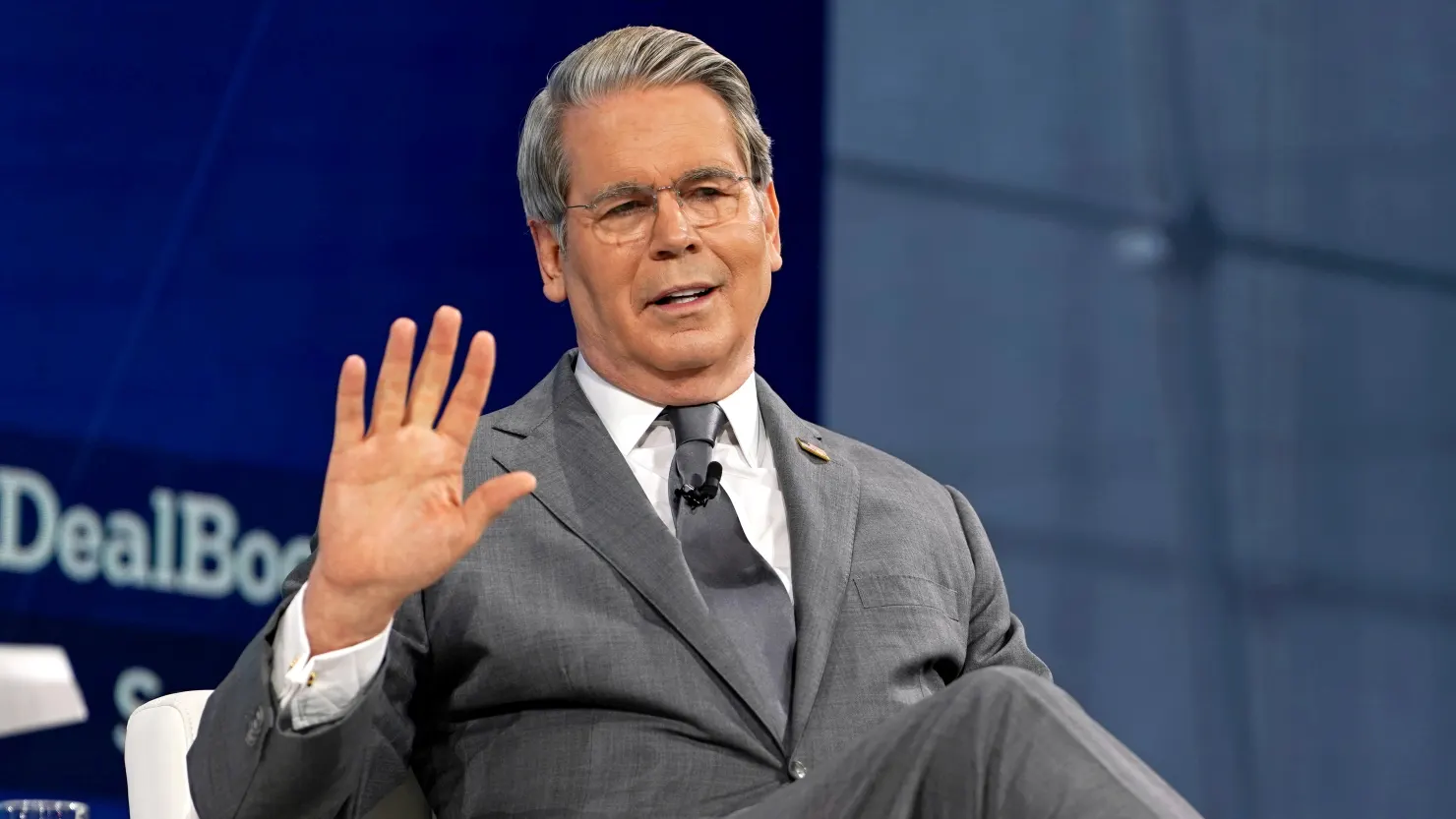
U.S. Treasury Secretary Scott Bessent said on Sunday that early signs from the holiday shopping season point to robust consumer activity, adding that he expects the American economy to close the year in a solid position. His remarks, made during an appearance on CBS News’ “Face the Nation,” reflected a notably optimistic view of economic momentum despite mixed signals from consumers.
Bessent highlighted that economic performance over the past year has exceeded expectations. “The economy has been better than we thought. We’ve had 4% GDP growth in a couple of quarters,” he said. He added that the country is still on track to achieve approximately 3% real GDP growth for the full year, even after the so-called “Schumer shutdown,” which temporarily delayed several federal operations.
Official data paints a more nuanced picture of economic conditions in 2025. The Bureau of Economic Analysis reported that GDP shrank by 0.6% year-over-year during the first quarter. That downturn was followed by a strong rebound in the second quarter, with GDP rising 3.8%. New preliminary results for the third quarter are expected to be released on December 23, while the Federal Reserve Bank of Atlanta estimated in early December that third-quarter growth is tracking at about 3.5%.
Despite this positive data, consumer attitudes remain subdued. Household spending represents nearly 70% of all U.S. economic activity, making consumer confidence a critical indicator. According to the University of Michigan’s latest consumer sentiment index, Americans continue to feel uneasy about the economy. December’s reading came in at 53.3—an increase from November but still roughly 28% lower than the same period last year. The survey suggests that everyday economic pressures, rather than macroeconomic indicators, continue to shape public perception.
Inflation remains central to those concerns. A delayed government report showed that consumer prices rose 3% year-over-year in September. Food prices, particularly groceries purchased for home use, climbed by 3.1%, adding to the burden on households already adjusting to higher living costs.
These economic challenges have also become a political flashpoint. President Donald Trump has repeatedly dismissed the suggestion that Americans are struggling financially. During a cabinet meeting last week, he argued that narratives around affordability are politically driven. “The word ‘affordability’ is a con job by the Democrats,” he said. “The word ‘affordability’ is a Democrat scam.”
Yet public dissatisfaction tells a different story. A recent NBC News poll shows that nearly two-thirds of registered voters believe the Trump administration has fallen short in its handling of the economy and the cost of living. Persistent inflation appears to be one of the strongest drivers behind voter frustration.
When asked about these criticisms, Bessent attributed current affordability concerns to what he described as lingering inflationary pressures inherited from the Biden administration. He also suggested that media coverage influences how Americans interpret economic conditions. “The American people don’t know how good they have it,” Bessent said, arguing that past Democratic policies created scarcity through energy restrictions and increased regulatory burdens. He projected that these issues would ease over the next year. “I think next year we’re going to move on to prosperity.”
Bessent’s comments reflect the widening gap between economic metrics and public sentiment—a divide that has shaped political debate throughout 2025. While holiday spending and GDP figures suggest resilience, many Americans continue to feel the strain of elevated prices in their daily lives. The coming months, including the release of third-quarter economic data, may offer clearer insight into whether the administration’s optimistic outlook aligns with the experiences of U.S. households.