Andrew Ross Sorkin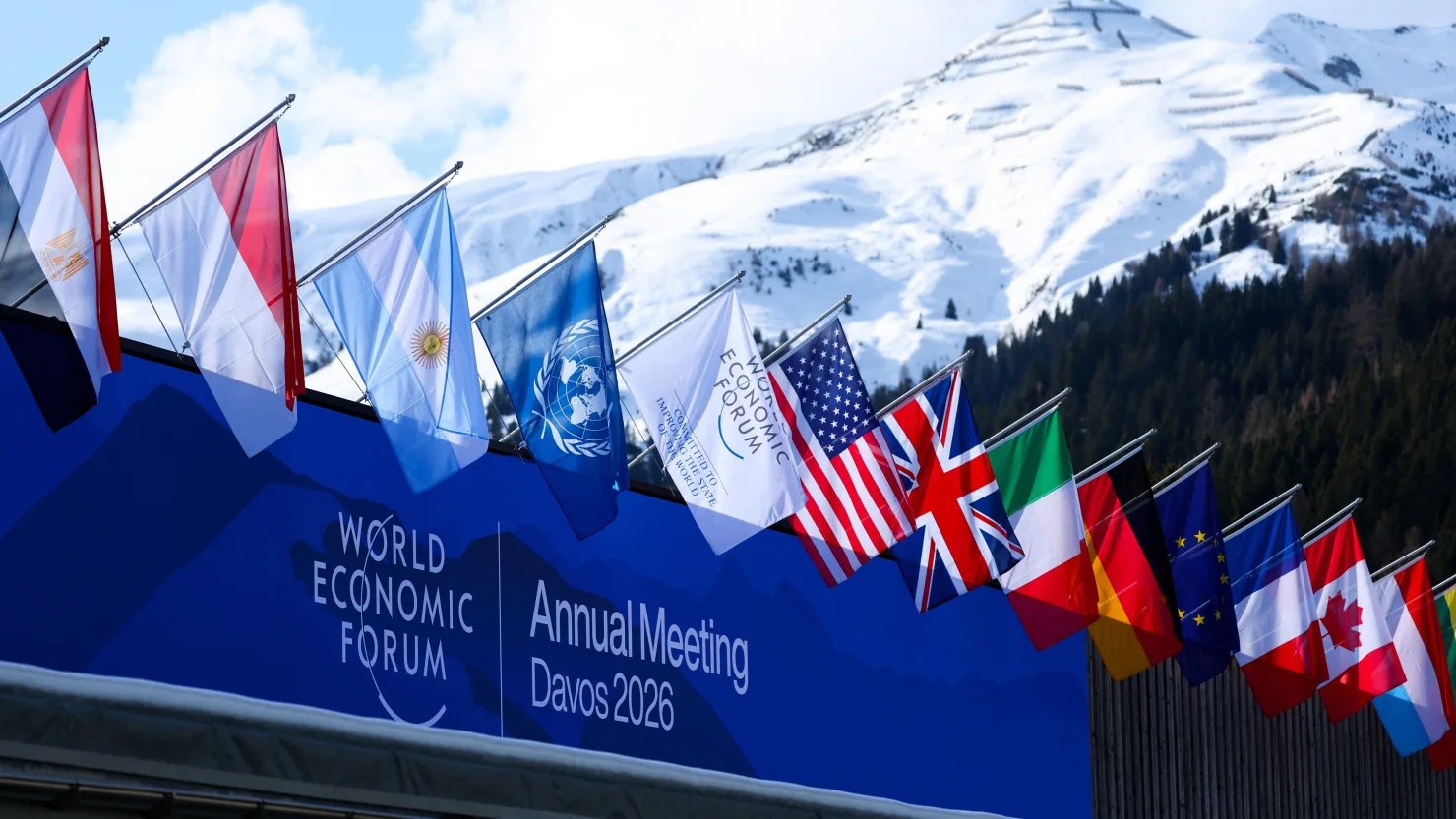
BEIJING — As political heavyweights gathered in Davos last week to debate issues ranging from U.S. territorial rhetoric to global trade realignments, China struck a noticeably different tone. While some leaders focused on confrontation and controversy, Beijing’s representatives emphasized cooperation and stability, a message that Chinese analysts believe may resonate more strongly as global tensions rise.
Observers in China say the discussions in Davos underscored a broader opening for Beijing to expand its international influence, particularly as relations between the United States and its traditional allies show signs of strain. According to Hai Zhao, director of international political studies at the Chinese Academy of Social Sciences, this year’s forum marked a turning point. He described the event as a watershed moment, arguing that many countries are gradually shifting away from a U.S.-centered global economic model toward more regionally focused trade systems.
China sent Vice Premier He Lifeng, one of the country’s four top economic officials, to the World Economic Forum. During his appearance, He promoted China as a reliable destination for investment, highlighted business opportunities, and called for fair and equal treatment of Chinese companies abroad. In his address on Tuesday, he pointed to recent U.S.-China trade talks as an example of pragmatic cooperation, without directly referencing disputes involving other nations.
Despite the substance of his remarks, He’s speech attracted less global attention than those delivered by some other leaders. U.S. President Donald Trump dominated headlines with sharp personal remarks aimed at foreign counterparts, followed by a partial retreat from his earlier comments regarding Greenland. European Commission President Ursula von der Leyen used her platform to outline potential new trade deals, including what she described as a possibly historic agreement with India. Meanwhile, Canadian Prime Minister Mark Carney captured significant attention with a brief but widely praised speech warning of a fracture in the existing world order.
Chinese analysts, however, argue that Beijing’s steady and consistent messaging may ultimately prove more influential than dramatic sound bites. Wei Wang, a researcher at Tianjin University of Commerce, said that growing friction between Washington and Europe could create space for closer ties between China and the European Union. He added that the Greenland controversy might accelerate a broader realization in the West that attempts to contain China’s rise have been ineffective, reinforcing perceptions that global power is gradually shifting eastward.
From the perspective of international investors, the tone in Davos reflected an increasing acceptance of long-term structural changes in the global economy. Peter Alexander, managing director of Shanghai-based Z-Ben Advisors, noted that many countries outside the U.S., European, and Japanese spheres have recognized these shifts for years. He argued that China’s dominance in global manufacturing has left other nations with limited leverage, a reality that is becoming harder to ignore.
China’s growing economic weight is evident in trade data. The country’s share of global container shipments has risen steadily, reaching 37 percent in the first three quarters of last year. Beijing was also the first major economy to respond to Trump’s so-called “Liberation Day” tariffs in April, positioning itself as a stabilizing force amid escalating trade disputes.
Although Washington and Beijing reached a fragile one-year truce in October, with Trump scheduled to visit China in April, trade tensions remain unresolved. Tariffs are still high, and the U.S. continues to impose restrictions on China’s access to advanced technologies. Alexander has described the rivalry as the result of decades of serious misjudgments by American policymakers and corporate leaders, a view he outlined in a recent essay reflecting on his nearly 30 years living in China.
Signs of changing global dynamics are also visible in diplomatic activity. Since the start of the year, China has hosted an unusually high number of foreign leaders, marking a clear contrast with the more isolated period during the Covid-19 pandemic. Early in 2026, President Xi Jinping met with Irish Prime Minister Michael Martin, the first visit by an Irish leader in 14 years, and later the same day welcomed South Korean President Lee Jae Myung.
Canadian Prime Minister Carney also visited Beijing last week, announcing a new strategic partnership focused on areas such as canola exports and electric vehicles. British Prime Minister Keir Starmer is expected to make a similar trip in the coming days. According to Jacob Cooke, co-founder and CEO of WPIC Marketing + Technologies, such high-level visits help restore confidence among foreign businesses considering deeper engagement with China.
Cooke said that over the past year, as U.S. tariffs increased, his company has seen growing interest from non-American Western consumer brands seeking to diversify their international markets by expanding into China. Demand among Chinese consumers remains strong for premium products, particularly in sectors such as health supplements, pet care, and sports-related goods.
At home, China faces ongoing economic challenges. Vice Premier He has identified boosting domestic demand, especially household income growth, as a key priority for the year. Progress has been limited so far, with retail sales rising only 0.9 percent in December, the slowest growth rate since the pandemic. When asked recently about concrete measures to raise disposable incomes, senior economic planners did not offer specific details.
Even so, global economic trends appear to be evolving regardless of China’s internal constraints. Larry Fink, CEO of BlackRock and co-chair of this year’s World Economic Forum, suggested that Davos may not always remain anchored in the Swiss Alps. Future gatherings, he said, could take place in cities such as Detroit, Dublin, Jakarta, or Buenos Aires, symbolizing a shift toward a more geographically diverse global dialogue.
The forum has already hosted a summer edition in China since 2007, with this year’s event scheduled for Dalian in the country’s northeast. Participants in recent years have noted a gradual shift away from a Western-centric focus toward greater representation from emerging markets.
Trump himself hinted at a more conciliatory approach toward Beijing during his Davos appearance. He spoke warmly of his relationship with President Xi Jinping, praising his leadership and global reputation. While acknowledging that ties were severely disrupted by the pandemic, Trump said he stopped using inflammatory language about China at Xi’s request, signaling a softer rhetorical tone even amid ongoing strategic rivalry.