Andrew Ross Sorkin
The International Monetary Fund’s April 2026 World Economic Outlook marks a clear inflection point in the macro debate. After entering the year with what the Fund described as better-than-expected momentum, the global economy is now projected to grow just 3.1% in 2026 and 3.2% in 2027, with renewed inflation pressure and sharper downside risks replacing the relative optimism that prevailed earlier in the year. The downgrade is not framed as a routine adjustment to baseline forecasts. Instead, it reflects a materially darker assessment of the global expansion as trade tensions, softer demand, and conflict-driven energy disruptions begin to interact in ways that could test both growth resilience and policy flexibility.
The IMF’s message is important because it combines cyclical weakness with structural fragility. In its telling, the world economy did not arrive at this point because of one isolated shock. It arrived here after a period of elevated trade barriers, persistent policy uncertainty, and narrowing fiscal and monetary room. Those conditions had not yet derailed activity outright. In fact, the Fund said the private sector had adapted better than expected through late 2025, supported by favorable financial conditions, some fiscal support, lower-than-announced U.S. tariffs, and a continuing technology investment boom. Absent the latest conflict shock, IMF officials indicated they would likely have revised their global growth forecast up to 3.4% for 2026. Instead, that momentum has been interrupted.
The immediate trigger for the downgrade is the energy and supply-chain impact associated with the conflict in the Middle East and the disruption of a region central to global hydrocarbon flows. The IMF’s reference scenario assumes the conflict remains limited in duration and scope and that the resulting shock proves manageable over time. Even under that relatively benign assumption, however, the Fund says global activity slows materially. Commodity prices rise, inflation expectations come under pressure, and financial conditions become more restrictive. The result is a world economy that grows more slowly while facing a renewed, if not runaway, inflation problem.
That combination is precisely what makes the April forecast more consequential than a simple growth revision. The IMF now expects global headline inflation to rise modestly to 4.4% in 2026 before easing again in 2027. In practical terms, that means central banks may not be able to lean as confidently toward easing as markets had hoped earlier in the year. The Fund argues that energy-price shocks can often be looked through when inflation expectations remain well anchored. But once firms and workers begin adjusting behavior to compensate for higher prices, the risk grows that a temporary commodity shock becomes more embedded in wage setting, services inflation, and broader pricing behavior.
The growth outlook also underscores that the burden of adjustment will not be shared evenly. The IMF says emerging market and developing economies, especially energy importers with limited buffers, are likely to feel the most acute strain. They face higher import costs, reduced purchasing power, and greater exposure to capital outflows if tighter global financial conditions strengthen the dollar and raise risk premiums. For countries already carrying heavy debt burdens or wide fiscal deficits, the downgrade is more than a forecast revision; it is a warning that macro stabilization could become harder and more expensive. The Fund also highlights risks to remittance flows and tourism-linked activity in countries connected to conflict-affected regions.
Advanced economies are not insulated. The IMF expects growth in advanced economies to slow to 1.8% in 2026 and 1.7% in 2027. While the direct energy impact is described as more modest than for vulnerable importers, advanced economies still face a deteriorating external environment, tighter financial conditions, and the possibility that disinflation stalls at an uncomfortable level. That matters for monetary authorities that had been moving from emergency inflation control toward a more balanced stance. In an environment where growth is slowing but inflation remains above target in several major economies, the tolerance for policy mistakes narrows sharply.

The report’s policy message reflects that tension. The IMF does not advocate a blanket tightening response to higher energy prices. Instead, it argues that central banks can generally look through a supply-driven price shock as long as medium- and long-term inflation expectations remain anchored. But it pairs that with a blunt warning: if expectations drift higher and second-round effects start to accumulate, price stability must take precedence over short-term growth support. This is a familiar message in theory, but in the 2026 context it carries more weight because policymakers are no longer operating with the same cyclical backdrop that followed the 2022 commodity shock.
The IMF draws that comparison explicitly. The post-Ukraine inflation surge was followed by a synchronized tightening cycle that ultimately helped reduce inflation without producing a full global recession. The Fund suggests the current episode could prove less forgiving. Softer labor markets and normalized private-sector balance sheets may mean some underlying inflation pressures are lower than in 2022, but policymakers also face a world in which households and businesses have become more sensitive to price-level shocks. After years of elevated living costs, inflation psychology may be more fragile. At the same time, the supply side of the economy may no longer absorb disinflation with such limited output losses. In other words, the path back to price stability could be costlier this time.
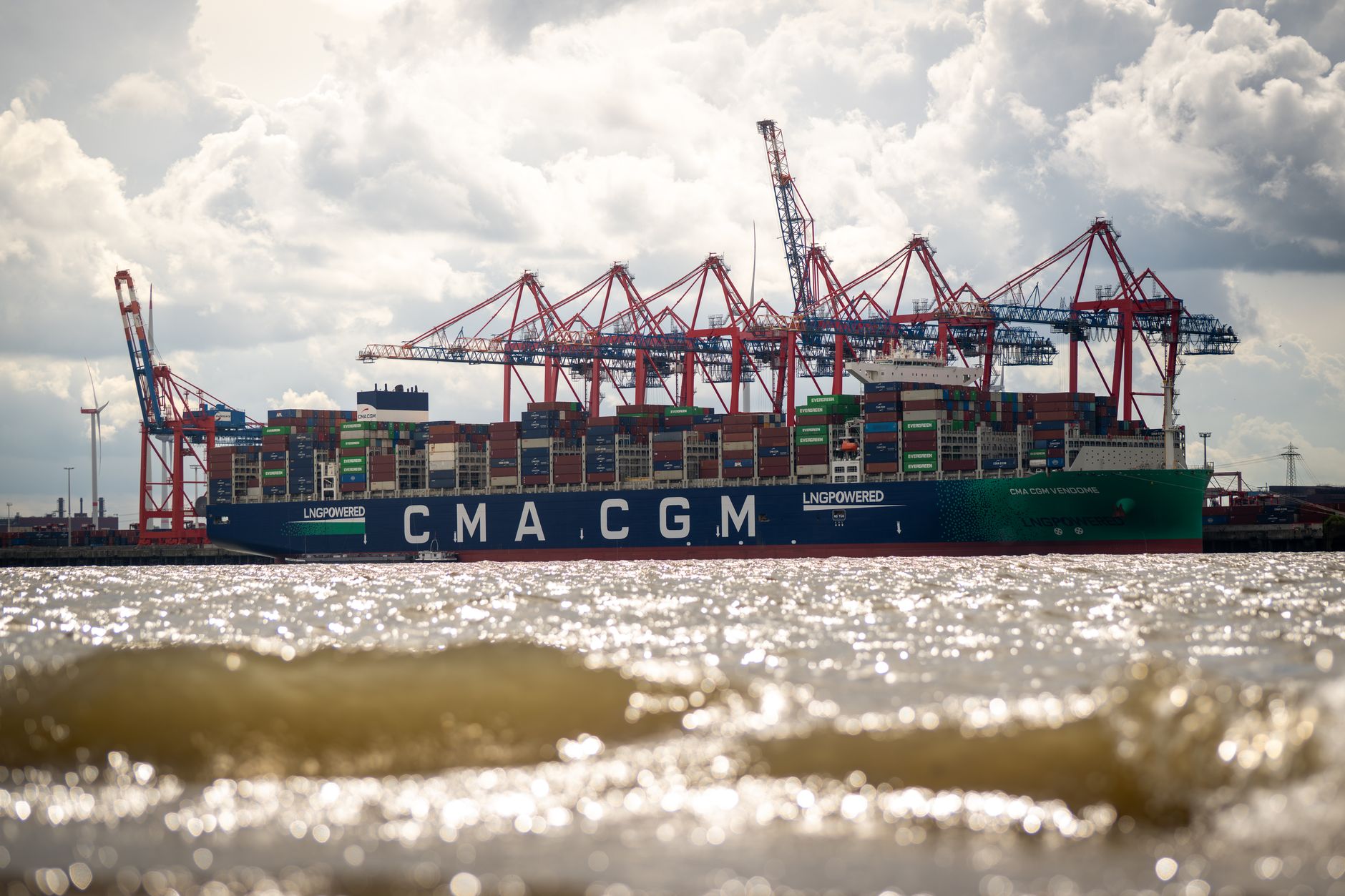
Trade tensions deepen that challenge. Although the most immediate catalyst for the forecast cut is the energy shock, the IMF repeatedly places renewed trade frictions and geopolitical fragmentation among the central downside risks. This is consistent with a broader pattern in the global economy: trade policy is no longer just a long-term structural issue but an active cyclical variable. Restrictions, rerouting, and uncertainty affect investment timing, inventory management, supplier diversification, and currency movements. Even where formal tariffs are not the dominant story, businesses are increasingly planning around a world in which cross-border commerce may be more expensive, slower, and less predictable. That weakens productivity and demand simultaneously.
The demand side of the story is easy to miss because the headline discussion centers on supply shocks. Yet the IMF’s framework makes clear that slowing demand is a key part of the downgrade. Higher energy prices erode real incomes. Tighter financial conditions restrain borrowing and risk-taking. Lower asset prices, wider risk premiums, and dollar strength dampen activity further. In other words, the same shock that lifts headline inflation can also suppress consumer spending and business investment. This is the essence of the Fund’s concern: the world may be moving toward a weaker-growth, more inflation-prone equilibrium in which the old assumption that slower activity will automatically cool prices is less reliable.
For fiscal policymakers, the report is equally pointed. The IMF argues against broad-based subsidies, price caps, and untargeted interventions of the kind many governments deployed in past energy shocks. Those measures may be politically attractive, but the Fund says they are frequently expensive, distort price signals, and can worsen inflation or fiscal vulnerabilities over time. Instead, it recommends that any support be temporary, targeted, and aligned with medium-term fiscal plans. That is easier said than done. Many governments face public pressure to cushion households and firms from rising costs, yet many of the same governments are already operating with elevated debt and thinner buffers than they had before the pandemic or the 2022 inflation episode.
The debt dimension is central to why this downgrade matters for markets as much as for macroeconomists. The IMF’s language on credibility and buffers suggests that investors may become less tolerant of fiscal slippage in a slower-growth world. When growth is strong, markets often give policymakers more room to absorb shocks. When growth slows and inflation remains sticky, that room shrinks. Borrowing costs become more sensitive to policy signaling, and countries with weak institutions or inconsistent policy frameworks can come under pressure faster. For emerging markets in particular, that raises the risk that what begins as an external price shock develops into a broader balance-of-payments or sovereign-financing problem.

The IMF’s scenario analysis makes the stakes clearer. Its reference forecast assumes a short-lived conflict and moderate energy price increases. But in an adverse scenario, where energy prices stay higher for longer, financial conditions tighten more materially, and inflation expectations rise, global growth falls to 2.5% in 2026 while inflation rises to 5.4%. In a severe scenario, where supply disruptions extend into 2027 and macro instability intensifies, global growth drops to 2% in both 2026 and 2027 and inflation exceeds 6%. Those are not presented as baseline outcomes, but the Fund’s chief economist indicated at launch that the world may already be drifting somewhere between the reference and adverse scenarios as energy disruptions continue.
That observation matters because it reframes the WEO not as a static snapshot but as a report at risk of being overtaken by events. The global outlook in April is therefore not just weaker; it is also unusually contingent. Oil prices, shipping routes, inflation expectations, and the political response to renewed trade friction could move the baseline quickly. For businesses and investors, that means the most relevant takeaway may be less the precise 3.1% number than the wider distribution around it. Volatility in rates, currencies, energy, and credit may persist even if the central case remains one of slower growth rather than outright recession.
There is one counterweight in the IMF narrative: productivity gains tied to artificial intelligence and broader technology investment still offer upside over the medium term. The Fund notes that a stronger realization of those gains, or a sustained easing of trade tensions, could lift activity more than currently assumed. But that is clearly treated as a secondary possibility, not the dominant short-run story. The short-run story is that the world economy is confronting another externally driven shock before it has fully rebuilt resilience from the last one.
For the global policy community, the IMF’s April assessment amounts to a demand for discipline rather than panic. It does not forecast a recession in its base case, and it does not argue that every rise in headline inflation should trigger aggressive tightening. But it does insist that the margin for complacency has narrowed. Central banks must watch inflation expectations closely. Fiscal authorities must protect the vulnerable without reigniting inflation or undermining debt sustainability. Governments must resist the temptation to answer scarcity with blunt market interventions that ultimately deepen distortions. And international cooperation, especially around trade and energy security, remains critical if the world is to avoid converting a serious shock into a broader and more persistent slowdown.
The broad implication is that 2026 is becoming a year defined less by normalization than by renewed stress-testing. The IMF’s downgrade captures that shift. Global growth is still positive, but the composition of risk has worsened. Trade tensions are no longer a background irritation; they are part of the active drag on the outlook. Slowing demand is not delivering clean disinflation; it is arriving alongside fresh cost pressures. And policy capacity, while still meaningful, is more constrained than it was in earlier shocks. For an economy section, that is the central takeaway: the global expansion is not ending, but it is becoming more vulnerable, more uneven, and more dependent on policy credibility and geopolitical restraint than it appeared only a few months ago.