Andrew Ross Sorkin
The International Monetary Fund has lowered its outlook for the world economy, arguing that a weaker trade environment and renewed inflation pressure are narrowing the margin for error for policymakers just as markets had started to price in a gentler macroeconomic landing. The downgrade, published in the Fund’s April 2026 World Economic Outlook and reinforced by reporting from Reuters on April 22, reframes the current cycle less as a continuation of post-pandemic normalization and more as a new phase of shock management in which geopolitical conflict, energy volatility and softening trade interact with already thin policy buffers.
Under the IMF’s reference forecast, global growth is expected to slow to 3.1% in 2026 and edge up only slightly to 3.2% in 2027. Those figures are below the pace recorded in 2024 and 2025 and remain well under the average rates that prevailed before the pandemic. The Fund’s message is not simply that growth is easing. It is that the composition of the slowdown is becoming more difficult for central banks and finance ministries to manage. Growth is weakening at the same time that headline inflation is projected to rise to 4.4% in 2026, creating a fresh supply-side challenge rather than the demand-led cooling many policymakers had hoped would dominate this year.
The IMF’s analysis places unusual emphasis on the interaction between slower trade and higher prices. Last year, global activity absorbed higher trade barriers and policy uncertainty better than many economists expected, helped by resilient private-sector adaptation, favorable financial conditions in some markets and ongoing strength in technology-related investment. But the Fund now says the world economy faces a more severe test. Fraying alliances, new conflict and increasingly inward-looking economic policies are, in its assessment, undermining cooperation and growth. The consequence is not an immediate collapse in cross-border commerce, but a more persistent chilling effect in which trade is rerouted, costs increase and the efficiency gains of globalization are steadily eroded.
That matters because trade has been one of the main shock absorbers of recent years. When demand weakened in one market, firms often found buyers elsewhere. When sanctions or restrictions hit a supply chain, producers and logistics operators reconfigured routes. The IMF is now warning that the adaptive capacity of the global system is still present but less reliable. Trade is being redirected through new partnerships and regional arrangements, yet that reconfiguration does not come without friction. It raises transaction costs, complicates investment decisions and can leave smaller or lower-income economies more exposed to price swings and financing stress.
The inflation side of the forecast is equally important. The Fund describes the current pressure as a classic negative supply shock, driven in large part by higher commodity and energy costs. Such shocks are especially difficult because they simultaneously weaken activity and lift prices. In its reference case, the IMF assumes a moderate rise in energy prices and a conflict that remains limited. Even then, the world does not resume a smooth disinflation path this year. Instead, inflation rises before easing later. In the Fund’s adverse scenario, where energy disruptions are larger and expectations begin to shift, global growth falls to 2.5% in 2026 while inflation climbs to 5.4%. In a severe case involving longer-lasting supply dislocations and sharper tightening in financial conditions, growth drops to 2% in both 2026 and 2027 and inflation exceeds 6%.
Those scenarios matter beyond headline economics because they force a repricing of monetary-policy assumptions. The IMF’s chief economist, Pierre-Olivier Gourinchas, said during the Fund’s April 14 press briefing that central banks can initially look through an energy shock only if inflation expectations remain anchored. That is a narrower condition than many markets had been assuming. The policy challenge is no longer merely whether inflation is falling slowly enough to justify patience. It is whether higher fuel and transportation costs begin to alter wage setting, pricing behavior and household expectations. If they do, major central banks may need to keep policy restrictive for longer than growth alone would warrant.

That concern is already showing up in broader macro debate. Reuters reported on April 22 that economists had pushed back expectations for U.S. rate cuts, citing renewed inflation risks from war-driven energy prices. The IMF is not delivering country-by-country monetary guidance in this forecast, but the direction of travel is similar: officials are being told not to mistake a supply shock for a temporary nuisance. In the Fund’s view, a repeat of the clean disinflation that followed the 2022 commodity surge cannot be taken for granted. Softer labor markets and normalized balance sheets have reduced some underlying pressure, but the social and psychological scars of the last inflation wave remain, making expectations more sensitive to renewed price jumps.
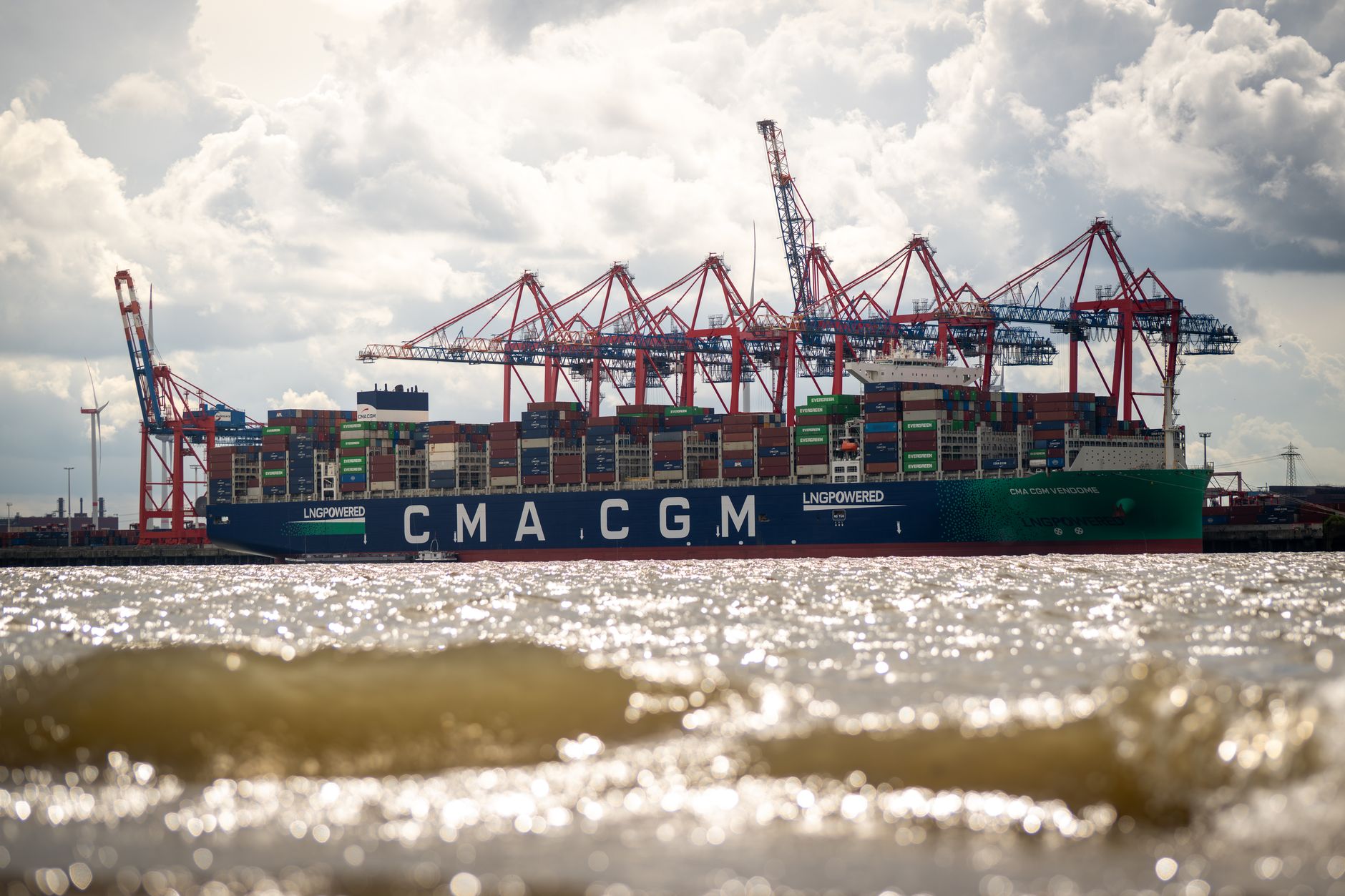
The trade slowdown warning broadens the story from an energy shock to a structural challenge for growth. The IMF says waves of trade restrictions imposed across major blocs are harming cooperation and expansion. That does not imply a collapse in aggregate trade volumes on the scale of the global financial crisis. It suggests something potentially more durable: a world economy that continues to trade, but less efficiently, with more political filtering, more redundancy in supply chains and more state intervention in strategic sectors. For businesses, that means higher working capital needs, more geographic hedging and a less predictable returns profile on long-cycle investment.
Exporters and commodity importers face particularly different versions of the same problem. Import-dependent economies are vulnerable to rising energy bills and weaker purchasing power. Export-oriented manufacturers, meanwhile, are vulnerable to slower global demand and the knock-on effects of fragmented trade rules. For many emerging markets and developing economies, these pressures arrive at a difficult moment. The IMF says the slowdown in growth and the increase in inflation are expected to be especially pronounced in those economies, notably in commodity importers with preexisting vulnerabilities. Higher borrowing costs, weaker currencies and limited fiscal space can turn what would be a manageable external shock for a rich economy into a balance-of-payments or debt-management problem for a poorer one.
The Fund’s policy prescription is therefore cautious and in some respects restrictive. On monetary policy, central banks should maintain credibility and be prepared to tighten if inflation expectations drift. On fiscal policy, governments are advised against broad price caps and untargeted subsidies, which the IMF says are costly, distortionary and hard to unwind. Instead, any support should be temporary and narrowly focused on vulnerable households and firms. That is a politically difficult message. Energy shocks create immediate public pressure for universal relief, but the IMF argues that, with debt already elevated, many governments no longer have the fiscal luxury to cushion everyone without worsening inflation or damaging confidence in the sovereign balance sheet.
There is also a market-structure dimension to the IMF’s warning. The Fund says downside risks include not only a longer conflict and deeper geopolitical fragmentation, but also potential disappointment around artificial-intelligence-driven productivity gains and renewed trade tensions. That combination is notable because it links the macro outlook to asset valuations. In recent quarters, part of the market’s optimism rested on the idea that stronger productivity growth from AI adoption could offset structural drags elsewhere. The IMF is effectively saying that such gains may still materialize, but they are not dependable enough to anchor the near-term macro baseline. If those gains arrive more slowly than investors expect, equity markets may need to reassess earnings assumptions at the same time that bond markets are contending with stickier inflation.

For the General category of market coverage, the central point is that the IMF’s downgrade is broad rather than sector-specific. It is not confined to banking, technology, commodities or one regional bloc. It goes to the operating environment of the global economy itself. Slower trade affects manufacturing, shipping, consumer goods and capital spending. Higher inflation risk affects rates, currencies, household demand and government financing. Geopolitical uncertainty affects energy markets, business confidence and cross-border investment. Put together, the Fund’s assessment implies a macro backdrop in which idiosyncratic corporate strength may still exist, but the broad market multiple is likely to remain constrained by uncertainty over policy, energy and inflation.
The most immediate question is whether the IMF’s reference forecast already looks too optimistic. Reuters reported on April 14 that Gourinchas suggested the world might already be drifting toward the adverse scenario, given continuing disruption and the lack of a clear path to ending the conflict. That is important because the official baseline assumes some normalization in energy prices later in 2026. If that assumption fails, the inflation-growth trade-off becomes materially worse. The adverse scenario’s 2.5% growth rate would still fall short of outright recession at the global level, but it would almost certainly be accompanied by significantly weaker corporate sentiment, tighter financial conditions and more acute strain on vulnerable sovereigns and import-heavy economies.
Still, the IMF does not present the outlook as hopeless. It notes that growth could strengthen if productivity gains from AI arrive faster than expected or if trade tensions ease on a sustained basis. But those upside forces are framed as contingent rather than imminent. The stronger emphasis remains on adaptability, credible policy frameworks and international cooperation. That wording reflects a larger shift in the institution’s message: the world economy is no longer being judged mainly on its cyclical momentum, but on its ability to absorb repeated non-economic shocks without losing policy credibility or financial stability.
For investors, the practical takeaway is that the IMF has made the macro regime less forgiving. A world of slower trade and stickier inflation is one in which rate sensitivity, balance-sheet resilience and exposure to energy costs matter more than they did when disinflation looked more secure. For governments, the Fund’s warning is that buffer rebuilding cannot be postponed indefinitely. And for businesses, the outlook implies that resilience will depend less on assuming a smooth global recovery and more on planning for continued fragmentation, cost volatility and uneven demand. The downgrade is therefore significant not just because the growth number is lower, but because it signals that the next stage of the global cycle may be defined by persistence of shocks rather than resolution of them.