Andrew Ross Sorkin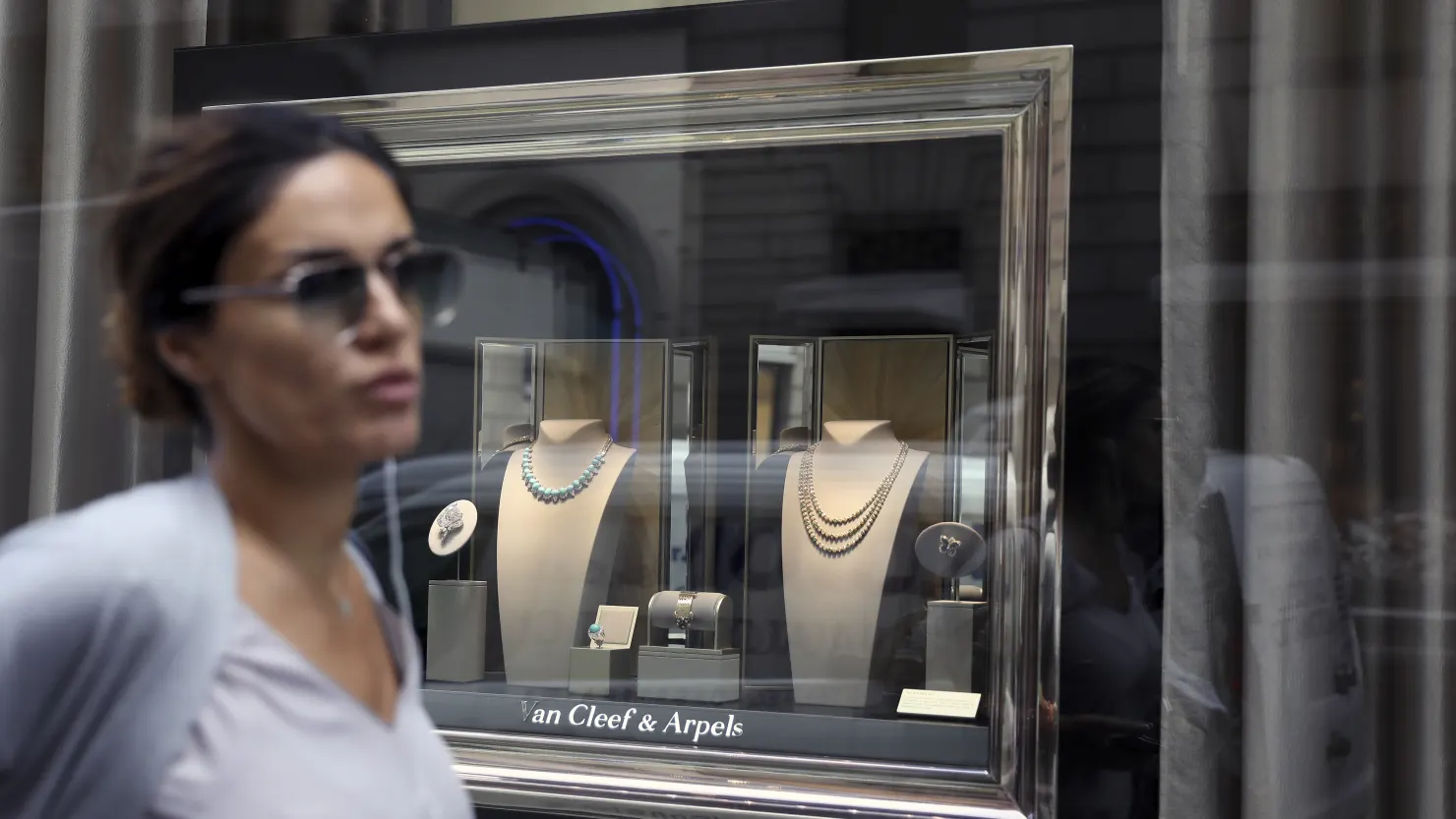
While many luxury consumers have begun to cut back on extravagant spending, the world’s wealthiest continue to indulge in the finest jewelry — from diamond-studded rings to rare gemstone necklaces. Yet for this exclusive group, not all luxury items are created equal. The ultra-rich have become more discerning than ever, gravitating only toward pieces that epitomize craftsmanship and exclusivity.
This growing preference for the most elite offerings has proven advantageous for Swiss luxury giant Richemont, whose portfolio includes some of the most coveted jewelry names in the world — Van Cleef & Arpels, Buccellati, and Cartier.
“Richemont’s jewelry brands remain unmatched in desirability,” said Luca Solca, head of global luxury goods at Bernstein, in an interview with CNBC’s “Squawk Box Europe.” “Even though LVMH has made considerable efforts to challenge that dominance, other brands are still trailing behind.”
Richemont’s latest earnings report confirmed this strength. The company’s fiscal fourth-quarter sales exceeded market expectations, driven by an 11% surge in its Jewellery Maisons division. Across the entire fiscal year, jewelry continued to be the company’s most robust category, achieving an 8% annual growth rate.
These results stand in sharp contrast to the broader luxury landscape. Major competitors such as LVMH, Kering, and Burberry all reported slower sales for the quarter ending in March, dimming earlier optimism that the luxury market might be rebounding after a sluggish 2023.
Within LVMH’s own watch and jewelry unit, sales remained flat compared to the previous year, following a 2% organic decline in 2024. Brands like Tiffany & Co., Bulgari, TAG Heuer, and Hublot saw softer demand, particularly in Asia.
“We are continuing to capture market share in jewelry — both from branded and non-branded competitors,” said Richemont chairman Johann Rupert during Friday’s earnings call.
However, the picture is less bright when it comes to watches. Richemont’s Specialist Watchmakers division, which includes high-end labels such as Piaget and Roger Dubuis, struggled with declining sales. Watch revenue dropped by 13% in 2024, primarily due to weakening demand in China. While performance improved slightly in the Americas during the second half of the year, it wasn’t enough to offset the overall slowdown.
According to Richemont’s financial report, “The global watch market experienced reduced volumes, with softness particularly visible in China, while high-end price segments showed greater resilience.”
The company’s challenges are also amplified by the fact that many leading watchmakers — including Rolex, Patek Philippe, and Audemars Piguet — are privately owned, making it difficult to gauge the true extent of the market’s downturn.
Beyond macroeconomic pressures, analysts note that luxury watches have an inherently slow sales cycle. As Bernstein’s Solca explained, “The watch market is still digesting the post-pandemic boom. Many consumers purchased watches during Covid-19, and that demand will take time to normalize. Jewelry, on the other hand, is purchased more frequently and has recently become relatively more affordable compared to handbags, which helps explain its stronger momentum.”
That shift in consumer behavior could play in Richemont’s favor. As high-end jewelry maintains its appeal, it may serve as a stabilizing force for the company amid global economic uncertainties and shifting trade conditions.
Chairman Rupert emphasized a cautious approach to pricing, noting that Richemont would avoid unsustainable price hikes — a stance that distinguishes it from competitors hinting at further increases.
“The company’s reliance on its jewelry business is becoming more pronounced, and it will depend on the enduring power of its iconic brands to sustain growth,” said Russ Mould, investment director at AJ Bell.
Still, analysts caution that Richemont is not immune to broader challenges. The company continues to face headwinds, including the strength of the Swiss franc against the U.S. dollar, rising gold prices, and potential tariff impacts. These factors could weigh on profitability in the months ahead.
Even so, Richemont’s commanding presence in the high-end jewelry segment — where craftsmanship, heritage, and prestige converge — ensures that it remains one of the most resilient players in the luxury world, even as other parts of the industry falter.