Andrew Ross Sorkin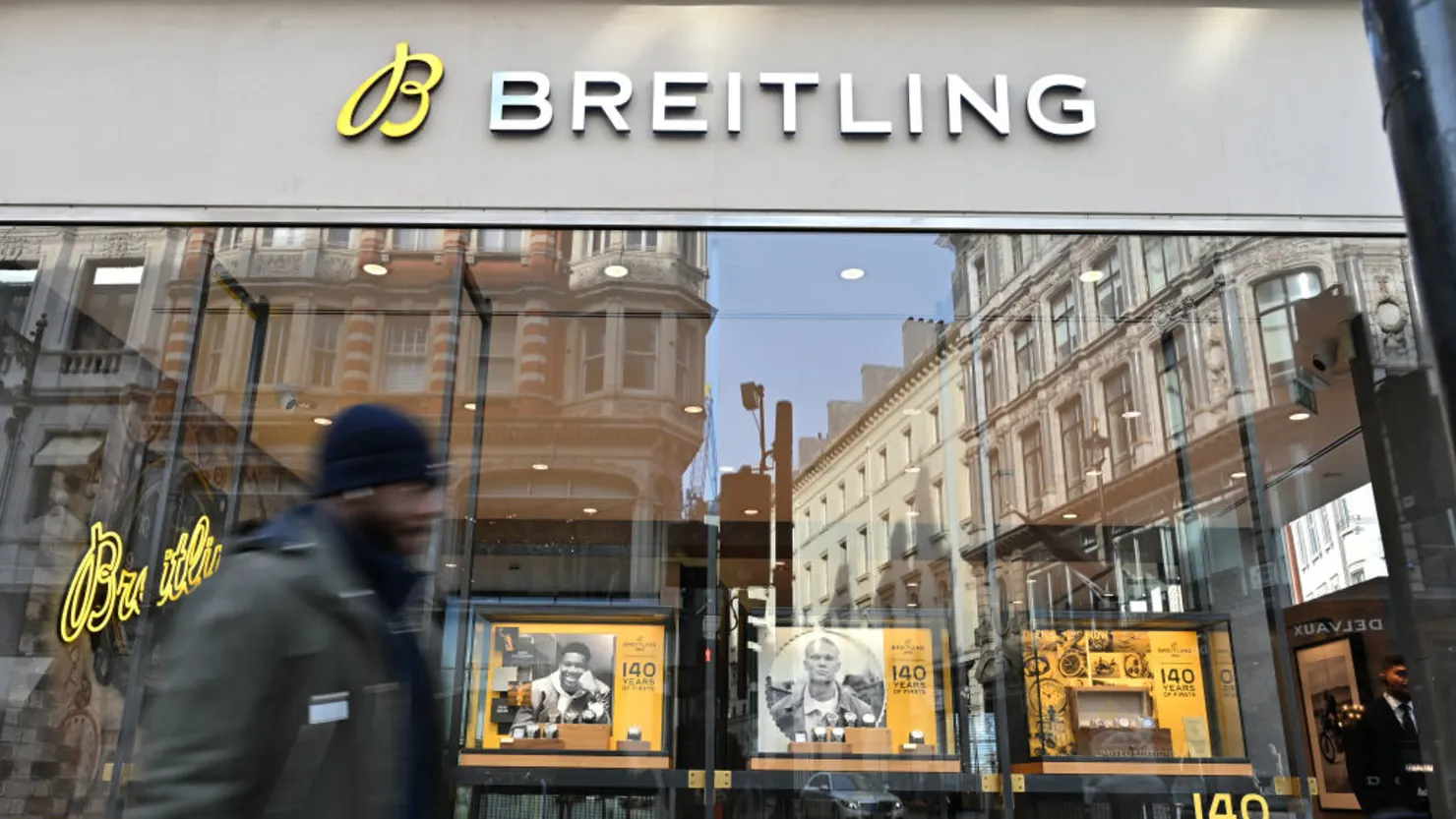
The chief executive of Swiss luxury watchmaker Breitling, Georges Kern, has voiced strong criticism of the 39% tariffs imposed by former U.S. President Donald Trump on Swiss goods, calling the move “horrible” for Switzerland and its export economy. In an interview with CNBC, Kern did not mince words when describing the toll these tariffs have taken on the watch industry and Switzerland’s broader trade relations with the United States.
“These duties were terrible news — 39% tariffs is horrible,” Kern said, adding that Swiss officials were unprepared for the aggressive trade stance taken by the Trump administration. According to him, Switzerland’s government failed to engage effectively with what he described as the “business-oriented mindset” of Trump’s economic team.
To offset the steep costs brought on by the tariffs, Breitling increased its global retail prices by around 4%. This move raised the company’s average watch prices from approximately $4,300 to $7,200. “We had no choice,” Kern explained, noting that such a dramatic increase in import taxes required immediate price adjustments to preserve profitability.
The tariffs were introduced in August as part of Washington’s broader effort to target countries with large trade surpluses with the U.S. Switzerland, known for its strong export economy, found itself unexpectedly caught in the crossfire of this policy. Despite pressure from within the country, Swiss officials refrained from retaliatory measures, instead opting to pursue negotiations with Washington. So far, however, no agreement has been reached to ease the restrictions.
The fallout was immediate. According to data from the Federation of the Swiss Watchmaking Industry, Swiss watch exports to the United States fell by 16.5% in August compared to the same month last year. Barclays later reported that the decline continued into September, with exports dropping 3.1% year on year. Traditionally, the U.S. has been Switzerland’s largest export market for watches, but in the months following the tariffs, exports to America plummeted 56%. Meanwhile, exports to the U.K. and Japan increased, reflecting a shift in trade flows as manufacturers sought to mitigate their losses.
Kern admitted that these trade challenges have added strain to an already fragile luxury goods market. “The environment is tough,” he said, pointing to a long-lasting downturn driven by post-pandemic fatigue, global inflation, and the slowdown in China’s economy. These combined pressures have made 2025 a difficult year for the sector, particularly for brands reliant on discretionary spending.
Still, Kern expressed cautious optimism regarding the Chinese market, which has shown signs of recovery after more than a year of weak consumer sentiment. “China became more positive over the last couple of months,” he said. “I think the downtrend stopped, and things have stabilized.”
This view was echoed by Luca Solca, managing director for Global Luxury Goods at Bernstein, who told CNBC that “Chinese demand is gradually improving.” Solca predicted that if this trend continues into the final quarter of 2025, it could indicate a U-shaped recovery for the Chinese luxury market — a slow but steady rebound following years of volatility.
However, Solca cautioned that the luxury watch market as a whole may continue to face headwinds. “Watches are a low-frequency purchase,” he noted. “Most consumers who wanted a watch bought one during the post-Covid boom in 2021 and 2022, and even into the first half of 2023.” As a result, demand in mature markets may take time to fully rebound.
Kern, however, rejected the notion of an industry-wide downturn. “The U.S. is really booming,” he said, emphasizing that American consumer sentiment remains “very positive” despite the tariff challenges. He also pointed to strong performance in the Middle East, describing it as a “booming environment” with “very good” sales results. The recent ceasefire agreement in Gaza, he added, could further improve consumer confidence across the region.
Beyond traditional markets, Breitling is seeing rising demand in South and Latin America, buoyed by favorable demographics and growing middle-class wealth. Similarly, sales have improved in Southeast Asian countries such as Indonesia, Malaysia, and the Philippines, where economic expansion and aspirational consumer trends have created fresh opportunities for luxury brands.
While acknowledging the current turbulence in global markets, Kern remains optimistic about the long-term future of the luxury sector. “Human beings will always desire beauty, craftsmanship, and emotion — that’s what luxury represents,” he said. “In the long run, I believe the luxury industry will continue to be one of the best places for investment and innovation.”
His confidence in the enduring appeal of luxury is shared by many within the industry, who view the current challenges as cyclical rather than structural. Despite temporary disruptions caused by tariffs, inflation, and changing global demand, brands like Breitling continue to focus on storytelling, design excellence, and heritage — the qualities that have defined Swiss watchmaking for generations.
As negotiations between Bern and Washington continue, the Swiss government faces growing pressure from exporters to secure a more favorable trade arrangement. But for now, Breitling and other watchmakers must navigate the dual challenges of high tariffs and shifting consumer behavior in a rapidly evolving global economy.
Kern concluded his remarks with a tone of resilience rather than frustration. “We’ve been through crises before — from quartz to Covid,” he said. “Each time, we adapted, and each time, the Swiss watch industry came out stronger. This time will be no different.”