Andrew Ross Sorkin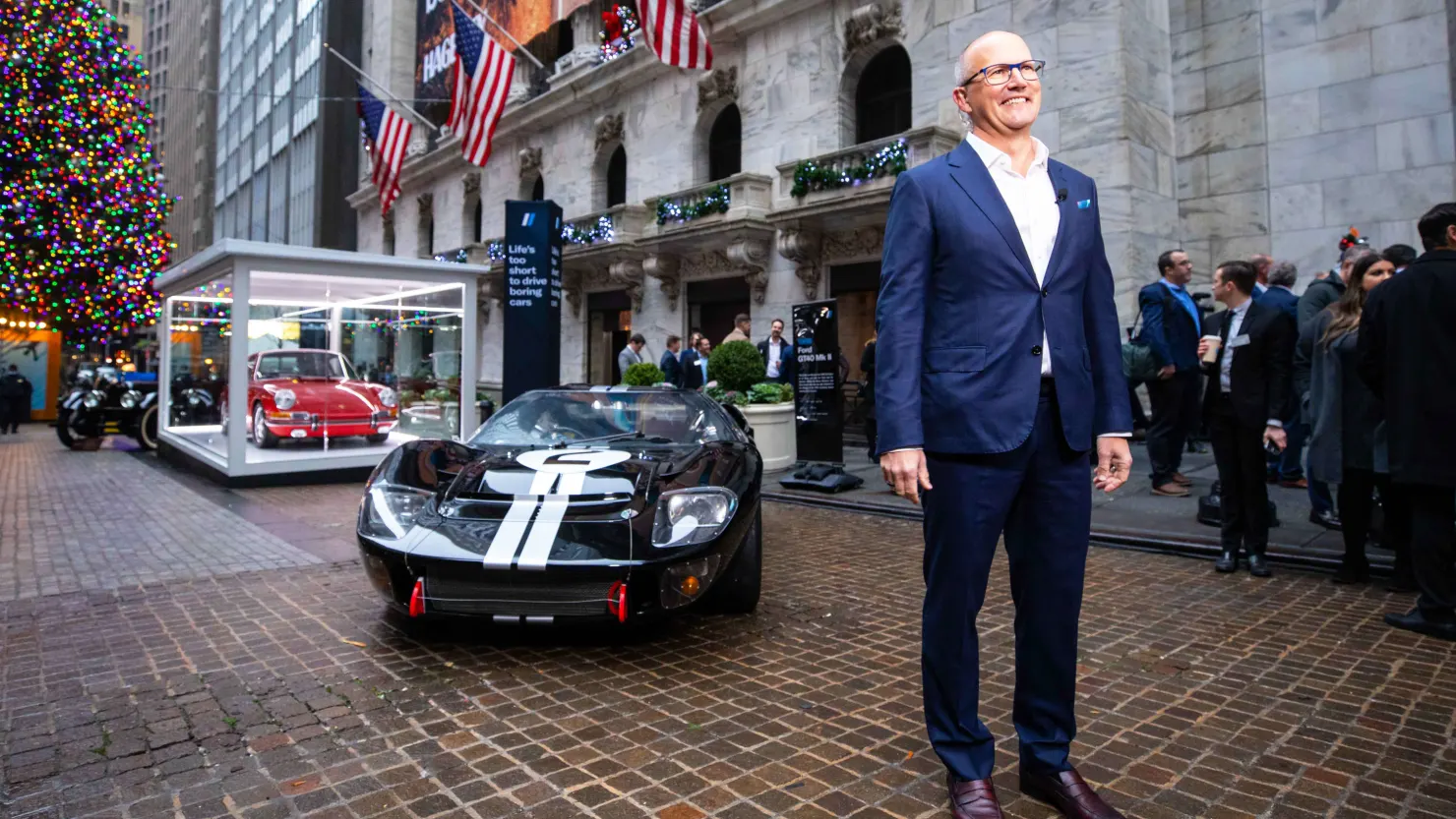
The global classic-car market is showing no signs of slowing down, and industry leaders believe the momentum will carry well into 2026. According to McKeel Hagerty, chief executive officer of Hagerty, a new wave of collectors is reshaping demand and giving the market fresh energy.
Hagerty, best known as a classic-car insurance provider and collector marketplace, reported that auctions and online transactions for collectible vehicles rose by 10% in 2025, reaching a total value of $4.8 billion. Based on current deal flow and activity in private sales, Hagerty expects the upward trend to continue next year.
Private transactions, in particular, have become a major source of growth. High-value vehicles are increasingly changing hands outside of traditional auction houses, reflecting a more flexible and globalized market. According to Hagerty, these private deals involve cars from a wide range of eras and categories, underscoring the depth of demand across the collector landscape.
One of the most significant forces behind this expansion is a generational shift. As baby boomers gradually exit the market, either by downsizing collections or passing assets to family members, younger buyers are stepping in. Collectors from Generation X, millennials, and even Gen Z are now playing a central role in redefining what it means to collect classic cars.
These younger buyers are also far more comfortable with digital platforms. Online classic-car sales grew 12% in 2025 to $2.5 billion, highlighting how technology is changing purchasing behavior. For many newer collectors, buying a car online feels just as natural as bidding at a live auction once did for earlier generations.
Preferences are evolving along with the buyers. While mid-20th-century sports cars from the 1950s and 1960s once dominated the market, attention is increasingly shifting toward high-performance vehicles from the 1990s and early 2000s. Modern classics and iconic supercars now sit at the top of many collectors’ wish lists.
Models such as the Ferrari F40 and F50, Bugatti Veyron and Chiron, McLaren F1, as well as cars from boutique manufacturers like Pagani and Koenigsegg, are among the most coveted vehicles today. These cars combine cutting-edge engineering, limited production, and strong brand identity, making them especially appealing to a new generation of enthusiasts.
At the same time, supply is expected to remain relatively healthy. Many luxury and performance automakers have expanded production in recent years, setting sales records and increasing the number of future collectible vehicles in circulation. According to Hagerty, this balance between supply and demand is a positive long-term signal for the market.
Another factor set to reshape the industry is the massive intergenerational transfer of wealth currently underway. Over the coming decades, trillions of dollars in assets owned by baby boomers will be passed on to spouses, children, and grandchildren. Estimates suggest that as much as $100 trillion will change hands by 2048, including real estate, financial holdings, collectibles, and other tangible assets.
Classic cars will be part of that inheritance. Families who receive these vehicles will face decisions about whether to keep them, store them, or sell them. This process is still in its early stages, but it is expected to introduce a large number of vehicles back into the market while also creating new collectors among heirs.
For investors and enthusiasts seeking opportunities, Hagerty recently released its annual Bull Market List. The list identifies vehicles that offer a combination of driving enjoyment, relative value, and strong potential for price appreciation based on market data and buyer demand.
This year’s selections span a wide price range. They include high-end models like the Porsche Carrera GT produced between 2004 and 2007, which often sells for more than $1.5 million, as well as more accessible classics such as the Alfa Romeo GTV from the late 1960s and early 1970s. The list also highlights the enduring appeal of the Mazda MX-5 Miata from the late 1990s and early 2000s, a car praised for its affordability and driving experience.
Ultimately, Hagerty believes the classic-car market is closely tied to broader trends in wealth creation. With equity markets posting strong gains and interest rates beginning to ease, many collectors feel financially secure enough to make discretionary purchases.
As personal portfolios grow, confidence follows. For many buyers, seeing stable or rising investment accounts provides the reassurance needed to invest in passion assets like collectible cars. According to Hagerty, this sense of financial strength continues to fuel enthusiasm across the market.
Looking ahead, the combination of generational change, digital innovation, wealth transfer, and favorable economic conditions suggests that the classic-car market is entering a new phase rather than nearing its peak. For collectors old and new, the road ahead still looks wide open.